
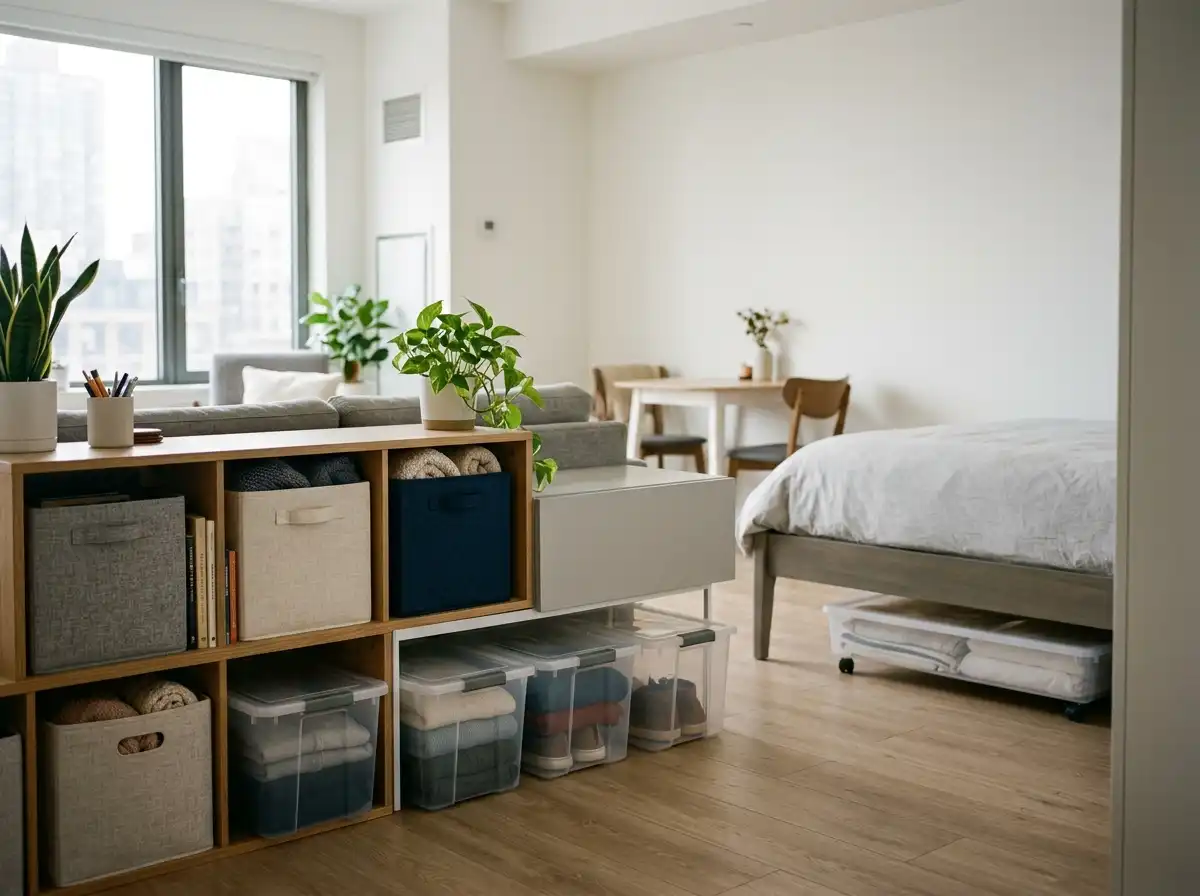
I used to think storage bins were storage bins. Then I moved into a 480-square-foot one-bedroom with a coat closet that’s basically a vertical shoebox, and I learned the hard way that the wrong bin doesn’t just look bad — it actively wastes space you don’t have.
I bought a set of “space-saving” fabric cubes my first month here that turned out to be so floppy they collapsed the second I stacked anything on top, and I ended up donating half of them within a year.
So this is the post I wish someone had written for me back then. If you’re working with a small apartment, a studio, or a dorm room, storage bins for small apartments aren’t a nice-to-have — they’re the difference between a place that functions and a place where you’re constantly moving one pile to find another.
I’ve bought, returned, regifted, and lived with a genuinely embarrassing number of these things over the past few years, and I’ve got opinions.
Here’s what’s actually worth your money, what to skip, and how to think about your space so you’re not buying bins that look great in a photo and then just sit there half-used.
Why Regular Storage Bins Don’t Work in Small Spaces
Most storage bin advice is written for people with basements, garages, or spare closets — rooms where the bin’s only job is to hold stuff out of sight.
In a small apartment, every bin is doing double or triple duty: it needs to fit a specific footprint, stack safely, often live somewhere visible, and sometimes double as furniture (my ottoman is a storage bin with a cushion glued to a plywood lid — don’t judge me).
That changes what actually matters. Volume alone is a bad way to shop. A 40-quart bin that’s deep and narrow will beat a squat, wide 50-quart bin every time if you’re trying to slide something under a bed frame with 7 inches of clearance, which, in my building, is exactly what I had to measure before ordering anything.
Pro tip: Before you buy anything, actually measure your target spaces — under the bed, top of the closet, that gap beside the fridge — and write the numbers down on your phone. I skipped this once, ordered bins based on vibes, and ended up with four bins that fit nowhere and lived in my living room for a month while I figured out what to do with them.
Under-Bed Storage: Where Most People Get the Depth Wrong
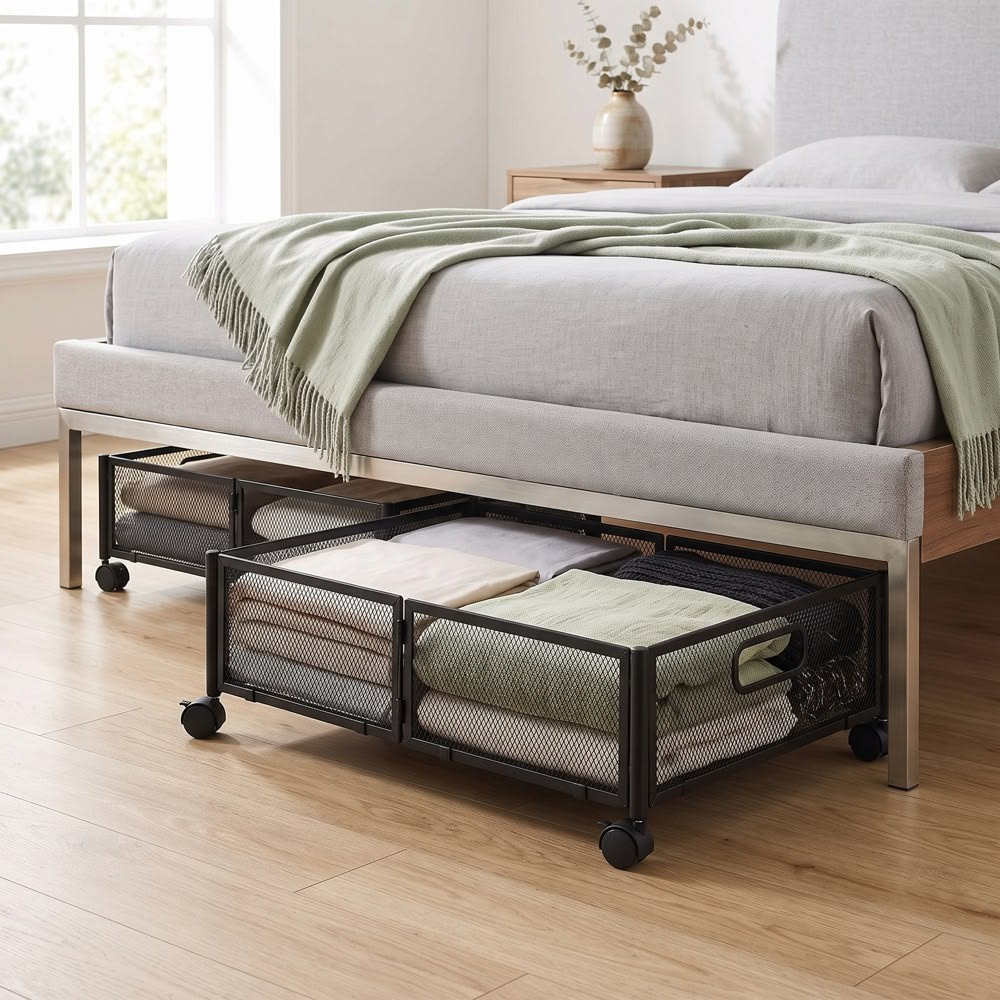
Under-bed bins are probably the single highest-value storage move for a small apartment because that space is almost always empty otherwise.
But the failure mode here is really specific: people buy bins that are too tall and either don’t fit under the bed frame at all, or fit so tightly that pulling them out scrapes your floor and eventually cracks the plastic.
The ones that have actually held up for me are low-profile — under 7 inches tall — with rolling wheels built into the base.
My first round I bought the wheel-less version to save about $8 and immediately regretted it, because dragging a full bin across a rug is a genuinely bad time and it wore a visible track into my carpet within a few months.
Clear bins matter more here than almost anywhere else in the apartment, because under-bed storage is exactly the kind of space where “I’ll remember what’s in there” turns into forgetting entirely.
I have one friend, Priya, who used opaque bins under her bed for winter clothes and didn’t realize she owned a second down comforter until she moved out two years later.
Pro tip: Get bins with lids that lock or clip rather than just resting on top. Dust gets under beds more than you’d expect, and an unsealed lid means you’re pulling out a slightly gritty sweater in October.
Closet Storage: Stackable Bins vs. Modular Systems
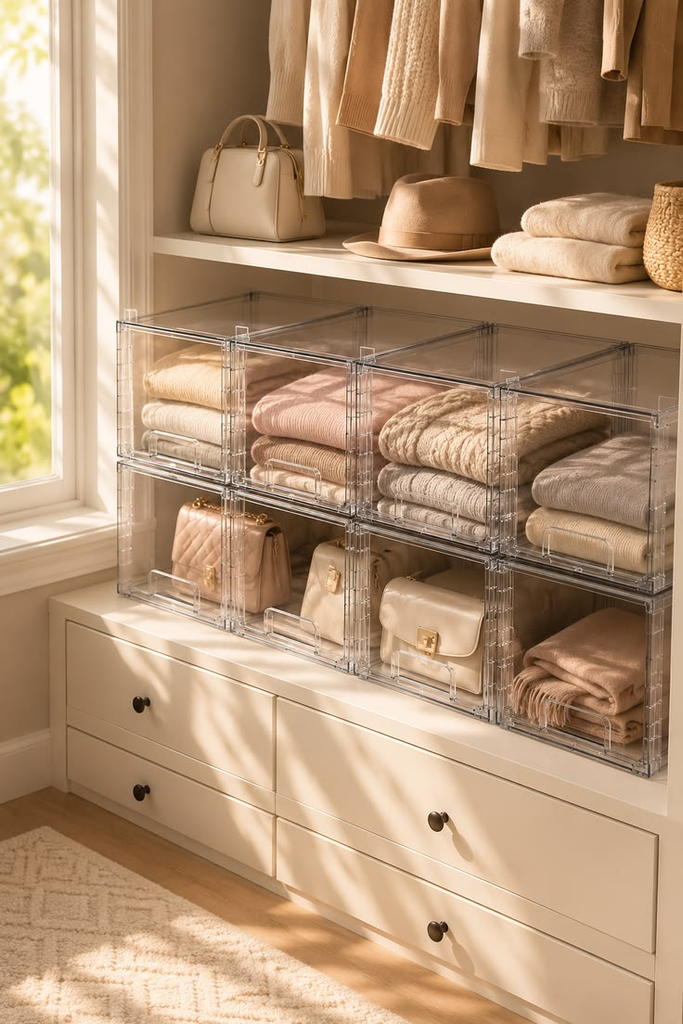
This is where format matters more than brand. In a small apartment closet, you’re usually choosing between simple stackable bins and modular drawer-style systems that slide into a frame.
Both work, but they solve different problems.
Stackable bins are cheaper and more flexible — you can rearrange them, take one to a different room, and they don’t require any assembly beyond opening the box.
The tradeoff is that to get to the bin on the bottom of a stack, you generally have to move everything above it, which gets old fast if it’s something you need often, like an off-season coat you didn’t expect to need in a surprise cold snap.
Modular drawer systems solve the access problem — each drawer slides independently — but they’re pricier, they take some assembly (usually 20 to 40 minutes depending on the size), and they’re less portable if you move apartments often, which, in your twenties and early thirties especially, tends to happen more than people plan for.
| Feature | Stackable Bins | Modular Drawer Systems |
|---|---|---|
| Upfront cost | Low ($8–$20 per bin) | Higher ($60–$150 per unit) |
| Access to bottom items | Poor — must unstack | Excellent — each drawer independent |
| Assembly required | None to minimal | 20–40 minutes typically |
| Portability if you move | High | Low to moderate |
| Best for | Seasonal items, rarely-used stuff | Daily-use items, clothes, accessories |
| Visual clutter if open shelving | Higher unless matched sets | Lower — built-in uniform look |
If your closet has open shelving rather than a rod-and-shelf setup, I’d lean modular.
If you’ve got a standard closet with a shelf up top for the stuff you touch twice a year, stackable bins on that top shelf are honestly the better value — you’re not accessing that stuff daily anyway, so the tradeoff barely matters.
Pro tip: Buy your stackable bins in one matched set rather than mixing sizes and brands over time. Mismatched stacks are less stable, and I’ve had a “Frankenstein stack” of three different bin brands topple onto me while reaching for a scarf — not a great way to start a Tuesday.
Kitchen and Pantry Bins: Where Clear Plastic Actually Pays for Itself
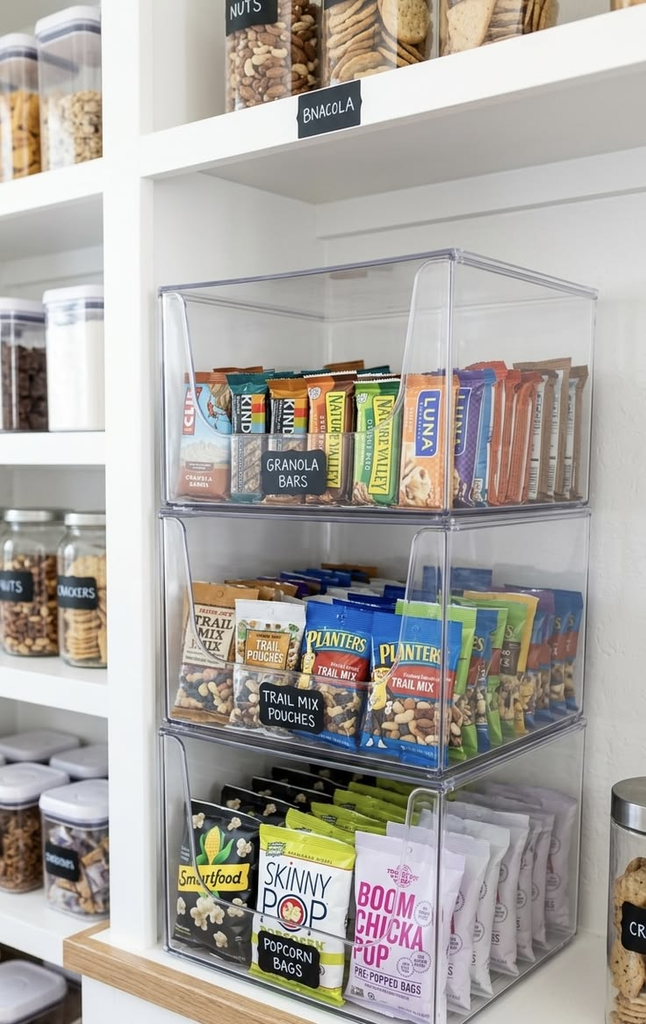
Kitchen storage in a small apartment is a different problem than closet storage, because you’re usually dealing with awkward cabinet depths and a fridge that’s smaller than what the bins were designed around.
The move that’s made the biggest difference for me here is bins with a low front lip — sometimes called “bin baskets” — that you can slide in and out of a deep cabinet without unloading everything in front of it first.
I resisted buying dedicated pantry bins for a long time because it felt like an unnecessary expense for something cardboard boxes already technically do.
Then I decanted my flour, sugar, and pasta into clear airtight bins after a pantry moth situation I genuinely don’t want to describe in detail, and I have not looked back.
Airtight matters more than I expected — it’s not just about pests, it’s that open bags of rice and pasta go stale noticeably faster in a kitchen that runs warm, which mine does thanks to a west-facing window.
Pro tip: Skip the “matching label” aesthetic bin sets unless you actually enjoy that kind of upkeep — I bought a 24-piece labeled set once, loved it for about six weeks, and then never refilled the labels correctly again. Plain clear bins with a dry-erase or masking-tape label you can actually update are more realistic for most people’s actual habits.
Bathroom Storage: Small Bins for a Genuinely Small Room
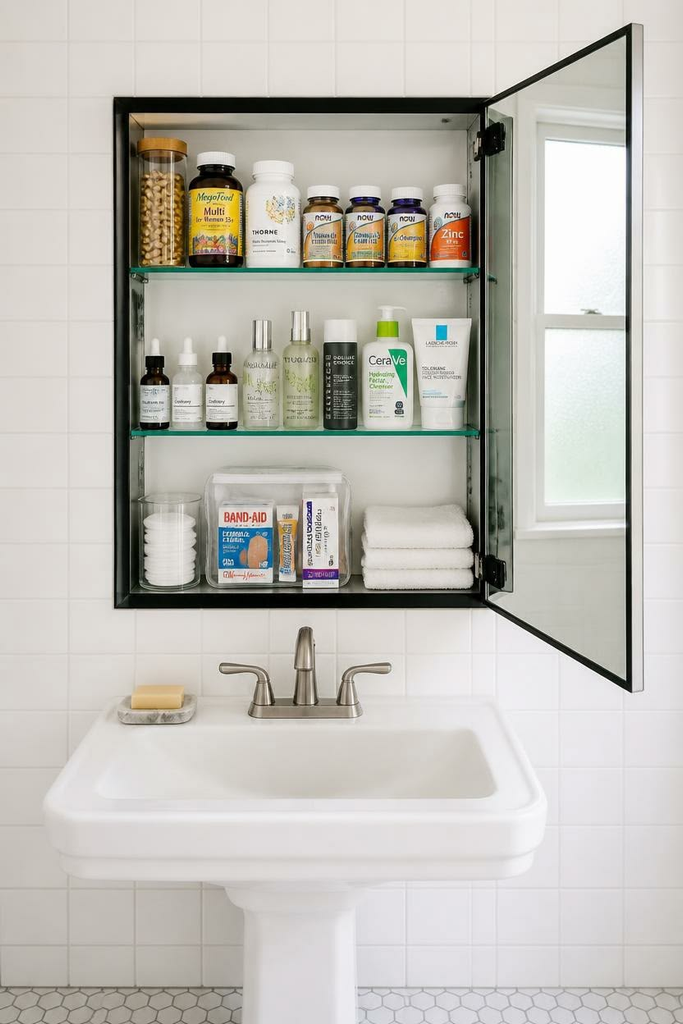
Bathroom cabinets in older apartment buildings especially tend to have odd, shallow shelving that a lot of standard bins simply don’t fit.
The trick that’s worked for me is measuring shelf depth first and shopping specifically for shallow bins — usually under 6 inches deep — rather than trying to make a standard bin work by turning it sideways, which I’ve tried and which mostly just makes things fall out.
Under-sink storage is its own category, because you’re working around pipes, which means a rectangular bin often wastes a surprising amount of usable space.
Bins designed specifically for under-sink use, with a U-shaped cutout or two narrower bins instead of one wide one, actually use that space instead of just sitting awkwardly around the plumbing.
Pro tip: Use a bin with a handle for anything you pull out daily — hair tools, first aid stuff — and reserve handle-less bins for things you’re not grabbing while half-asleep at 7 a.m. This sounds minor until you’re the person who’s dropped a full bin of bobby pins on a bathroom floor because it had no handle to grip with wet hands. Ask me how I know.
Living Room and Multi-Purpose Bins: When Storage Has to Double as Furniture
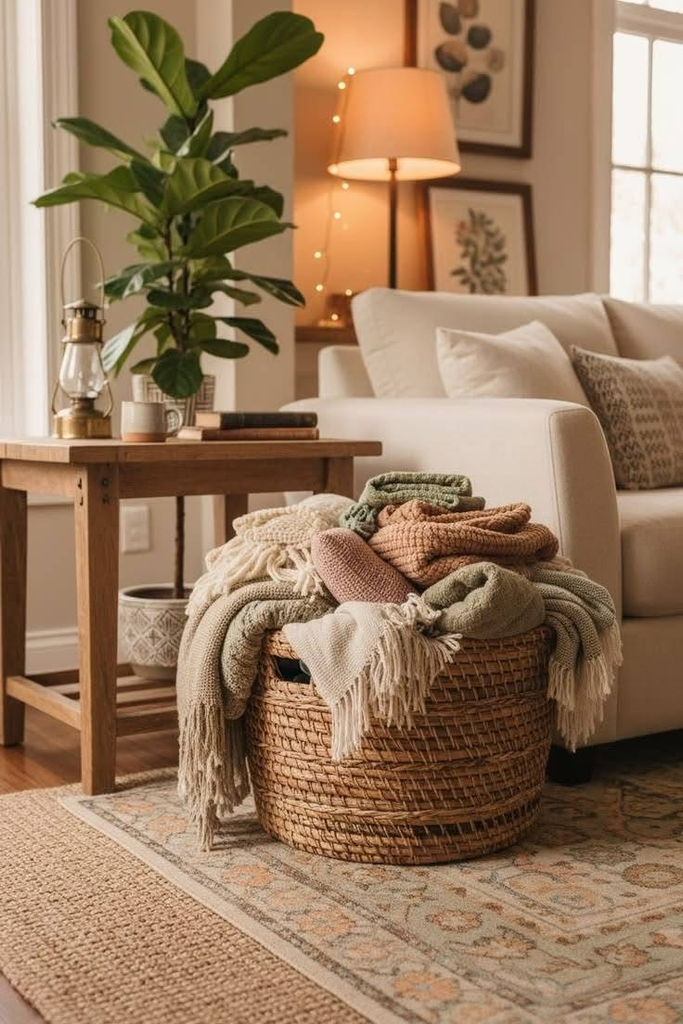
This is the category where design matters as much as function, because these bins are often visible and sometimes load-bearing in a literal sense.
My current setup includes two woven storage baskets that hold blankets and also serve as extra seating when I have people over — my apartment doesn’t have room for a couch and enough chairs, so this genuinely solves two problems with one purchase.
Fabric and woven bins are lighter and better-looking in a living space, but they’re a worse fit for anything heavy or anything you need weatherproofed, like holiday decorations that might sit near a window.
Rigid plastic bins with a lid are the better call for that, even if you have to get a bit more creative about hiding them — I keep mine in the bottom of a console table cabinet rather than out in the open.
Pro tip: If you’re using a bin as a coffee table or ottoman substitute, check the weight rating before you sit on it. I did not do this, and a cheap fabric ottoman-bin buckled under me within a month — mildly funny in retrospect, less funny with a guest over.
What I’d Actually Buy If I Were Starting Over
If I were setting up a small apartment from scratch today, I’d start with three things: a set of matched, low-profile bins with wheels for under the bed, one modular drawer system for the closet shelf I actually reach into daily, and a couple of airtight pantry bins for whatever dry goods go stale fastest in your kitchen.
Everything else — the bathroom bins, the living room baskets — I’d add once I actually knew where my specific pain points were, because guessing at that stuff before you’ve lived in a space for a few weeks is how you end up with bins that don’t fit anywhere, sitting in your living room, judging you.
The honest truth is that no bin fixes a small apartment by itself.
What actually helps is figuring out which of your specific corners keep getting cluttered and matching the bin to that exact problem, rather than buying a big matching set because it looked satisfying in a home organization video.
Buy less than you think you need at first. You can always add more once you know what you’re actually short on.

Leave a Reply