
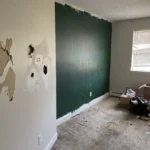
I painted my first rental bedroom a deep green on a Saturday afternoon, felt incredibly smug about it, and then spent the next two Sundays and about $140 trying to cover it back up with white before move-out.
The landlord still knocked $75 off my deposit for “visible roller marks.” That was the day I started taking the removable wallpaper vs paint question seriously, because the wrong answer isn’t just ugly, it’s expensive.
If you rent, you already know the frustrating part: you want the room to feel like yours, but you’re also on the hook for returning it in roughly the shape you got it.
Both peel and stick wallpaper and paint can transform a room, and both can go wrong in ways that cost you money. The trick is knowing which one fits your lease, your walls, and your tolerance for weekend projects.
I’ve now done both in three different apartments, and I’ve watched friends do both with wildly different results. So here’s how I’d actually decide, with real costs, real trade-offs, and the mistakes I’d tell you to skip.
Removable Wallpaper vs Paint: The Quick Answer
If your lease bans painting, or your landlord is the type who inspects with a flashlight, removable wallpaper is the safer bet for most renters. If your lease allows paint (ideally in writing) and you’re covering a large area on a budget, paint wins on cost and coverage.
That’s the short version. The longer version depends on four things: how much wall you’re covering, what condition your walls are in, how long you’re staying, and what your lease says. Let’s go through each.
Side-by-Side Comparison: Removable Wallpaper vs Paint
Here’s how the two stack up on the things renters actually care about. Costs are rough ranges based on what I’ve paid and what friends have reported; they’ll swing depending on brand and where you live.
| Factor | Removable (Peel and Stick) Wallpaper | Paint |
|---|---|---|
| Typical cost for one accent wall (about 10 x 8 ft) | $60-$250 depending on brand and pattern | $30-$80 for paint, primer, and supplies |
| Cost to cover a whole room | Often $300-$900+ | Often $60-$150 in supplies |
| Time to install | 3-6 hours for a wall with a pattern; longer with matching | 1 day with two coats, plus drying time |
| Time to undo | 1-2 hours to peel | A full day or more to repaint, sometimes two coats |
| Deposit risk | Lower if walls are in good shape; higher on flat or cheap paint | Higher if you can’t match the original color or finish |
| Works on textured walls | Often poorly; gaps and bubbles show | Yes |
| Hides wall flaws | Slightly, not dramatically | Better, especially with primer |
| Best for | Accent walls, small spaces, bold patterns, strict leases | Whole rooms, solid colors, long stays |
The row that surprises people is “time to undo.” Wallpaper looks like the higher-commitment option, but peeling it off in an hour is far easier than repainting a room to match a builder-beige you no longer have a can of.
How Much Does Removable Wallpaper Cost vs Paint?
This is where paint usually wins, so let’s be honest about it. A gallon of decent paint covers around 350-400 square feet, and even with primer, rollers, tape, and a tray, a whole bedroom might run you $100 or so.
Peel and stick wallpaper is sold in rolls that cover about 28-30 square feet each, and good-quality ones can run $30-$60 per roll. A full 12 x 12 room can need 10+ rolls, and suddenly you’re at several hundred dollars.
But cost isn’t just the sticker price. Add what it costs if something goes wrong:
- Paint gone wrong: if you have to repaint to the original color before moving out, you’re buying paint twice, plus primer if you went dark. If you can’t match it, a landlord may charge for a full repaint of the room. That can be several hundred dollars deducted from your security deposit.
- Wallpaper gone wrong: if it pulls paint off the wall during removal, you may be charged for patching and repainting that section. This is less common with higher-quality adhesives and well-painted walls, but it does happen.
My rule of thumb: for a single focal wall, wallpaper’s higher price is often worth the reversibility. For three or four walls, paint is almost always the smarter spend.
Check Your Lease Before You Buy Anything
I can’t stress this enough, and I say it as someone who skipped this step once. Before you pick between removable wallpaper and paint, read the decorating or alterations section of your lease. Some leases ban paint outright.
Some allow it with written permission. Some say nothing at all, which is not the same as permission.
Here’s what I do now: I email the landlord or property manager with something short and specific, like “I’d like to put up peel and stick wallpaper on one bedroom wall that I’ll fully remove at move-out.
Is that okay?” Getting a yes in writing is worth more than any amount of careful application.
And if a landlord says yes to paint, ask whether you’ll be required to return the walls to the original color. Many will say yes, and then you at least know what you’re signing up for.
Pro tip: Take dated photos of your walls before you touch them, including close-ups of any existing scuffs, nail holes, or peeling spots. If a deduction dispute ever comes up, those photos are the thing that actually protects your deposit.
Peel and Stick Wallpaper for Renters: When It’s the Better Choice
I’d pick removable wallpaper in these situations:
Your Lease Says No Paint
This one is obvious, but worth saying plainly. If paint is banned, wallpaper is the cleanest workaround, as long as you confirm it’s allowed too. Some leases that ban painting also ban anything adhered to the walls, so ask.
You Want a Bold Pattern or Texture
Paint can do color well, but it can’t give you a botanical print, grasscloth look, or geometric pattern without serious skill and a lot of tape. My friend Dana wanted a mural-style wall in her one-bedroom and priced out hiring a painter at around $400.
She bought a peel and stick mural for about $120 and did it in an afternoon. It’s the one situation where I think wallpaper is clearly the better tool.
You’re Only Covering a Small Area
Behind a bed, in an entryway, inside a bookshelf, or in a narrow bathroom nook. Small, high-impact spots are where wallpaper’s price per roll doesn’t hurt and the visual payoff is big.
You Might Move Within a Year
If you’re not sure you’ll stay, removable wallpaper means you can take it down in an hour and potentially reuse it in your next place, assuming you removed it carefully and it’s not creased. Paint stays behind.
When Paint Is the Better Choice for Renters
I’d go with paint in these cases:
You’re Covering a Lot of Wall
Cost per square foot is where paint shines. For a whole room, paint is far cheaper and a lot faster than hanging a dozen rolls of wallpaper with pattern matching.
Your Walls Are Textured
This is a big one that many wallpaper posts skip. Most peel and stick wallpaper is designed for smooth, properly cured walls.
On orange-peel or knockdown texture, the adhesive has less surface to grab and you tend to see bubbles, gaps, and curling edges within weeks. If your walls are textured, paint is usually the more reliable option, or you’ll want a wallpaper specifically rated for textured surfaces (and even then, test it first).
Your Landlord Is Fine With It
Some landlords actually prefer a tenant who paints a neutral color, because it means less work between tenants. If you get written approval and plan to use a neutral shade, painting can be a low-risk, low-cost upgrade.
You Want to Cover Existing Flaws
Paint, especially with a good primer, hides scuffs, stains, and uneven patches much better than wallpaper. Wallpaper can show the bumps underneath, particularly lighter or glossy styles.
The Hidden Risks Nobody Warns You About
Both options have gotchas, and they’re not always obvious until it’s too late.
Wallpaper Risks
- Fresh or cheap paint underneath: Walls painted within the past few weeks haven’t fully cured, and flat or low-quality builder paint can peel off with the wallpaper when you remove it. If you’re unsure, wait several weeks after any painting, and always test a small hidden area first.
- Heat and humidity: Bathrooms, kitchens near the stove, and rooms with direct sun can weaken adhesive over time.
- I tried a peel and stick in a small bathroom with a shower and saw the corners lifting after about three weeks.
- Removal damage: Pulling quickly or at a sharp angle is how paint comes off. Slow, low-angle peeling, sometimes with a hairdryer on low heat to soften the adhesive, usually helps.
Paint Risks
- Color matching: If you paint it and your lease requires you to return it to the original color, you need the exact shade and finish. Landlords are surprisingly specific about this. Ask for the paint name and sheen before you start.
- Poor coverage: Going over a dark color with a light one often takes primer plus two coats. Skimp, and you’ll see ghosting.
- Fumes and drying time: Use low-VOC paint in small apartments and keep windows open. Paint smell in a studio is not something you want to live with for days.
Pro tip: If you’re choosing paint, ask your landlord if they’ll provide leftover paint from the last repaint. Many keep a can for touch-ups, and having the exact formula can save you a lot of deposit-related stress.
How to Apply Removable Wallpaper So It Actually Comes Off Cleanly
If you go the wallpaper route, a bit of prep makes the difference between a nice weekend project and a ruined wall.
- Clean the wall. Wipe with a damp cloth and let it dry fully. Dust and grease are the main reasons wallpaper fails.
- Test a small patch. Stick a small piece in an inconspicuous spot, leave it for a few days, then peel it. If paint comes off, stop and rethink.
- Start from the top. Use a level or plumb line for your first strip, then work down slowly with a smoothing tool.
- Work in sections. Peel back a bit of the backing, press, smooth outward, and keep going. Rushing is how you get bubbles.
- Trim carefully. Use a sharp craft blade and a straight edge. Dull blades tear the paper.
One thing I wish someone had told me: order an extra roll. Pattern matching eats more material than the listing suggests, and running out halfway through is the worst feeling.
How to Paint a Rental Without Losing Your Deposit
If paint is your pick, here’s how I’d approach it:
- Get written permission and find out if you must repaint before moving out.
- Choose a neutral or easy-to-cover color if you can. Soft whites, warm greiges, and light neutrals are forgiving.
- Use primer if you’re covering a darker shade or stains.
- Keep leftover paint labeled with the room and date. It’s useful for touch-ups later.
- Plan your repaint at move-out early. Don’t leave it for the last night.
A slightly bolder idea that has worked well for people I know: paint an accent wall in a mid-tone color and keep the rest neutral. That way if you do need to restore it, you’re only redoing one wall.
Small Apartment and Dorm Considerations
In a small space, the decision gets more interesting. In a studio, a dark painted wall can make the room feel smaller if you don’t have much natural light, while a patterned wallpaper on one wall can add depth.
In a dorm, where rules are often strict and walls are cinderblock, many schools restrict both. Check your housing rules first, and consider alternatives like large fabric wall hangings or removable art frames.
So Which One Should You Choose?
Here’s the honest breakdown I’d give a friend.
- Choose removable wallpaper if you’re covering one wall or less, your lease bans paint, your walls are smooth and well-painted, and you want a pattern or texture that paint can’t deliver.
- Choose paint if you’re covering a whole room, you have written permission, your walls are textured, or you want the cheapest option and are willing to repaint at move-out.
- Choose neither if your landlord is strict, your walls are in rough shape, or you’re not staying long enough to justify the effort. Plug-in lighting, big art, and a good rug can do more than you’d think.
What I’d Do If I Were Starting Over
If I were moving into a new rental tomorrow, I’d take photos first, email the landlord about my plan, and test one small piece of peel and stick wallpaper in a closet or behind a door. If it peeled off cleanly after a few days, I’d put a single wallpapered accent wall behind my bed and leave the rest of the room alone. It’s the least risky way I’ve found to get a room that feels like mine without a deposit headache.
The green bedroom taught me an expensive lesson: the best choice isn’t the one that looks best on Pinterest, it’s the one you can undo without drama.
For most renters, that makes the removable wallpaper vs paint decision less about style and more about how reversible you need your walls to be.

Leave a Reply