
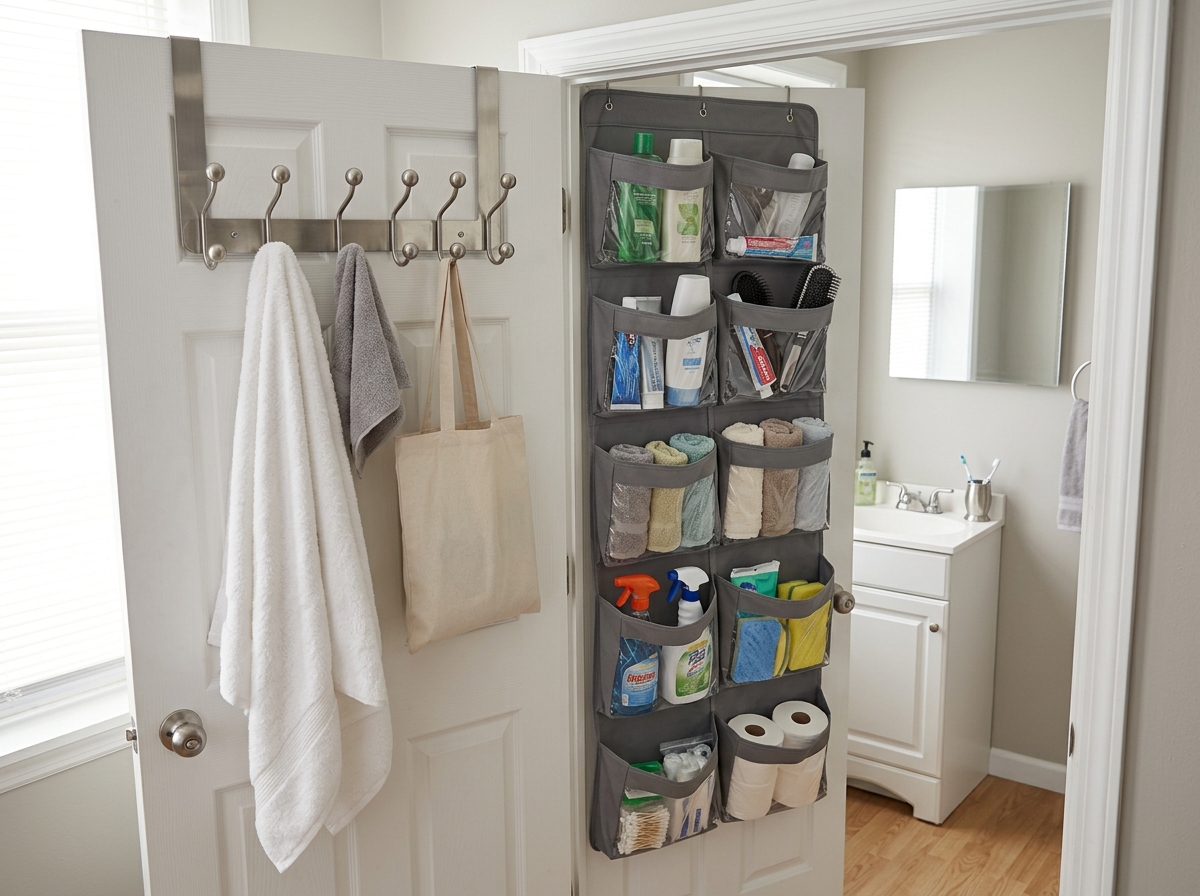
I used to have four different over-the-door organizers crammed onto one closet door because I kept buying a new one every time the last one sagged, ripped, or just quietly stopped working after two months.
My studio is 480 square feet, the coat closet is maybe 18 inches deep, and for a solid year that closet door was doing more organizational work than every drawer in my apartment combined.
So I’ve bought a lot of these — some great, most mediocre, one genuinely dangerous (more on that shoe rack in a minute).
If you’re living in a small apartment, a dorm, or a rental where you can’t touch the walls, over-the-door storage is one of the only real wins you get. It uses vertical space you’re already paying for and it’s fully renter-friendly.
But not all of them are built the same, and the difference between a $14 organizer and a $40 one usually isn’t the price — it’s whether it’ll still be holding your stuff in six months.
This is everything I’ve learned buying, using, and eventually retiring these things across three apartments.
Why Over-the-Door Storage Actually Matters in a Small Space
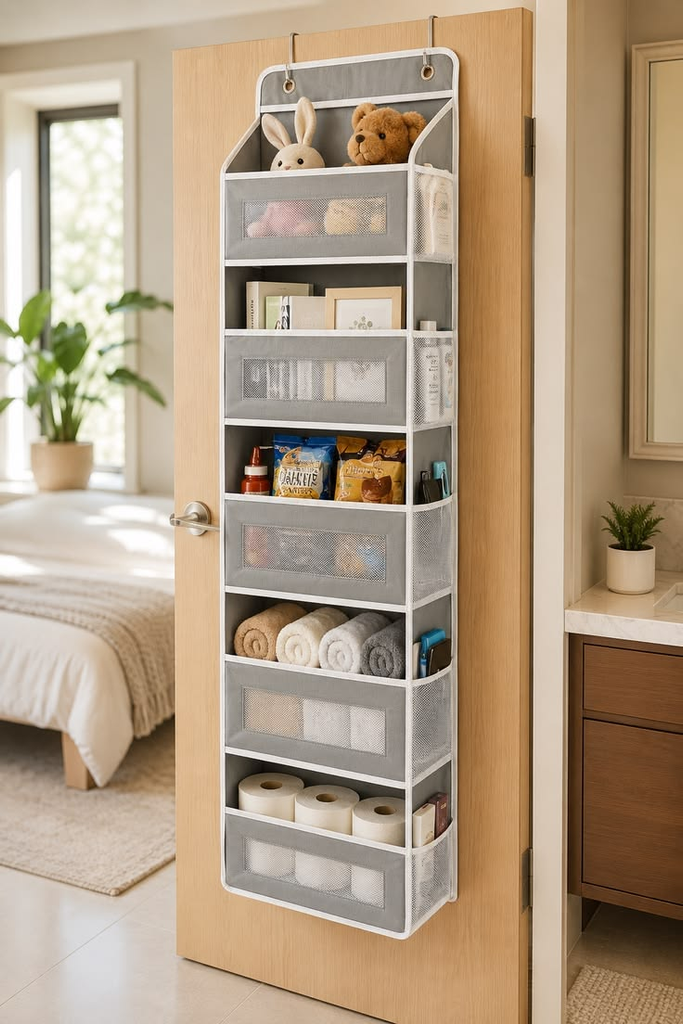
Here’s the thing about small-space organization that nobody says out loud: you’re not actually short on storage, you’re short on floor storage.
Every square foot of floor space in a small apartment is doing double or triple duty — it’s your walking path, your yoga space, your “where the roommate’s Amazon boxes live for three days” space.
Vertical space, especially the back of a door, is almost always empty.
An 18-inch-deep coat closet with an over-the-door organizer on it holds roughly the same amount of stuff as a much bigger closet without one.
That’s not an exaggeration — I measured it once out of boredom. The shelf space I gained on the back of that door was close to two extra linear feet of storage I wasn’t using before.
Pro tip: Measure your actual door thickness before you buy anything, not just the door height. Most organizers are designed for standard interior doors around 1.375 inches thick. If you’ve got a thicker fire door (common in older apartment buildings) or a hollow-core dorm door, the hook depth matters more than people think — I learned this the hard way in my first apartment when a hook that was too shallow let the whole thing slide down every time I opened the door.
The Over-Door Shoe Rack: Skip the Clear Pocket Kind
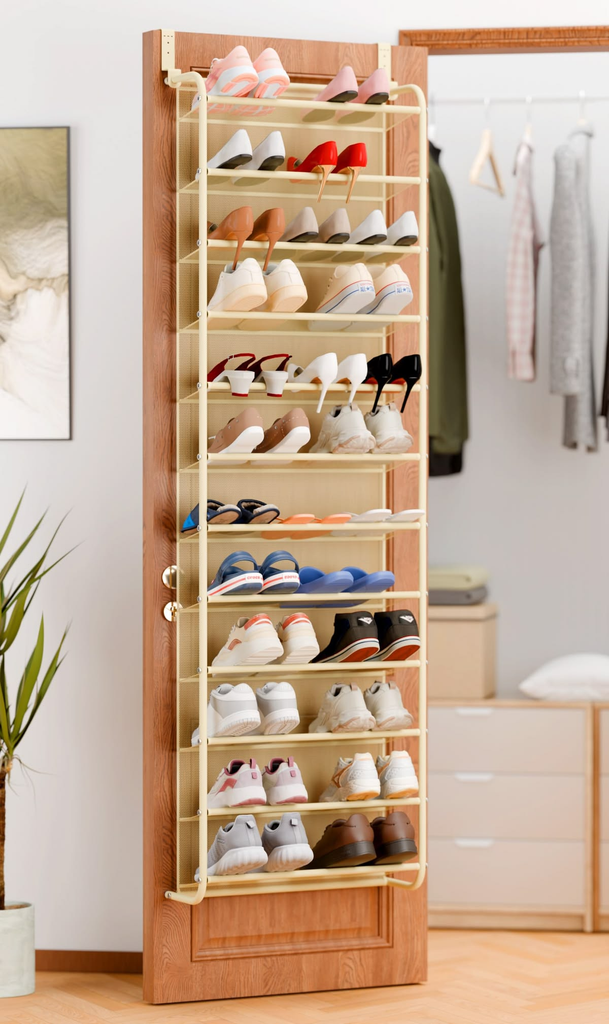
Everyone’s first over-the-door purchase is a shoe organizer, and for good reason — shoes are the worst offenders for floor clutter in a small entryway. But there’s a real difference between the styles, and I bought the wrong one first.
I started with the clear vinyl pocket kind, the ones that look like a giant hanging shoe pouch with 24 individual slots.
It held shoes fine for about three weeks, and then the weight of everything pulled the top grommets clean through the vinyl and the whole thing came down at 7am while I was getting ready for work. Not a great way to start a Tuesday.
What actually held up was a wire-frame rack style with individual shoe shelves, the kind with a steel frame and vinyl-coated wire shelving rather than fabric pockets doing all the load-bearing work. It’s heavier and less “cute,” but it’s held up for two years now with zero sagging.
| Type | Best for | Weight limit (avg) | Watch out for |
|---|---|---|---|
| Clear vinyl pocket organizer | Light shoes, flats, sandals | Low — grommets fail fast | Grommet tearing under real weight |
| Wire-frame shelf rack | Sneakers, boots, everyday rotation | High — steel frame | Bulkier, can hit door trim on swing doors |
| Canvas/fabric pocket organizer | Slippers, seasonal rotation only | Low-medium | Fabric stretches and sags over time |
| Mesh basket-style hanging rack | Mixed shoe types, quick access | Medium-high | Baskets can swing and hit the door when it closes |
Pro tip: If you’re renting and worried about door damage, look specifically for organizers with over-the-door hooks rated for the door thickness and a stabilizing strap or bracket that anchors to the bottom hinge or the door frame — this is the single biggest factor in whether it stays put versus sliding down over time, and almost nobody mentions it in the product photos.
Pantry and Kitchen Door Organizers: The Most Underrated Small-Space Upgrade
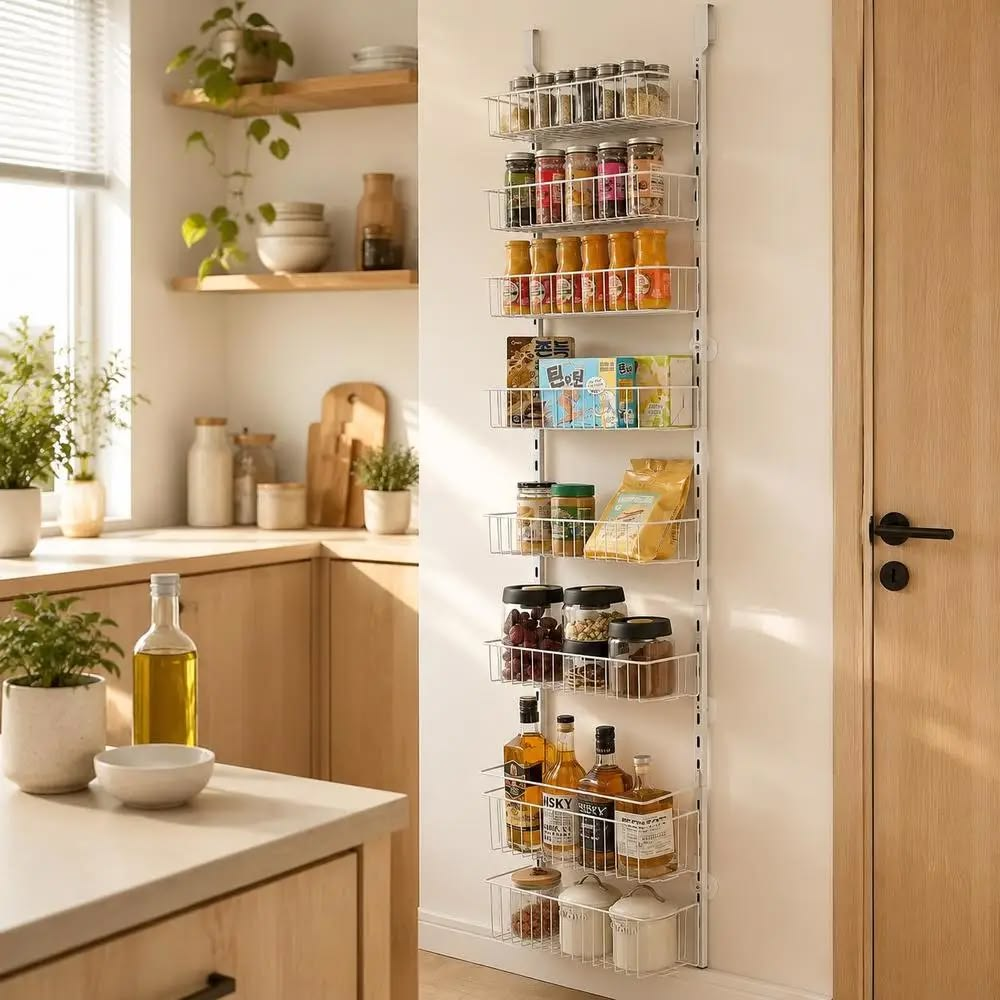
If you’ve got a tiny kitchen — and if you’re in a small apartment, you almost definitely do — the back of your pantry door or even a cabinet door is genuinely underused real estate.
My friend Priya has a New York kitchen so small her stove is next to her bathroom door (a whole separate conversation), and the thing that made the biggest difference for her wasn’t a shelf or a cart, it was a tiered wire door rack for spices and canned goods on the inside of her one cabinet door.
The trick with kitchen door organizers is depth. A lot of the cheap ones are shallow wire baskets meant for small stuff, and if you try to cram taller bottles or bulkier cans in there, they won’t clear the shelf in front of them when the door closes.
Measure the gap between your door and your first interior shelf before buying — I skipped this step once and ended up with a rack I could only use if I left the cabinet door slightly ajar, which defeats the entire point.
Look for adjustable-tier racks specifically, since they let you reconfigure the shelf heights as your storage needs change — spice jars need less clearance than a stack of canned tomatoes, and a fixed-shelf rack won’t let you mix both.
Pro tip: Command-strip-mounted door racks exist and they’re tempting for renters, but I wouldn’t trust them with anything glass or anything you can’t afford to lose. I put one up in my first apartment for canned goods and it held for about four months before the humidity from cooking weakened the adhesive and it came down overnight. Stick to hook-style, hardware-free organizers that hang over the door itself rather than adhering to it if you’re dealing with a kitchen door specifically — steam and heat are rough on adhesive over time.
Bathroom Door Organizers for Dorms and Tiny Apartments
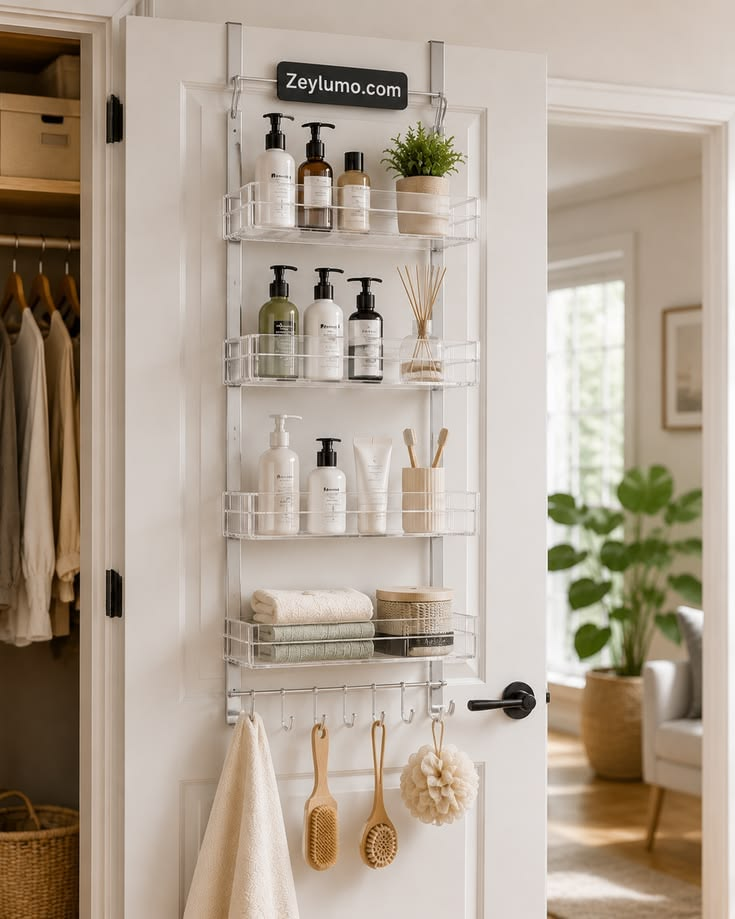
Dorm bathrooms and small apartment bathrooms have basically the same problem: almost no counter space and usually no linen closet. The back of the bathroom door is where a lot of that storage has to live instead.
For towels specifically, skip the small hook-style organizers and go for a rack with actual bars rather than hooks — hooks bunch towels up into a wad that never actually dries, which in a humid bathroom means mildew smell within a week.
A friend of mine in her dorm sophomore year swore by a slim towel bar organizer that hung on the inside of her dorm bathroom door and held four towels flat enough to actually dry between showers, which solved a problem she didn’t even realize a hook rack was causing.
For toiletries and hair tools, a clear pocket organizer works better here than it did for shoes, mostly because the weight per item is so much lower — a straightener, a few bottles of product, some skincare.
Just don’t hang anything with liquid contents pointed the wrong way, because pocket organizers tend to tip items forward when the door swings, and I’ve had a bottle of leave-in conditioner empty itself into the bottom pocket more than once.
Pro tip: If your bathroom door swings inward toward a small space (common in older apartments and most dorms), measure the swing clearance with the organizer’s full depth before installing — a rack that’s 4 inches deep can turn a door that used to open all the way into one that only opens 60%, which in a small bathroom is genuinely annoying every single day.
What to Actually Buy: Cost Tiers
Here’s roughly what you’re looking at by quality tier, based on what I’ve bought and what’s held up:
| Price range | What you get | Worth it? |
|---|---|---|
| $10–15 | Basic wire or fabric organizer, thin gauge, minimal weight rating | Fine for light, low-stakes use (extra bags, light linens) |
| $18–28 | Mid-tier steel-frame or reinforced canvas, moderate weight rating | The sweet spot for most shoe and pantry organizers |
| $30–45 | Heavy-gauge steel, adjustable tiers, stabilizing brackets | Worth it for anything holding real weight long-term |
| $45+ | Branded/designer versions, often the same internals as the $30 tier | Usually not worth the markup unless you specifically want the look |
I’ve genuinely never found the $45+ tier to outperform a well-reviewed $30 organizer in actual function — the extra money there is almost always aesthetic, not structural.
What I’d Buy First If I Was Starting Over
If I were furnishing a small space from scratch again, I’d start with one wire-frame shoe rack for the entry closet and one adjustable-tier kitchen door organizer, in that order — those two solved more daily friction for me than anything else on this list, including furniture I spent way more money on.
The bathroom towel bar would be next, but only if the space genuinely had nowhere else for towels to go.
The real lesson across all of this: the flimsy version of any of these might work for a month, but it’s rarely worth the second purchase you’ll end up making when it fails. Buy the mid-tier version once instead of the cheap version twice.

Leave a Reply