
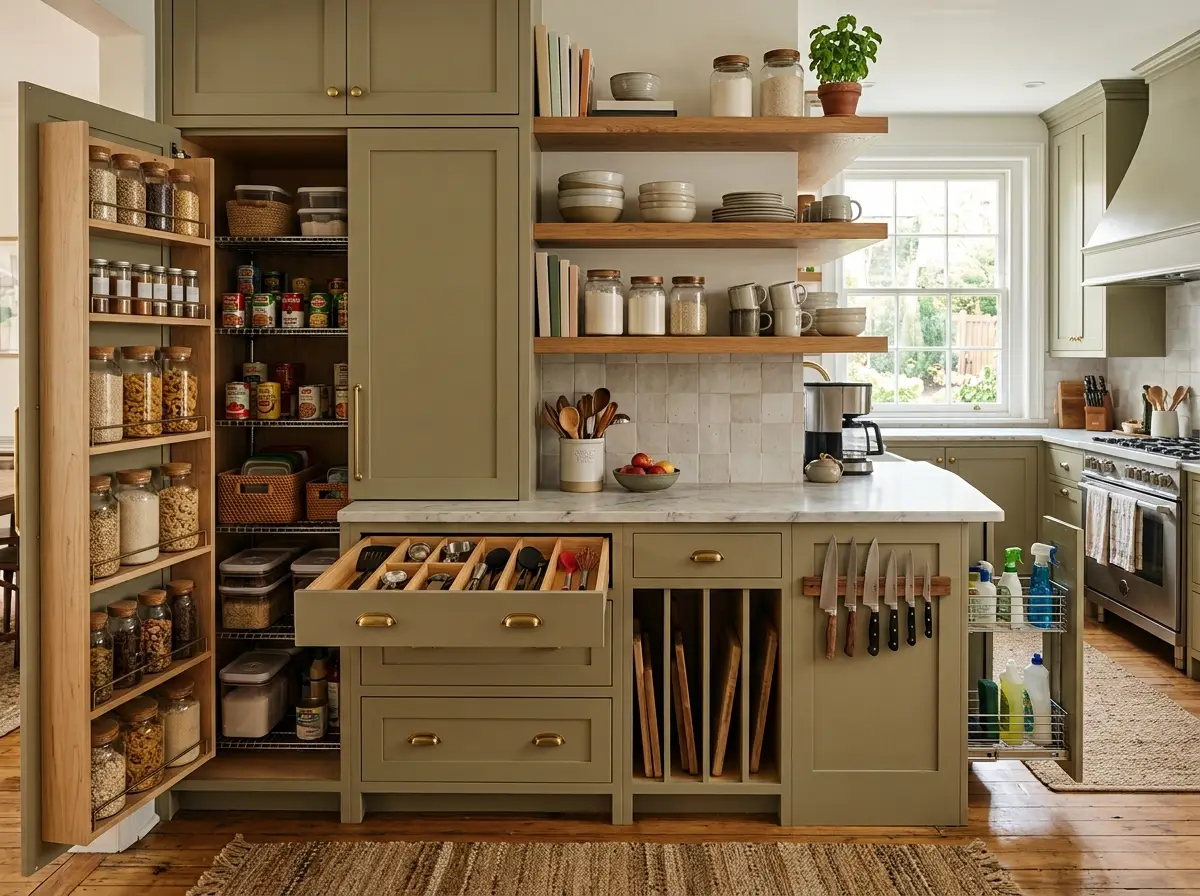
I lived in a 62-square-foot galley kitchen for three years before I finally admitted the problem wasn’t my “stuff,” it was my storage. I had exactly four upper cabinets, no pantry, and a single drawer that stuck every time it rained (still don’t know why humidity affected a metal drawer track, but it did).
I registered for a stand mixer at my wedding and it lived in its box under my bed for eight months because there was nowhere else for it to go.
If you’re in a tiny apartment kitchen right now, you already know the specific flavor of stress I’m talking about — the cutting board balanced on top of the microwave, the Tupperware avalanche every time you open a cabinet, the fact that you own a garlic press you’ve seen exactly once since you moved in.
Small-kitchen storage isn’t really about buying more bins. It’s about using vertical space you’re currently ignoring, picking organizers sized for your actual kitchen instead of a Pinterest kitchen, and accepting that some kitchen tools just don’t belong in a 300-square-foot apartment.
I pulled together 35 ideas below, organized by where they go — cabinets, countertops, walls, drawers, pantry-adjacent spots, and a few odd-corner tricks — because “storage ideas” as one giant scrolling list isn’t actually useful when you’re standing in your kitchen trying to solve one specific problem.
Skip to the section that matches what’s driving you crazy right now.
Quick Jump
- Cabinet & shelf storage (ideas 1–8)
- Drawer organization (ideas 9–14)
- Wall-mounted storage (ideas 15–21)
- Countertop-clearing tricks (ideas 22–26)
- No-pantry pantry solutions (ideas 27–31)
- Odd corners & renter-friendly fixes (ideas 32–35)
Cabinet & Shelf Storage
1. Stackable shelf risers before anything else
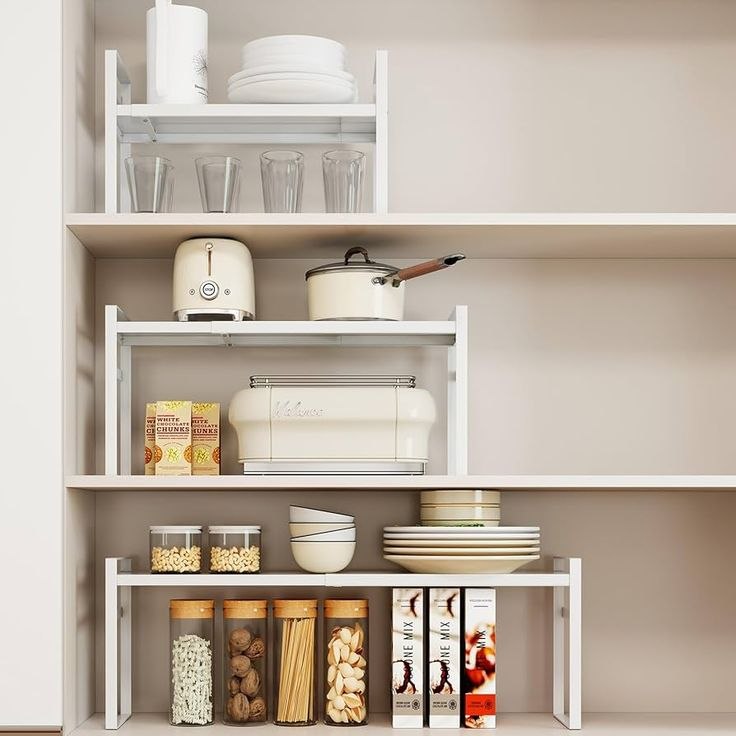
If you do nothing else on this list, do this one. Most apartment cabinets have one giant dead zone of vertical air above your plates and below the next shelf.
A $12 wire or bamboo riser turns that wasted space into a second shelf. I doubled my usable cabinet space this way before I bought a single organizer.
Pro tip: Measure the interior height of your cabinet before buying — a lot of cheap risers are a fixed 5 inches, which is too short for stacking mugs and too tall to be useful for saucers. Adjustable metal ones cost a few dollars more and are worth it.
2. Lazy Susans for corner cabinets and awkward depth
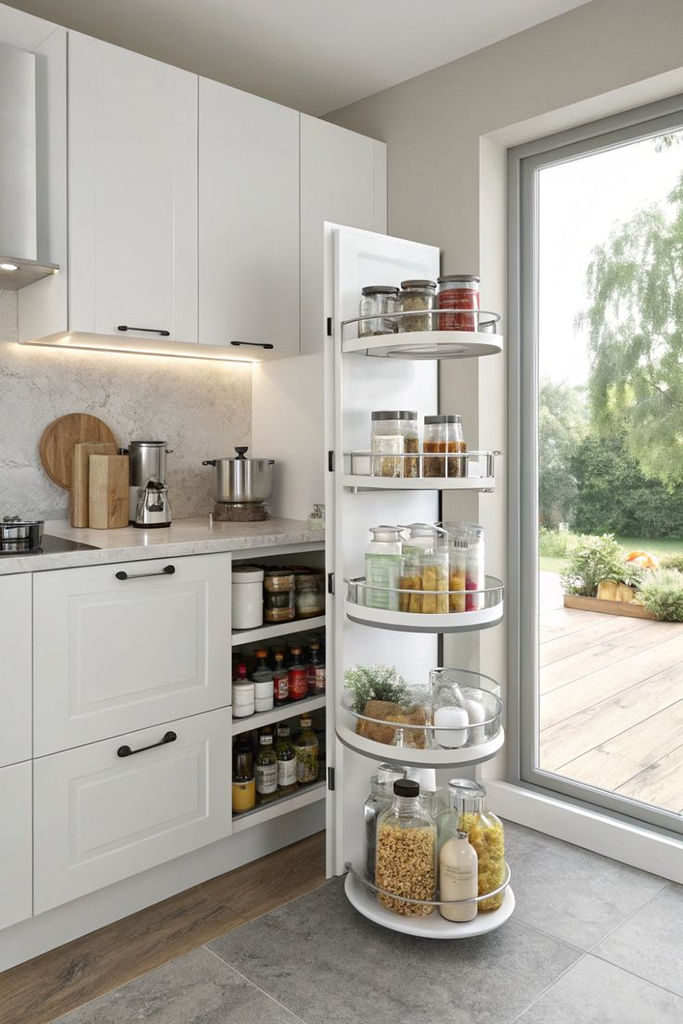
Corner cabinets in small apartments are almost always poorly designed — deep, dark, and impossible to reach into without pulling three other things out first.
A turntable fixes that instantly. I use one for oils, vinegars, and sauces; my friend Priya uses a two-tier version for spice jars in a cabinet that has zero shelving of its own.
3. Under-shelf wire baskets
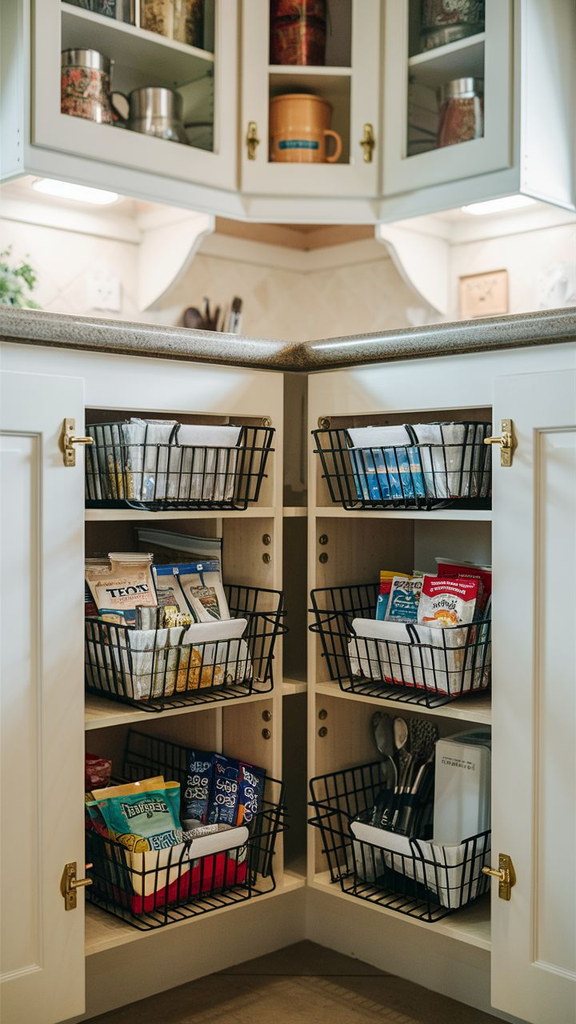
These clip onto the underside of an existing shelf and give you a second layer without removing anything permanently — huge for rentals.
Good for produce that doesn’t need the fridge (onions, garlic, potatoes) or for corralling snack bags that otherwise slide around loose.
4. Door-mounted storage racks
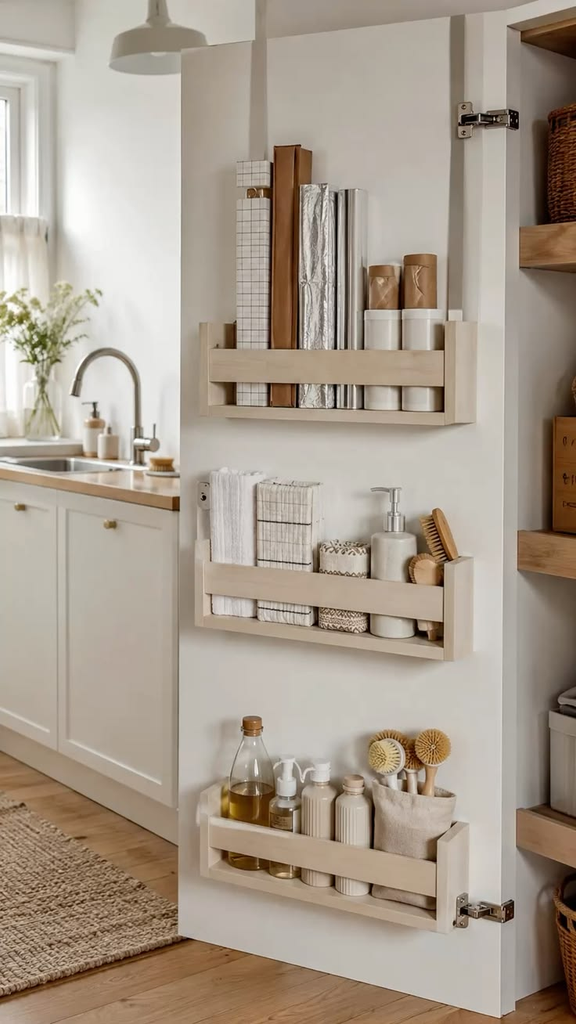
The inside of your cabinet doors is free real estate almost nobody uses. Over-the-door racks (the kind that hook over the door, no drilling) work well for cutting boards, foil and plastic wrap boxes, or spray bottles.
I’ll be honest with you: I tried an over-the-door version rated for canned goods and it ripped out of the door hinge within a week under the weight — read the weight limit before you load it up with anything heavier than lightweight boxes.
5. Clear bins for cabinet zoning
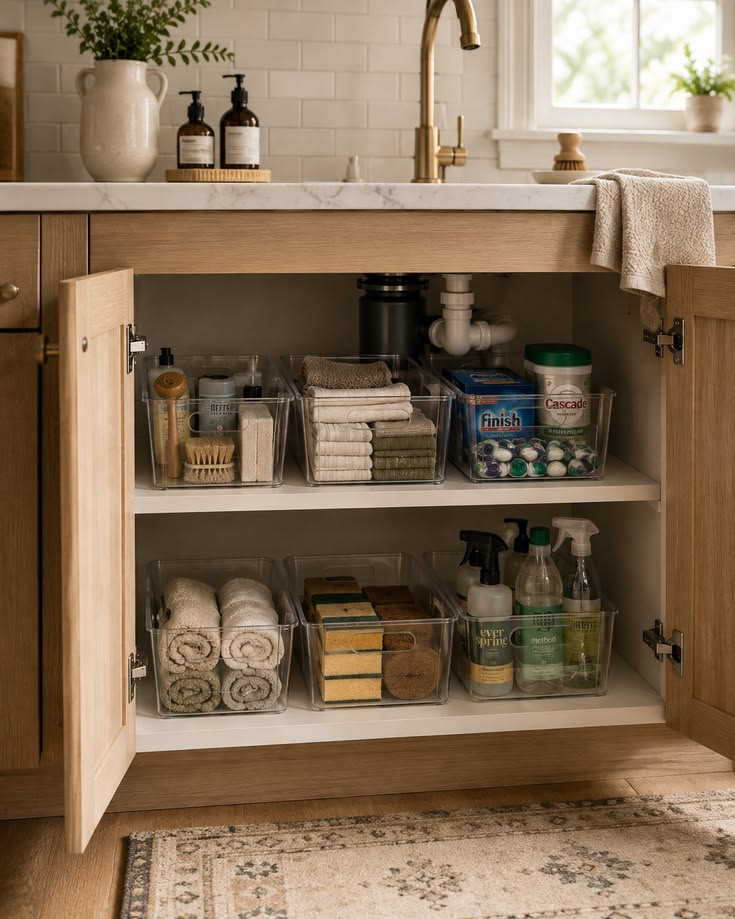
Grouping loose items into labeled clear bins — baking supplies, snacks, canned goods — means you pull one bin instead of digging through a shelf. It also makes it obvious when you’re actually out of something instead of it hiding behind three other boxes.
6. Vertical dividers for bakeware
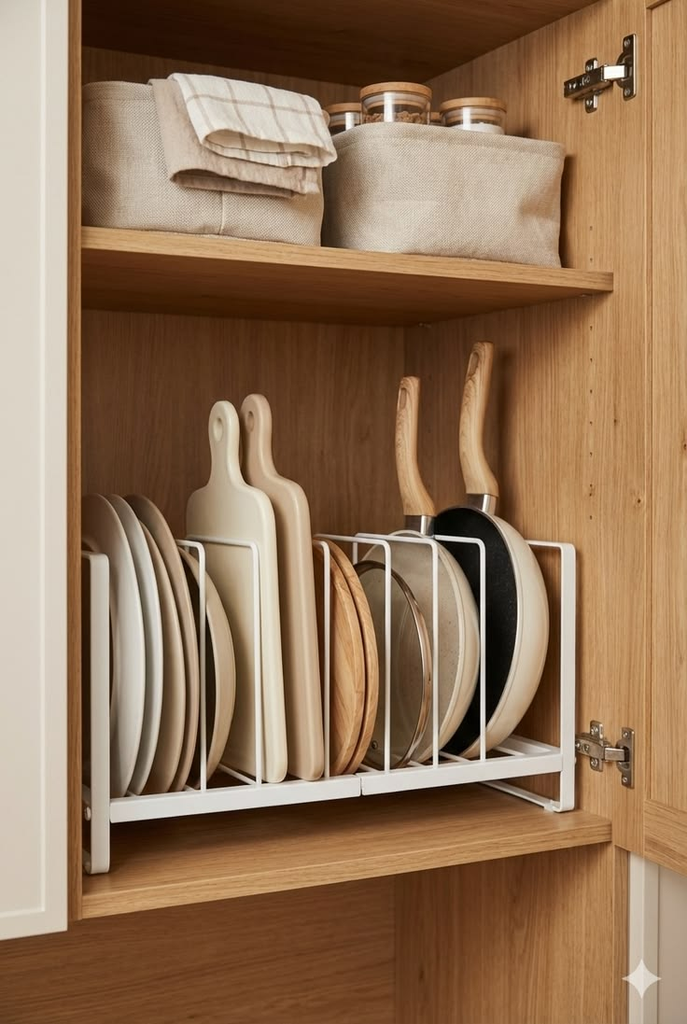
Sheet pans, cutting boards, and muffin tins stack into an unusable pile if they’re just laid flat. A tension-rod divider or a cheap file-organizer-style rack turns them into a row you can flip through like records.
7. Command hooks inside cabinet doors for measuring cups and spoons
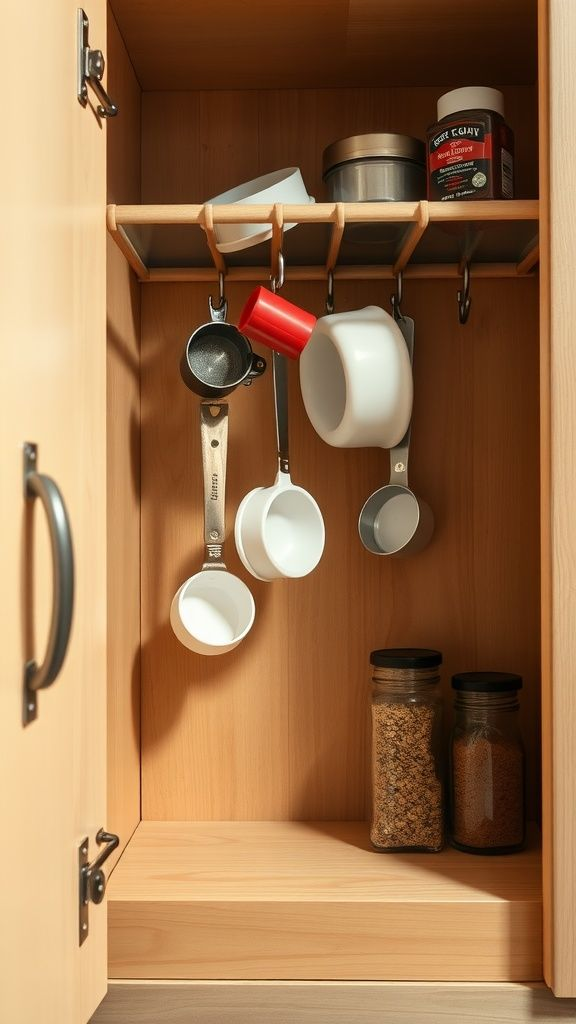
Small, but it adds up. Hanging measuring spoons and cups on the inside of a cabinet door frees a drawer entirely.
8. Open shelving — but only if you’re actually tidy
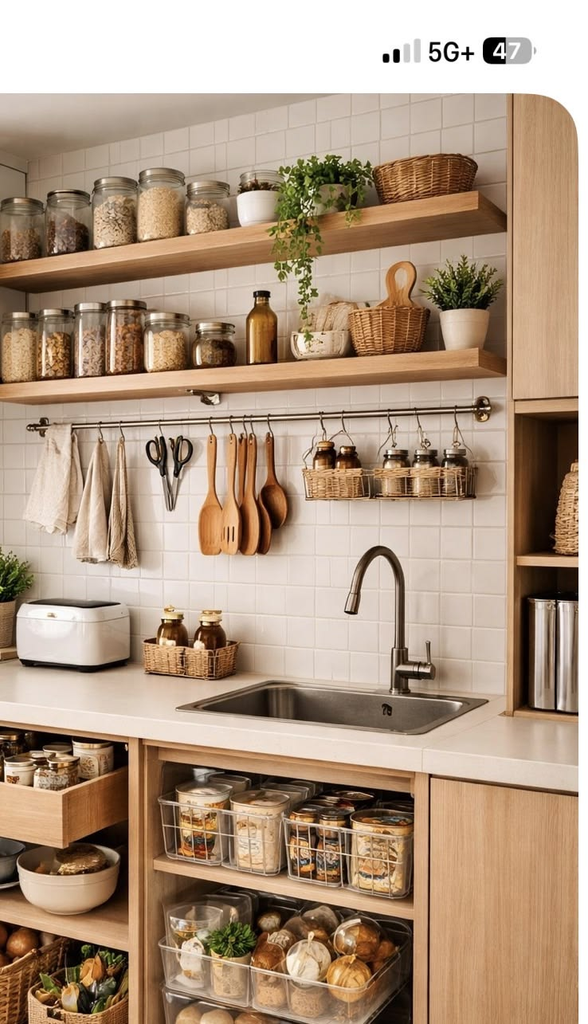
Open shelves look incredible in photos and can genuinely add storage in a kitchen with no upper cabinets at all. But they only work if what’s on them is intentional.
My rule: open shelves get the pretty stuff (glassware, cookbooks, a plant), closed storage gets everything else. Open shelves stacked with mismatched Tupperware just look like clutter with better lighting.
Drawer Organization
9. Expandable drawer dividers
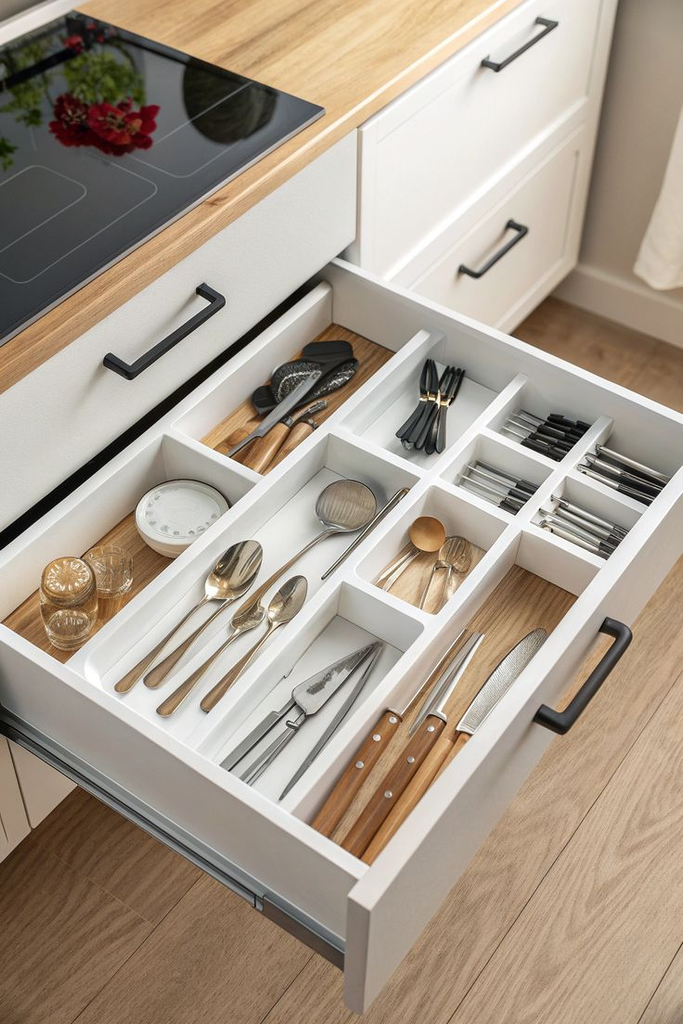
Fixed-size drawer organizers rarely fit apartment kitchen drawers, which come in every random dimension imaginable. Expandable/adjustable dividers solve that — you set the width to match your actual drawer instead of hoping a standard size fits.
10. A dedicated “junk drawer” — on purpose, not by accident
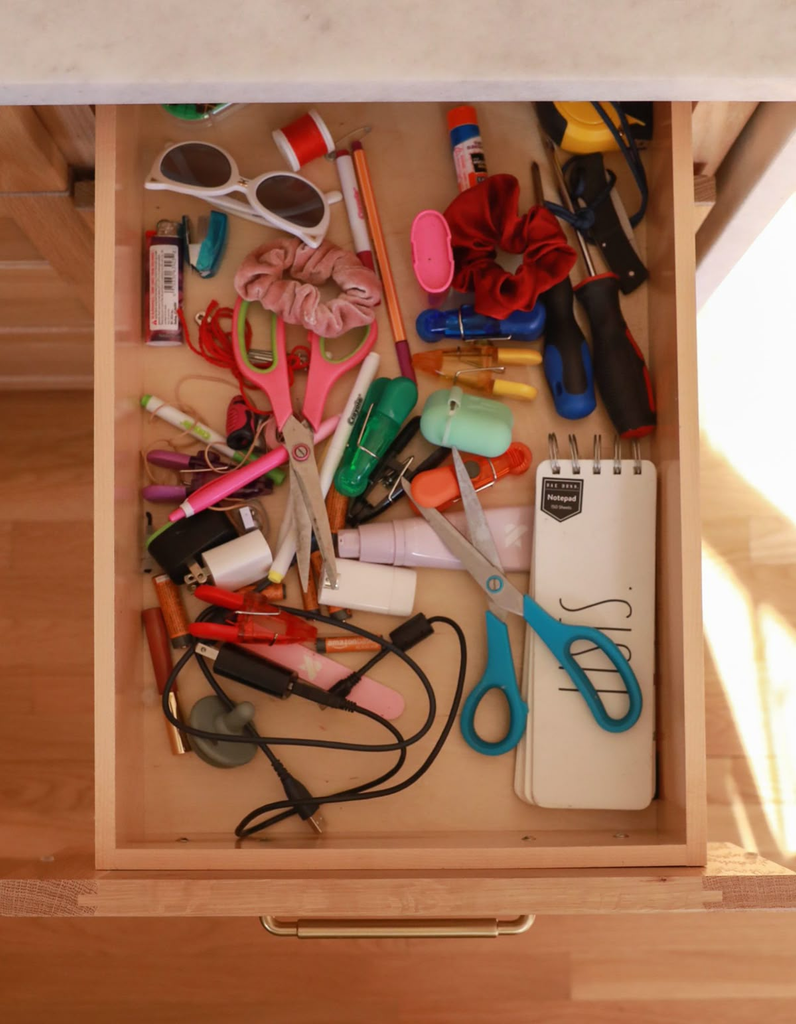
Every kitchen ends up with one drawer of takeout menus, twist ties, and dead batteries. Fighting that is a losing battle. Instead, designate one drawer for it on purpose and add a small tray so it stays contained instead of spreading.
11. Deep drawer storage for pots and pans
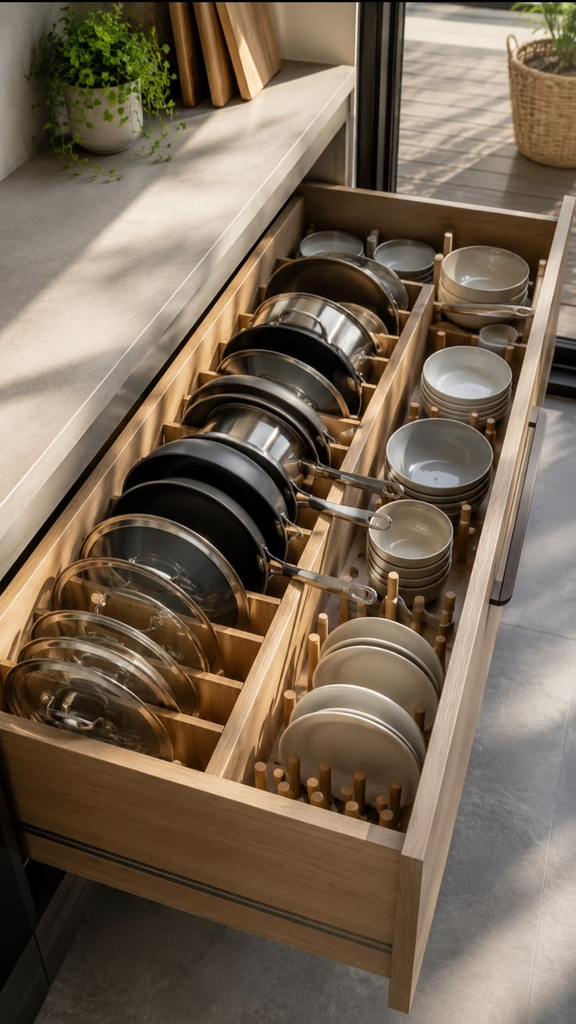
If you have even one deep drawer, pots and pans belong there instead of a cabinet — you can see and grab exactly what you need without unstacking three pans to get to the bottom one.
A drawer-specific pot organizer (the kind with adjustable pegs) keeps them from sliding into a metal pile every time you open it.
12. Under-liner shelf paper that actually grips
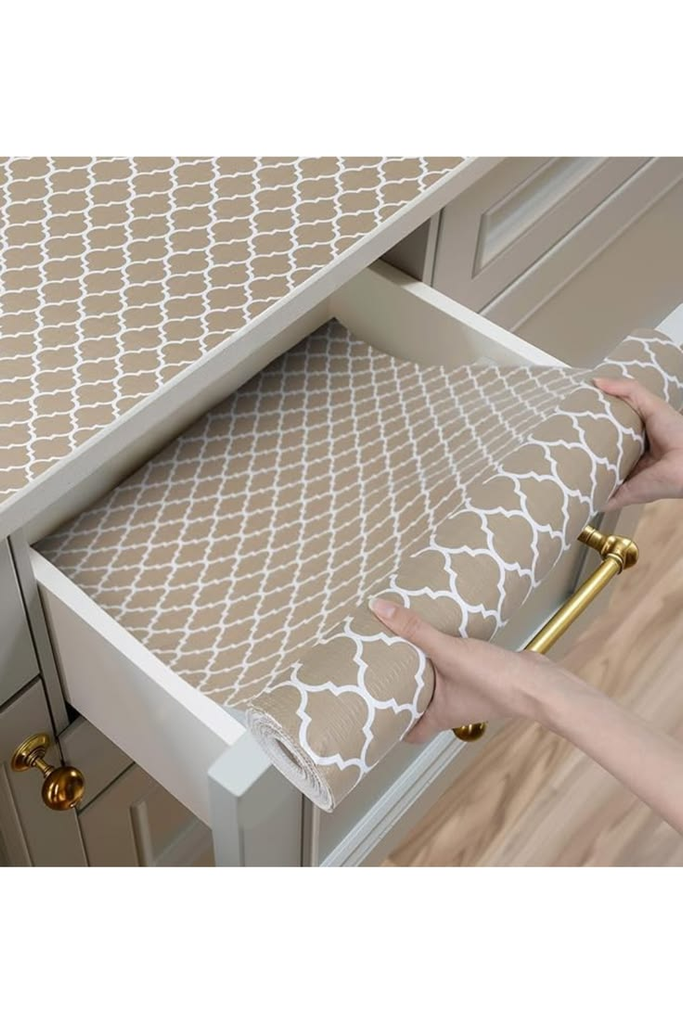
This isn’t glamorous, but a grippy drawer liner keeps utensil trays and loose items from sliding every time you open the drawer — which matters more in an apartment kitchen where drawers tend to be shallower and slide faster.
13. Knife storage inside a drawer, not on the counter
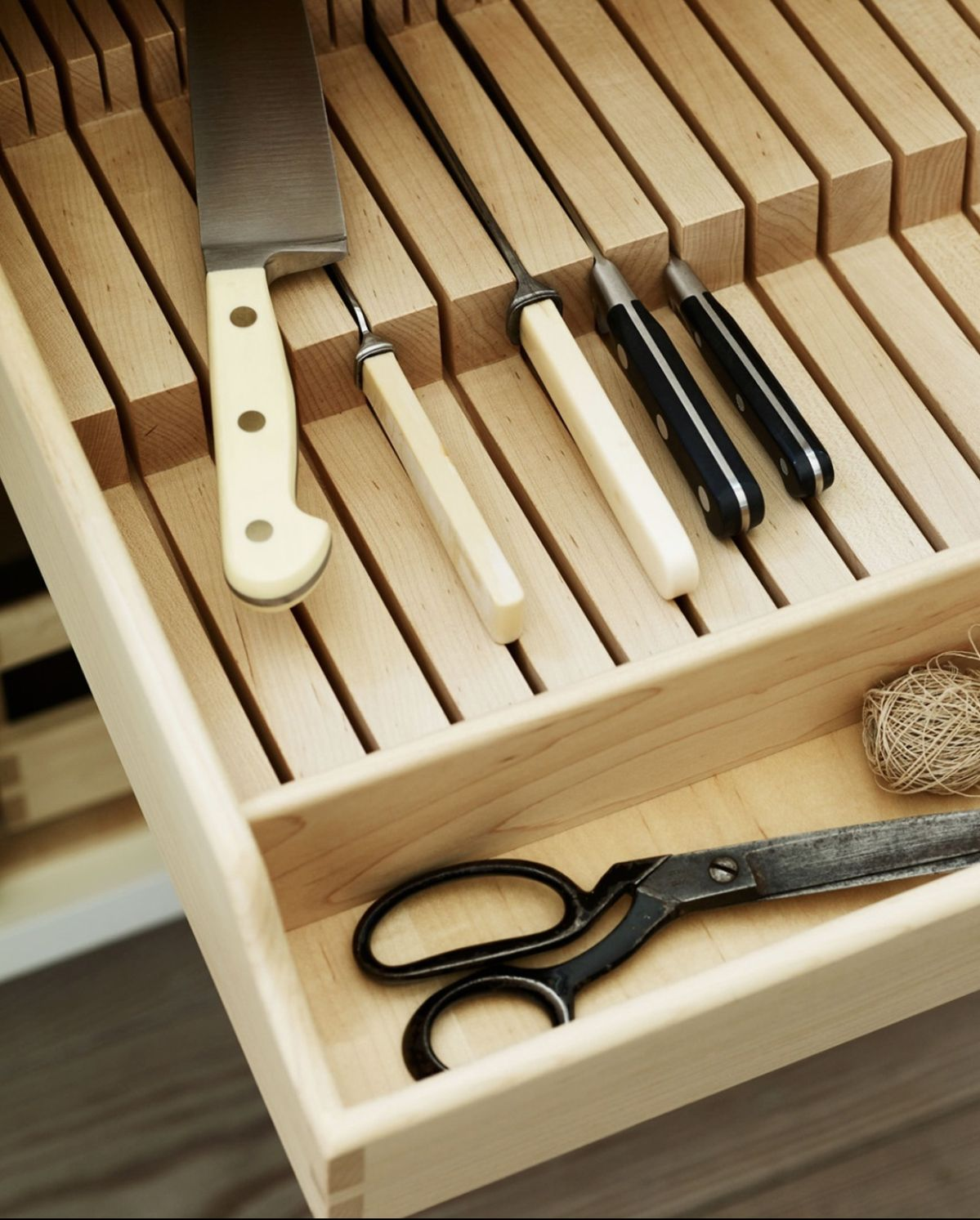
If counter space is tight, an in-drawer knife block (a flat insert with slots) keeps knives sharp, safely stored, and off your counter, which frees up more space than people expect.
14. Spice drawer instead of spice cabinet
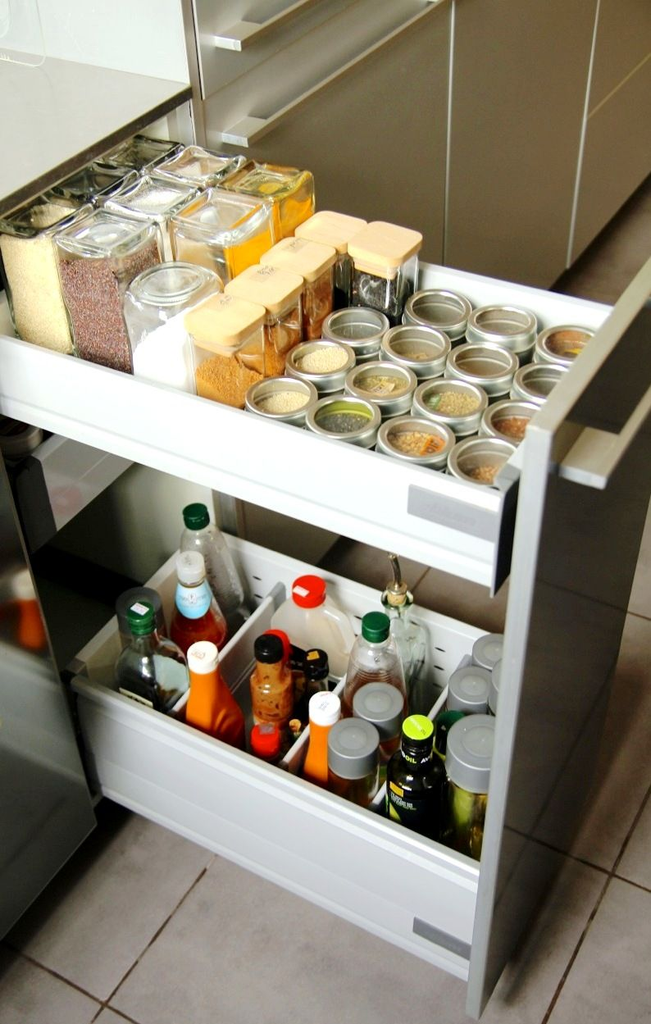
If you have a shallow drawer near the stove, a spice-jar drawer insert lets you see every label from above instead of digging through a lazy Susan or reaching behind the olive oil.
I switched from a cabinet shelf to a drawer insert two years ago and I’ve never gone back — it’s the single change that’s saved me the most time cooking on weeknights.
Wall-Mounted Storage
15. Pegboard above the counter or stove
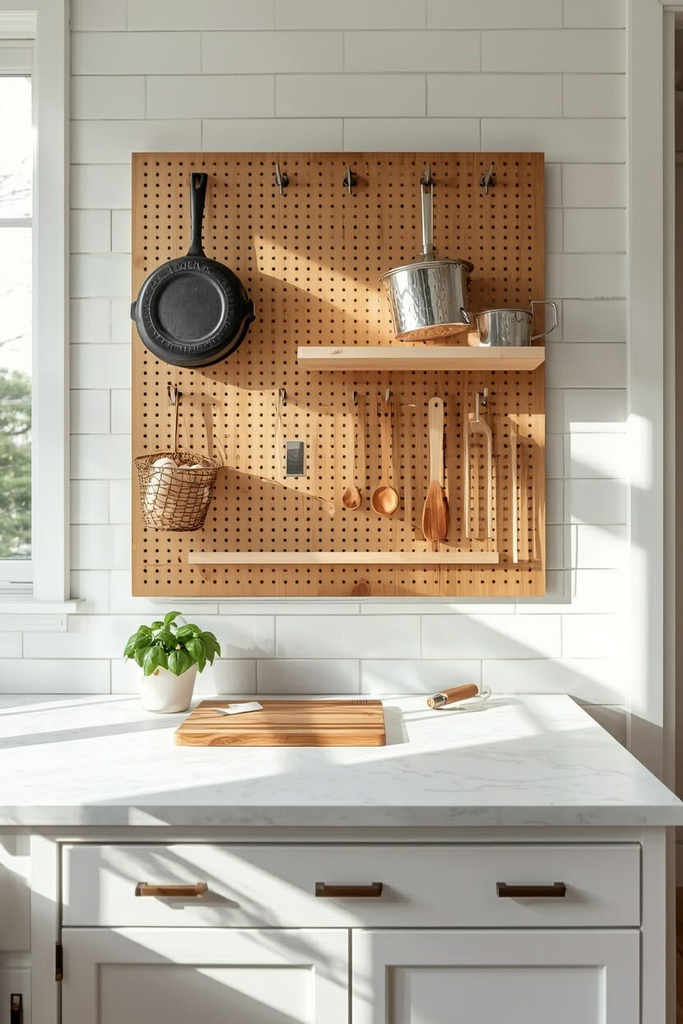
A pegboard is probably the single highest storage-per-dollar option on this whole list. Mount it above your counter (renter-friendly with the right anchors, or over an existing backsplash with removable adhesive strips) and hang pots, utensils, and even small shelves off the pegs.
My friend Sophia hung a 2×3-foot pegboard in her studio kitchen and moved almost her entire utensil drawer onto it — freed up a whole drawer for a rolling pin and cutting boards.
Pro tip: Skip the flimsy pegboard hook kits that come in a bag of 30 identical hooks — buy a small set of load-rated hooks separately. The cheap ones bend under a cast-iron pan within weeks.
16. Magnetic knife strip
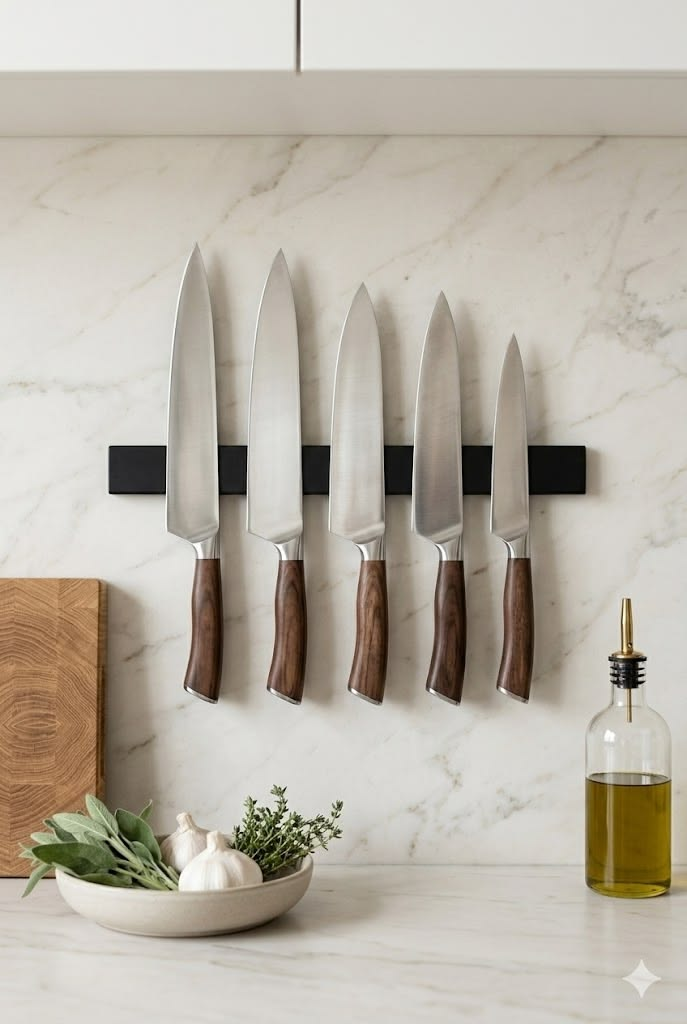
Mounts on the wall or the side of a cabinet, holds knives safely and visibly, and takes up zero counter or drawer space.
Worth doing even in a rental — most stick-on magnetic strips hold surprisingly well for lightweight knives, though a heavy chef’s knife collection does better with screws into a stud.
17. Floating shelves above the stove or sink
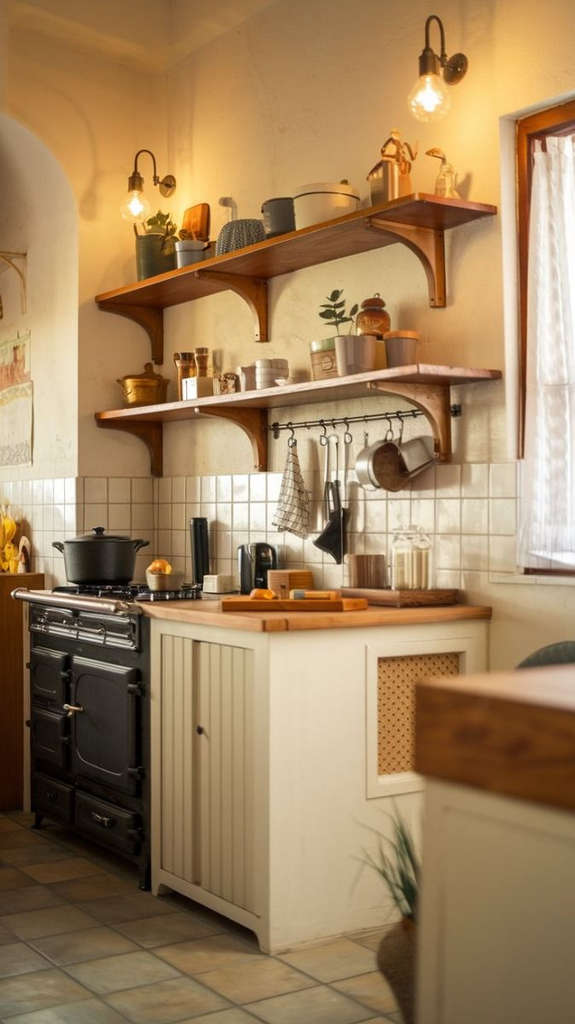
A single 24-inch floating shelf can hold your most-used oils, a small plant, or a stack of bowls, and it visually opens up a kitchen instead of making it feel more crowded the way a full cabinet does.
18. Hanging pot rack
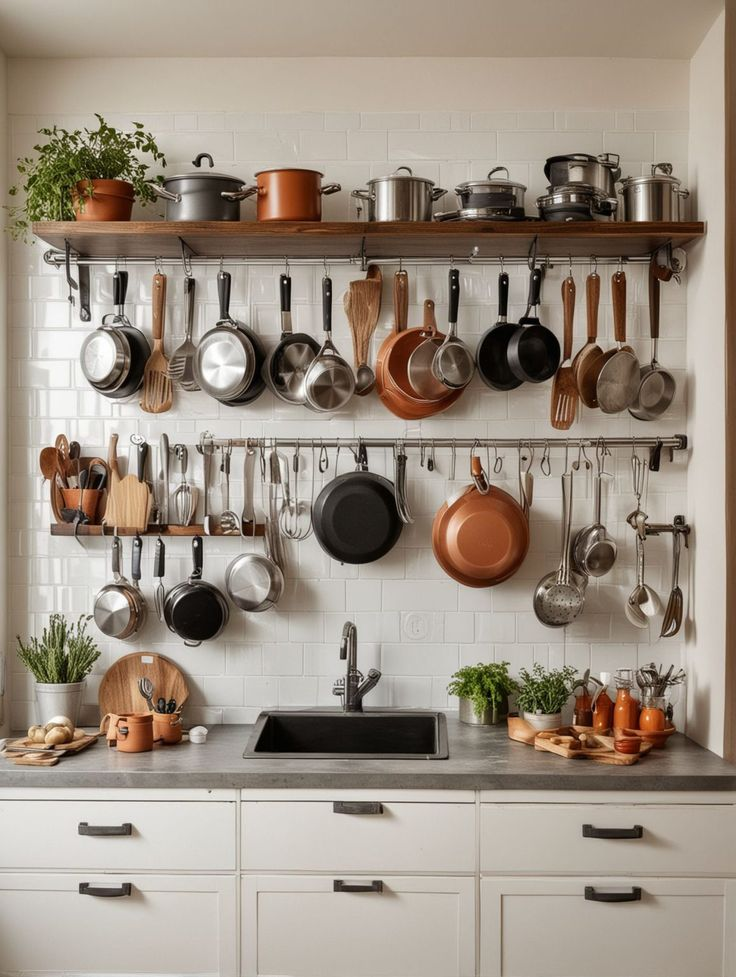
If your ceiling height allows it, hanging pots overhead solves the “pots and pans take over an entire cabinet” problem in one move.
Not every rental allows ceiling mounts, so check your lease — a wall-mounted rail version does almost the same job without touching the ceiling.
19. Wall-mounted paper towel and foil dispenser
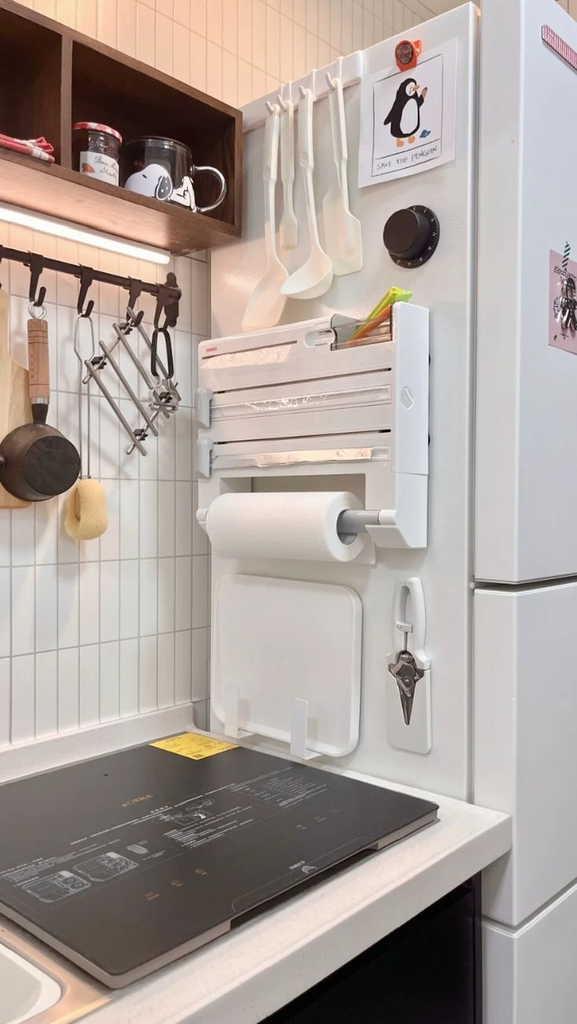
Small, but it removes three bulky items from a drawer or counter permanently.
20. Adhesive wall grid systems (like Elfa or IKEA’s wall grids)
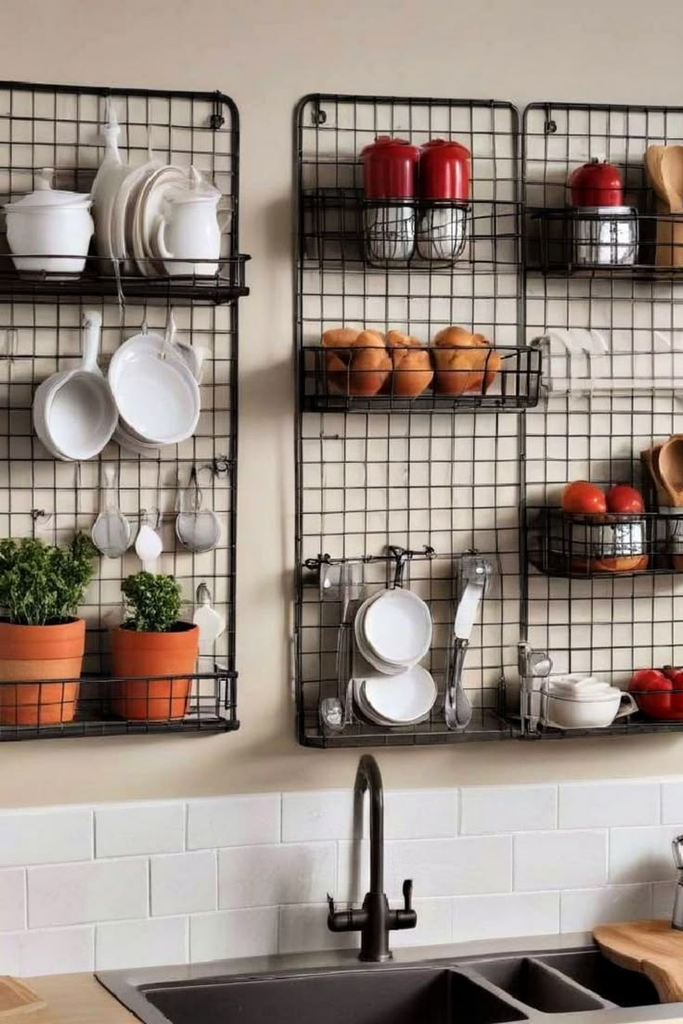
These give you a modular wall of hooks and small shelves you can rearrange as your needs change — genuinely useful in an apartment because your kitchen “problem” tends to shift every few months as you cook differently.
21. Over-the-sink cutting board with built-in strainer
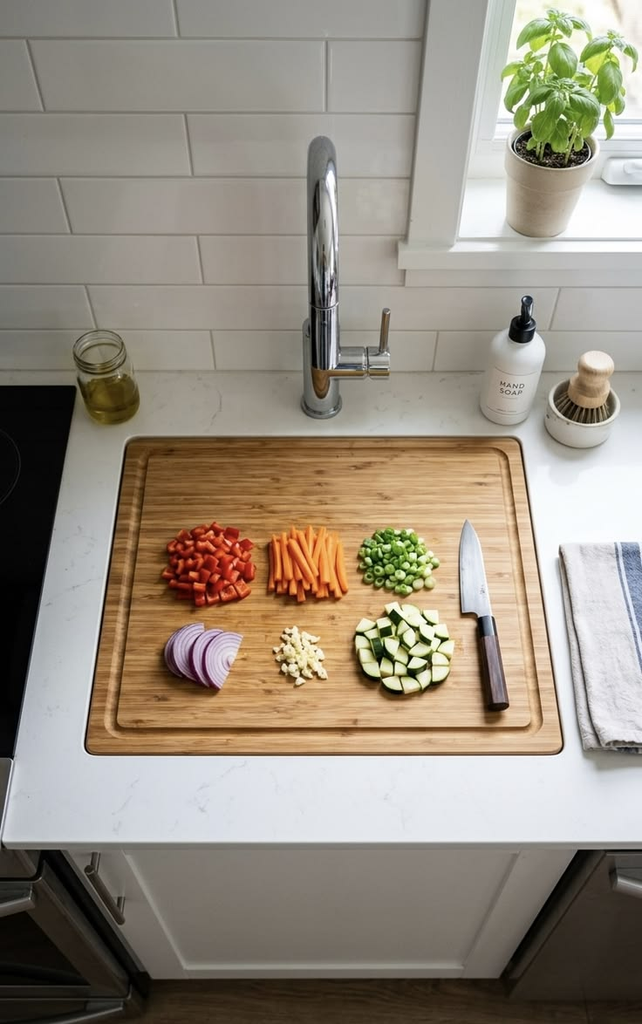
This one covers two categories at once — storage and counter space — because it turns your sink into extra prep surface when you’re not using it to wash dishes.
Countertop-Clearing Tricks
22. Appliance garage or corner shelf for small appliances
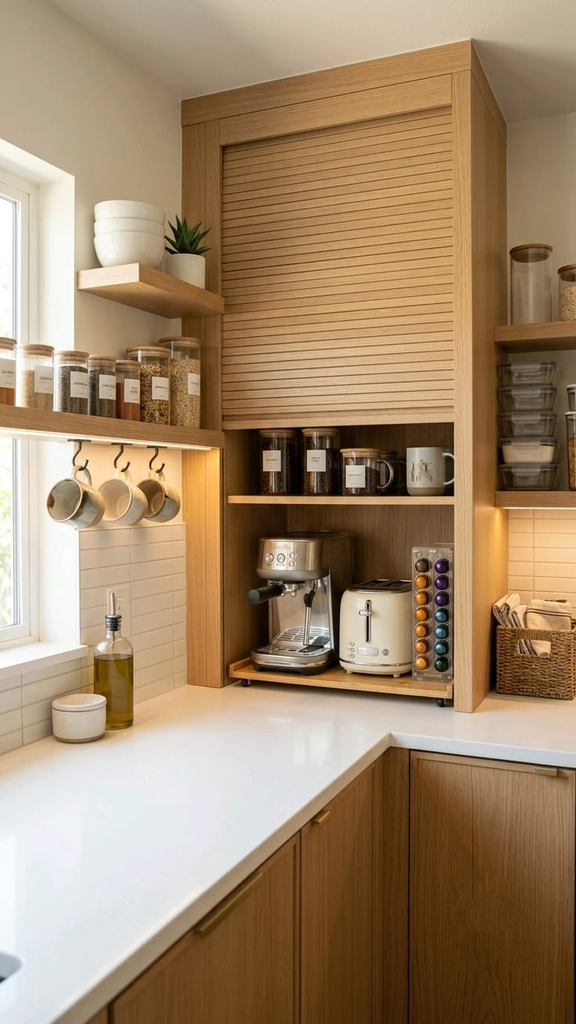
If your toaster, coffee maker, and air fryer are eating your entire counter, a tiered corner shelf lifts one appliance above another instead of spreading them out. It’s not a dramatic fix, but it can reclaim a foot or two of usable counter.
23. Rolling kitchen cart
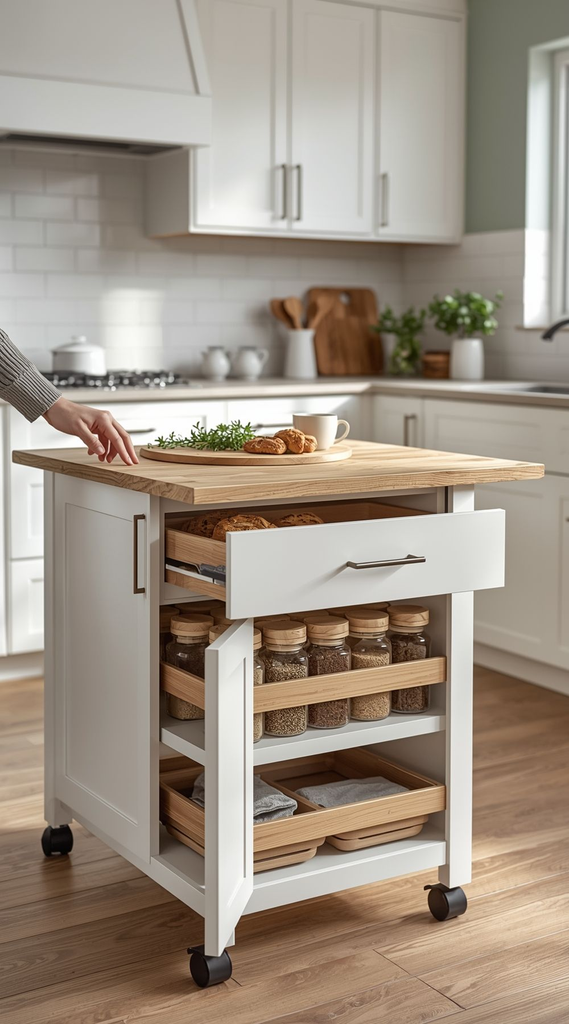
This is the closest thing to buying yourself an extra cabinet. A slim rolling cart (18–24 inches wide fits in most galley kitchens) adds counter surface, shelving, and sometimes drawers, and it moves out of the way when you need floor space.
I bought one for $89 two years ago specifically to hold my instant pot and air fryer, and it’s genuinely the single purchase that made my kitchen feel functional instead of chaotic.
24. Tiered stands for produce
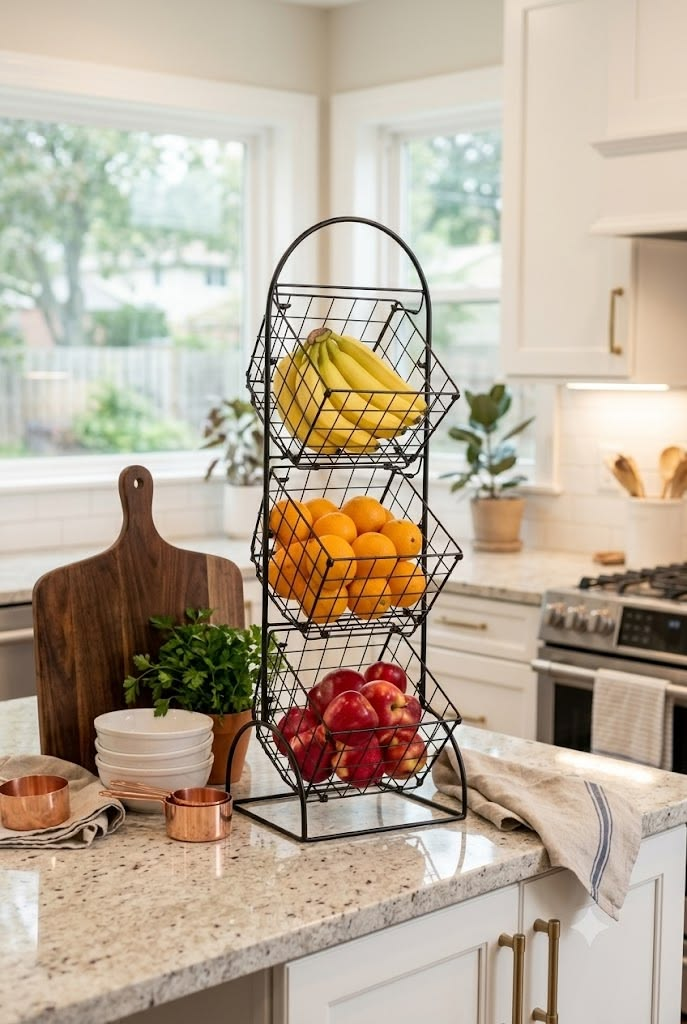
A two- or three-tier fruit stand takes bananas and tomatoes off the counter and stacks them vertically instead — small footprint, real difference in visible clutter.
25. Wall-mounted spice rack instead of a countertop one
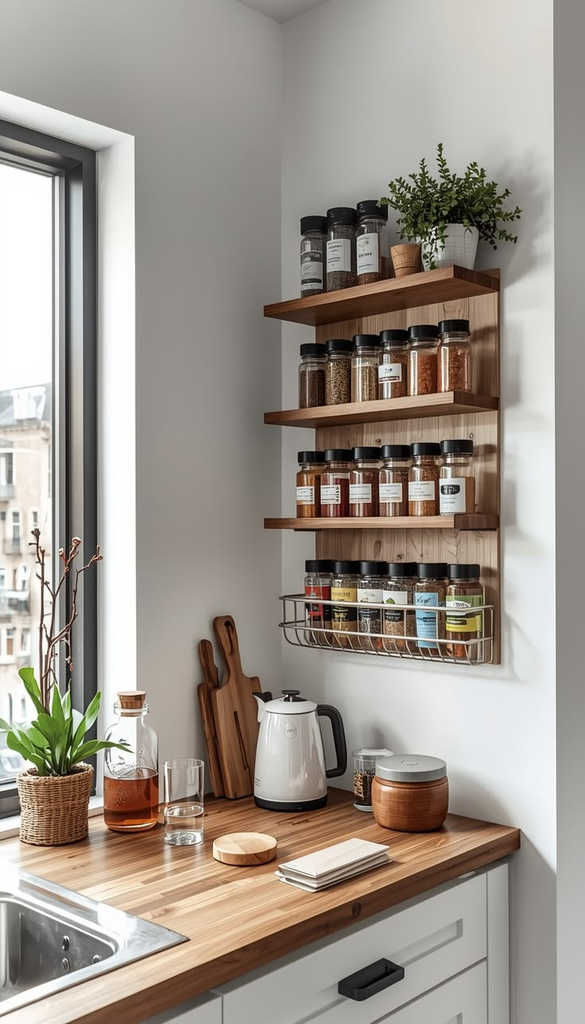
Moving spices off the counter and onto the wall (magnetic tins, a slim door-mounted rack, or floating shelves) is one of the fastest ways to visually calm down a tiny counter.
26. Fold-down or drop-leaf counter extension
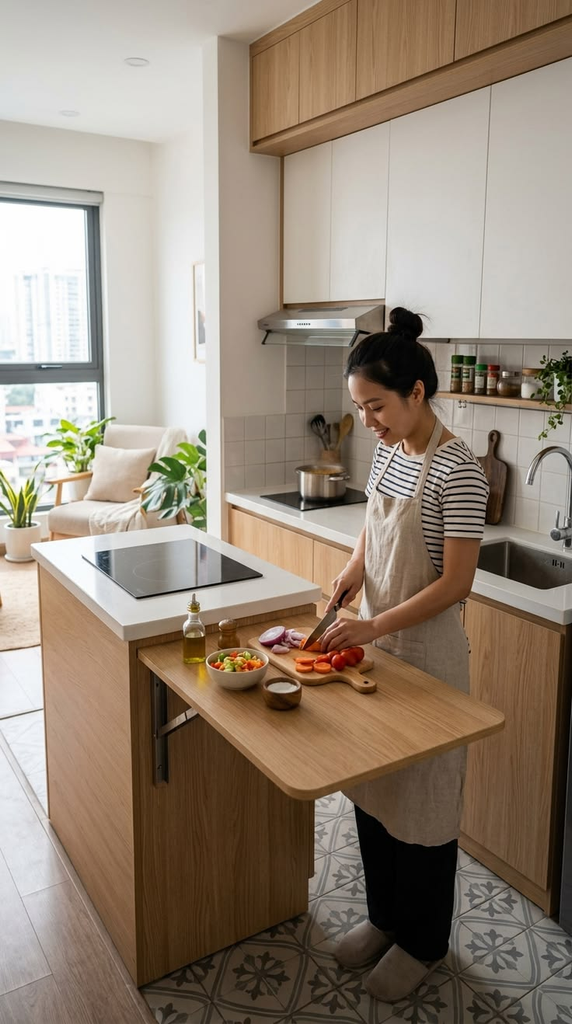
If you have even 6 inches of blank wall, a drop-leaf shelf gives you temporary prep space that folds flat when you’re not using it — useful for apartments where the counter is barely big enough for a cutting board, let alone a cutting board and a mixing bowl.
No-Pantry Pantry Solutions
Most apartment kitchens don’t have a pantry at all, which is genuinely the biggest storage complaint I hear from readers. These ideas build a “pantry” out of space you already have.
27. A narrow rolling pantry cart in a gap next to the fridge
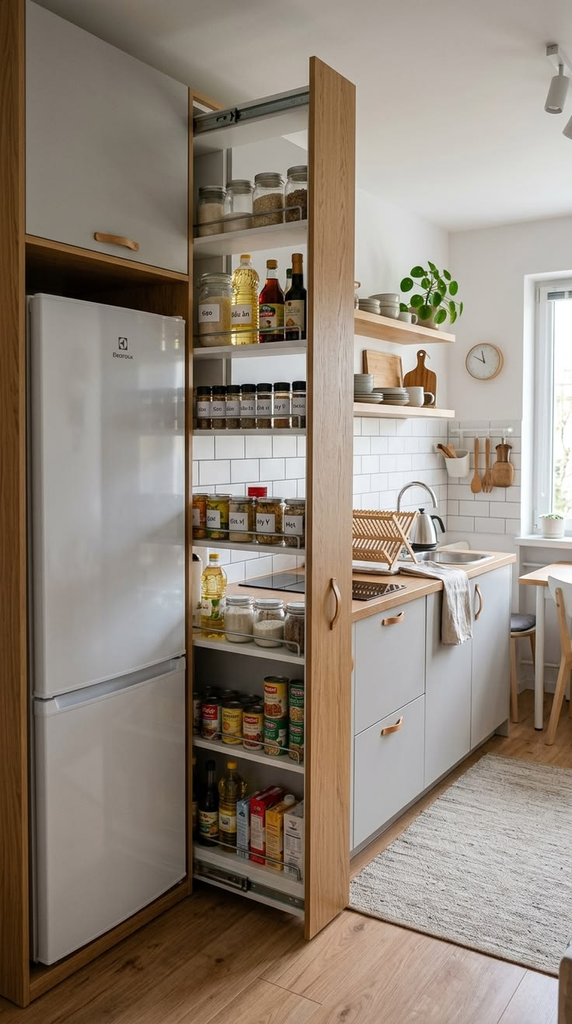
Most fridges have a 4–8 inch gap next to them that does absolutely nothing. A narrow pull-out cart built for exactly this gap (they’re sold specifically as “fridge gap” carts) can hold an entire shelf’s worth of canned goods and snacks in space you were walking past every day.
28. Closet shelving repurposed as a pantry
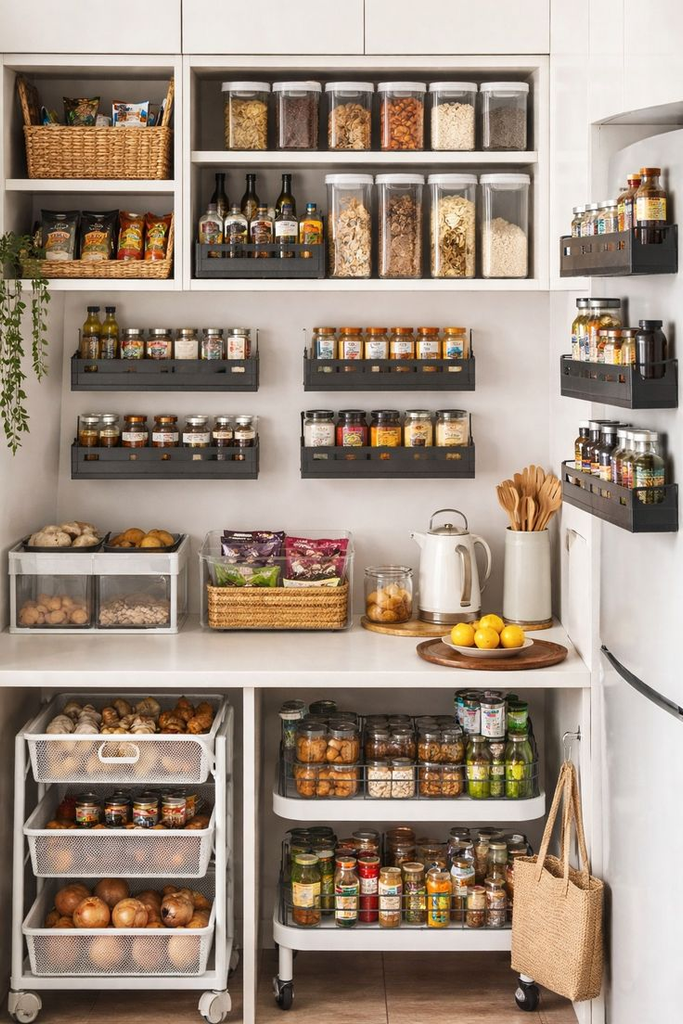
If you have a coat closet or linen closet near the kitchen, even one shelf converted to canned goods and dry goods functions as a real pantry.
My studio apartment had a closet in the hallway that I split — top half coats, bottom half pasta, cereal, and canned soup — and it solved 80% of my “no pantry” problem for the cost of some bins.
29. Over-the-fridge storage
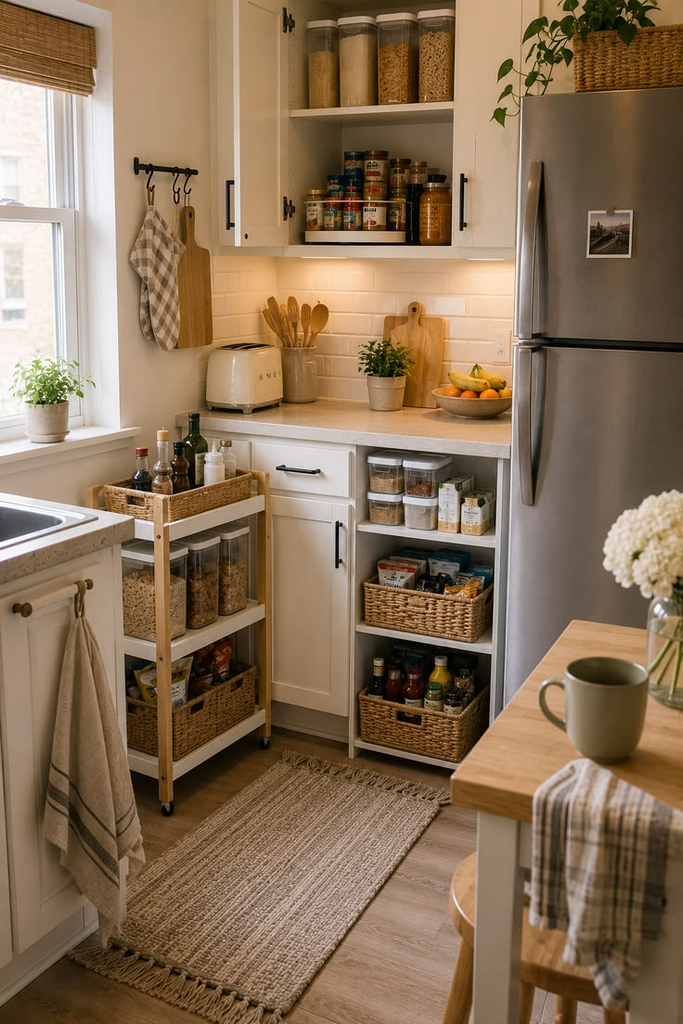
The top of the fridge is usually wasted space or a junk pile. A basket or small shelf unit up there works well for items you use rarely — the crockpot, the waffle iron, extra paper towels — as long as you’re comfortable with a step stool for access.
30. Stackable canned-good organizers
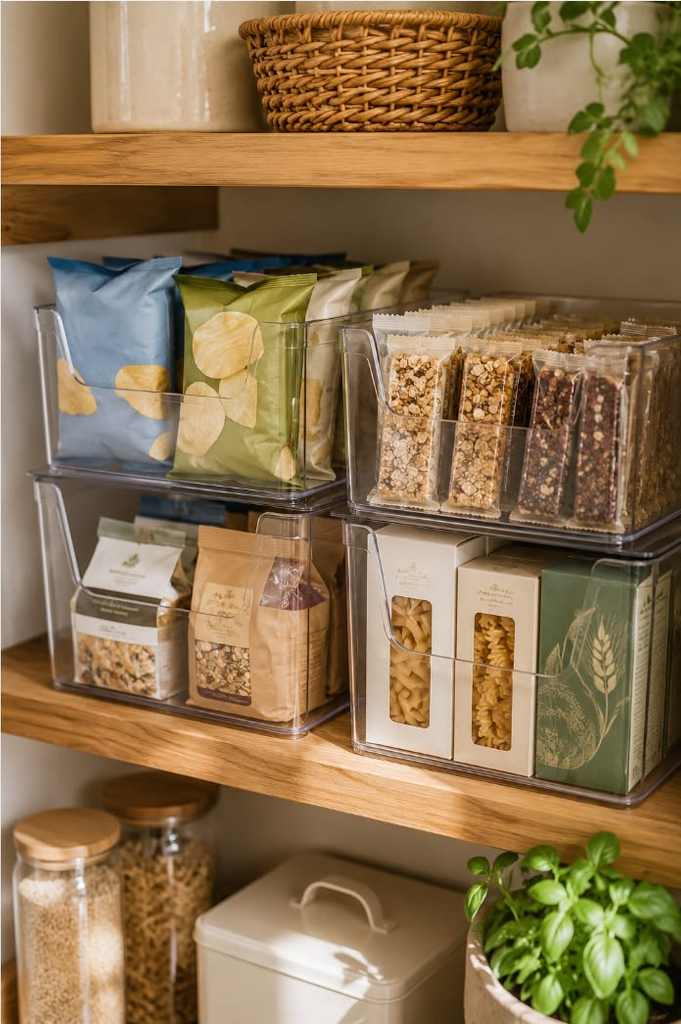
These angled or stepped racks let cans roll forward as you use them, so you can actually see what you have instead of a cabinet where the same three cans stay hidden in the back for a year.
31. Under-bed storage for bulk pantry overflow, if you’re truly out of kitchen space
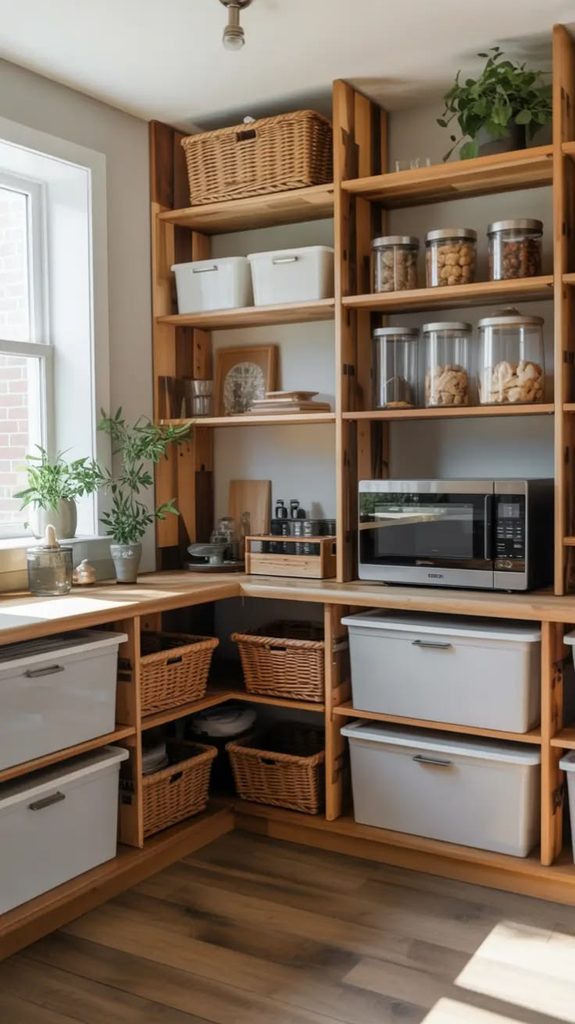
This one’s a last resort, but it’s real: if you buy in bulk from a warehouse club and have nowhere to put it, a shallow under-bed bin for unopened bulk items (rice, canned goods, paper towels) works fine as long as you rotate stock and keep it sealed.
Odd Corners & Renter-Friendly Fixes
32. Tension rods as makeshift dividers
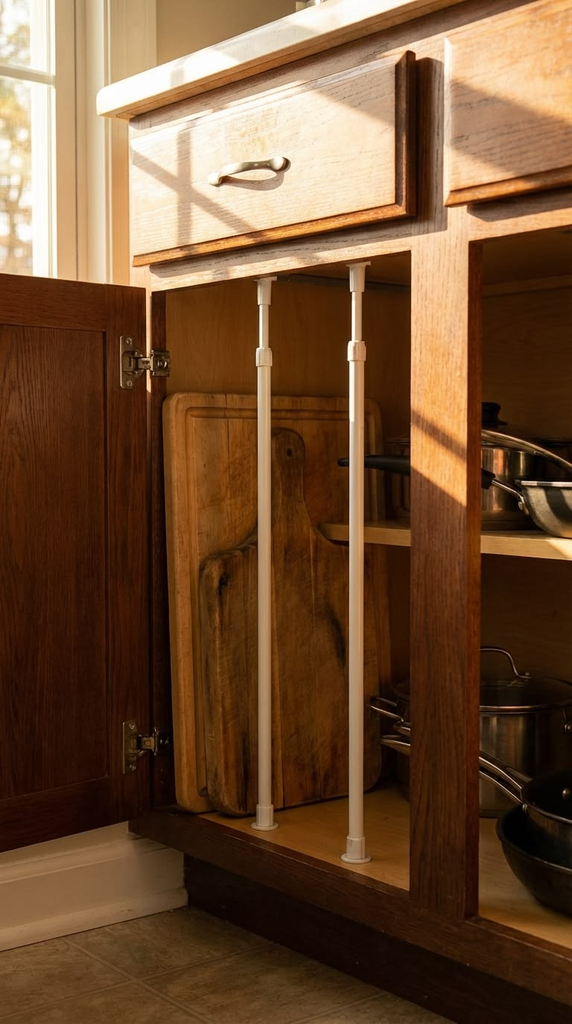
A cheap tension rod mounted inside a cabinet, just below the top shelf, creates a spot to hang spray bottles or lightweight cleaning supplies by their trigger handles — completely reversible, zero holes.
33. The back of the pantry or closet door
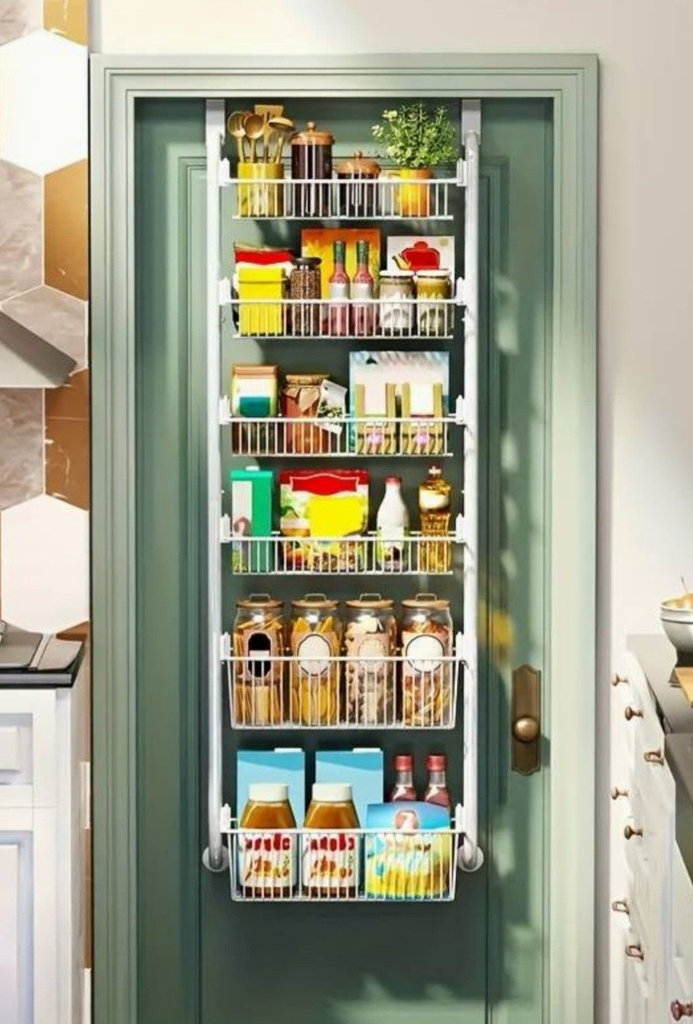
Over-the-door shoe organizers aren’t just for shoes — the clear-pocket versions work well for spice packets, snack bags, or small canned goods, and they turn a totally wasted door into functional storage.
34. Vertical bakeware storage between the fridge and the wall
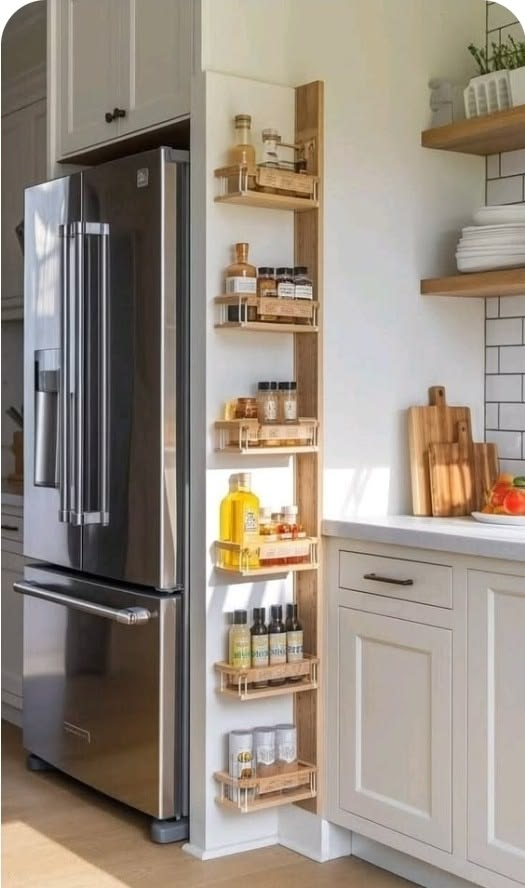
If there’s a gap between your fridge and the wall (even 2–3 inches), a slim vertical rack can hold cutting boards, sheet pans, or a cooling rack standing up on their sides.
35. Command strip hooks for anything that can hang
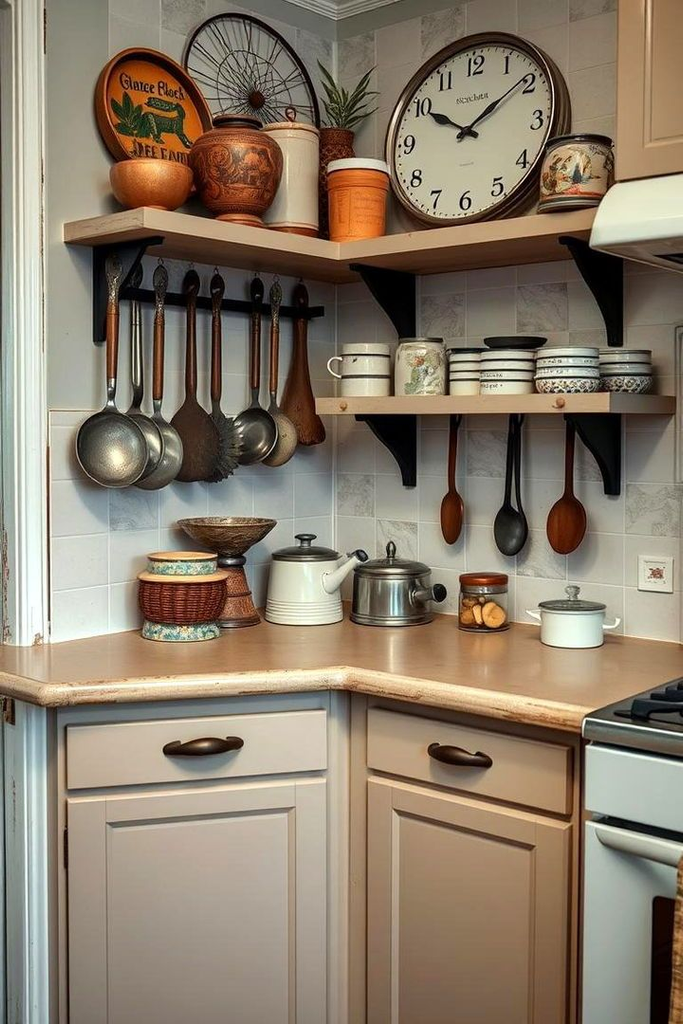
Mugs, oven mitts, dish towels, a small colander — if it has a loop or a handle, it can probably hang instead of sitting on a shelf. This is the cheapest idea on the whole list and it’s the one I still use the most, five apartments later.
Comparison: Best Storage Solutions by Kitchen Type
Not every idea above fits every kitchen. Here’s how I’d prioritize based on what you’re actually working with:
| Kitchen type | Best 3 ideas to start with | Approx. cost | Renter-friendly? |
|---|---|---|---|
| Studio, one wall of cabinets | Pegboard (#15), shelf risers (#1), rolling cart (#23) | $60–150 | Yes, with removable anchors/adhesive |
| Galley kitchen, no pantry | Fridge-gap cart (#27), closet shelving (#28), spice drawer (#14) | $40–120 | Yes |
| Tiny counter, lots of appliances | Rolling cart (#23), corner shelf (#22), tiered stand (#24) | $50–130 | Yes |
| Deep, awkward cabinets | Lazy Susan (#2), vertical dividers (#6), under-shelf baskets (#3) | $20–60 | Yes |
| No wall space to drill into | Command hooks (#7, #35), tension rods (#32), adhesive grid (#20) | $15–50 | Yes, zero drilling |
What I’d Do First If I Were Starting Over
If I were moving into a tiny apartment kitchen again tomorrow, I wouldn’t start with the Pinterest-worthy stuff. I’d start with the pegboard and the shelf risers, because they’re cheap, they don’t require permanent damage to a rental, and they solve the two biggest problems — no vertical storage and no visible system — in an afternoon.
Everything else, I’d add as I actually lived in the space and figured out what I kept reaching for and what was just taking up room.
The real trick with small-kitchen storage isn’t buying every organizer on this list. It’s figuring out which two or three problems are actually driving you crazy, fixing those first, and letting the rest wait until you’ve lived in the kitchen long enough to know what you really need.

Leave a Reply