

I moved into a 210-square-foot dorm room my sophomore year with a roommate, two twin XL beds, and exactly one closet that we had to split down the middle with a strip of painter’s tape. By week three, my side looked like a laundry explosion, and hers looked like a Container Store ad.
The difference wasn’t that she had more stuff or more money — she just knew which dorm storage ideas were actually worth the drawer space and which ones were going to fall apart by Thanksgiving.
That’s basically what this post is. I’ve lived through three dorm rooms, one truly cursed shared apartment with a “kitchen” that was a hot plate on a bookshelf, and now a 410-square-foot studio where the closet is more of a polite suggestion than a functional space.
Somewhere in there I’ve bought a lot of storage products that failed spectacularly, and a handful that I still recommend to anyone who’ll listen.
If you’re setting up a dorm room, a first apartment, or you’re a parent trying to help a kid pack for move-in without buying forty bins they’ll never use, this is going to walk through what’s genuinely worth it — organized by where you’re actually short on space, since “dorm storage” and “small apartment storage” solve pretty different problems even though they get lumped together every August.
Why Dorm and Small Apartment Storage Needs a Different Approach Than Pinterest Suggests
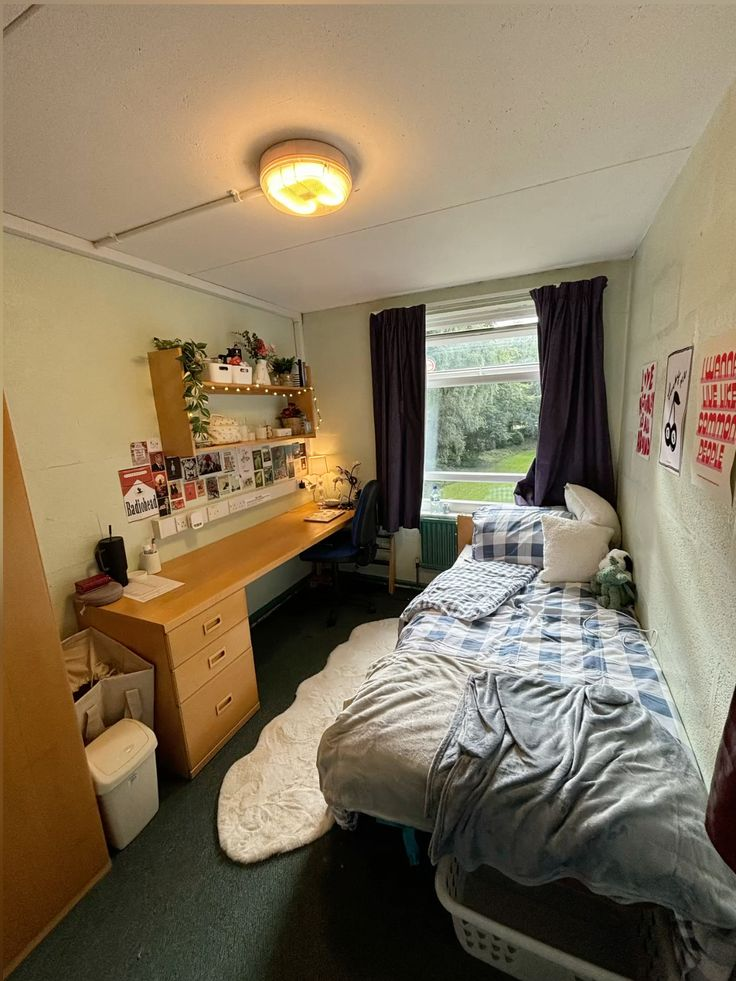
Here’s the thing most back to school storage roundups skip: dorms and small apartments have completely different constraints, and treating them the same way wastes money.
Dorms usually come with fixed furniture you can’t remove, strict no-nail and no-command-strip-on-certain-surfaces rules (check your housing contract, seriously), and a move-out deadline that means anything permanent is a liability.
Apartments give you more freedom to mount things and commit to a layout, but you’re paying for every square foot, so bad storage decisions cost you rent money, not just closet chaos.
The other thing nobody tells you: vertical space is the actual answer to small-space storage, not more bins.
Most of us are storage-poor not because we don’t have enough containers, but because we’re only using the floor and forgetting the thirty vertical inches above our heads exist. Nearly everything below is built around that idea.
Under-Bed Storage: The Highest-Value Square Footage You’re Ignoring
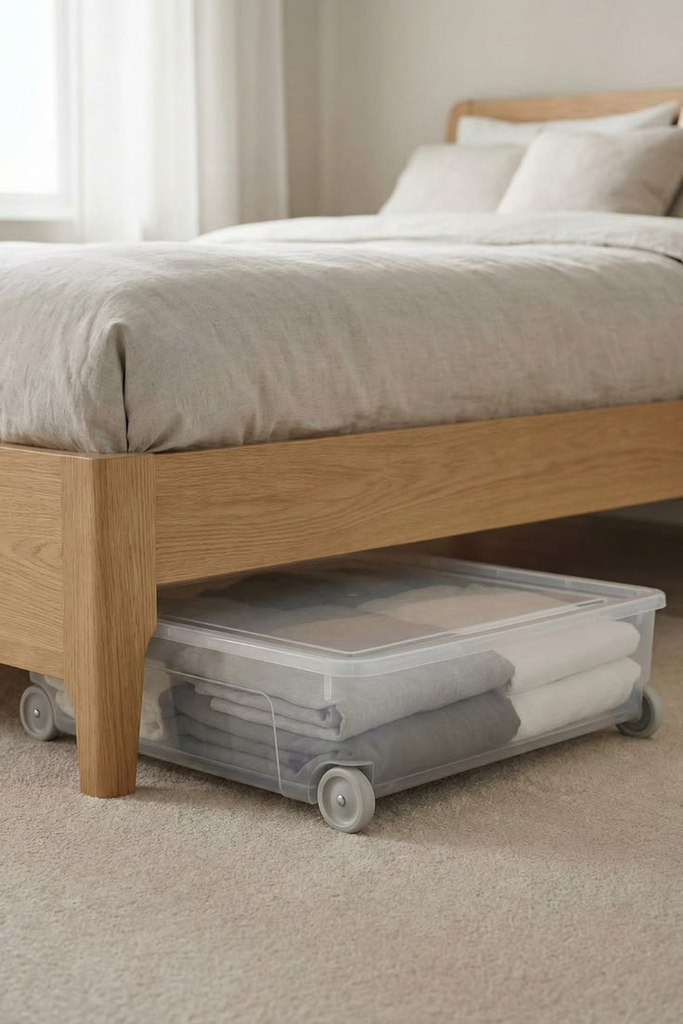
Under the bed is usually the single biggest chunk of unused storage in a dorm room, and it’s the first place I tell people to solve before buying anything else.
Why it matters: A standard dorm bed sits high enough off the ground to fit rolling bins, but almost nobody actually measures the clearance before buying storage — which is how you end up with bins that don’t fit under the frame, sitting in the middle of the room instead.
How to do it: Measure the actual gap between the floor and the bottom of your bed frame before you order anything — dorm beds vary more than people expect, sometimes by four or five inches between buildings on the same campus.
Rolling under-bed bins with low-profile wheels work best because you can actually pull them out without turning your room upside down every time you need a sweater.
If your bed doesn’t have enough clearance, bed risers solve this for about $15–20 and also free up outlet access if you’ve got a mini fridge under there.
Pro tip: Don’t put your heaviest, least-used items (winter coats, extra bedding) in bins that need to be pulled all the way out to open — get bins with a top or front opening if you’re using this space for stuff you need weekly, and save the pull-out bins for seasonal storage you touch twice a semester.
My friend Priya bought clear stackable bins for under-bed storage her freshman year specifically so she could see what was in each one without pulling all four out — sounds obvious, but I watched three other people that year buy opaque bins and then just guess which one had their charger cords.
Closet Organization: Where Most Dorm Storage Money Gets Wasted
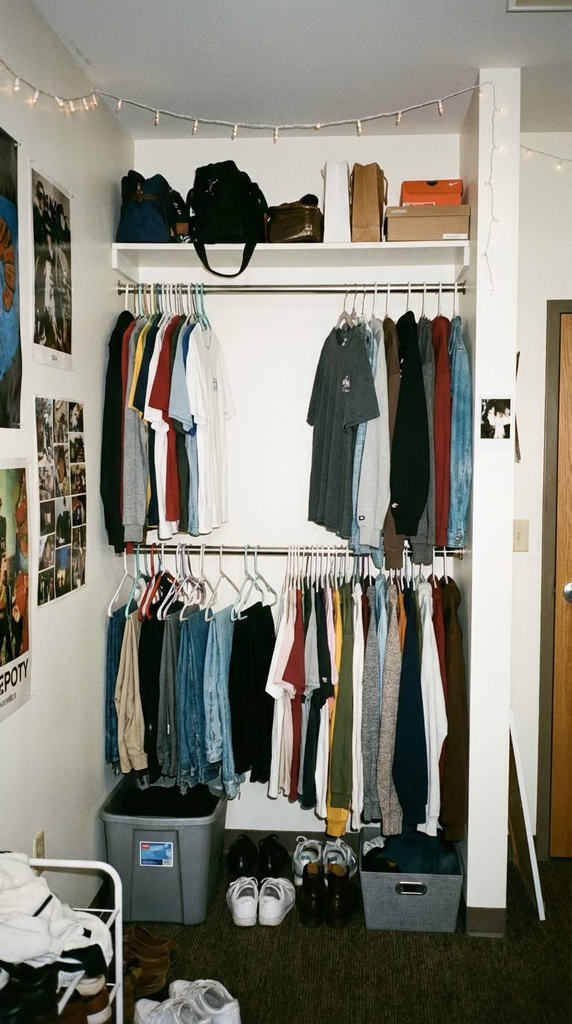
The dorm closet is usually a single rod with maybe one shelf, shared between two people, and it’s where I’ve seen more wasted money than anywhere else in a back-to-school shopping list.
Why it matters: A single hanging rod wastes almost all the vertical space in a closet, because clothes only take up the top two-thirds and the bottom third just sits empty. Doubling your hanging space is the single highest-impact closet upgrade for the lowest cost.
How to do it: A double hang closet rod organizer — the kind that clips onto your existing rod and adds a second bar below it — roughly doubles your hanging capacity for about $12–15, and it’s one of the only “as seen on TikTok” dorm products I’ve bought that actually worked exactly as advertised.
For shelf space, stackable closet shelf dividers or a slim shoe rack turn one flat shelf into two or three usable ones. If you’ve got any hanging space left over, an over-the-rod hanging organizer with fabric cubbies is genuinely good for sweaters and jeans you don’t want to hang.
Pro tip: Skip the metal wire double-hang rods and get the plastic-coated ones — the wire versions leave rust marks on light-colored clothing after a semester of humidity, which I learned the hard way with a cream sweater I really liked.
| Closet Solution | Cost Range | Best For | Trade-Off |
|---|---|---|---|
| Double hang rod organizer | $12–15 | Doubling hanging space fast | Can sag with heavy coats — fine for shirts/pants |
| Stackable shelf dividers | $8–20 for a set | Turning one shelf into two | Doesn’t work on very shallow shelves |
| Over-the-door shoe organizer | $10–15 | Small items, toiletries, accessories | The flimsy versions fall within weeks — check reviews for weight rating |
| Slim velvet hangers | $15–25 for 30–50 | Reclaiming inches of rod space | Upfront cost, but real space savings vs. plastic hangers |
That over-the-door shoe organizer line isn’t theoretical — I tried the cheapest one on Amazon my first semester and it ripped off the door hook within a week under the weight of shoes. Spent another $12 on a sturdier one with metal grommets and it’s still hanging in my apartment closet four years later.
Desk and Study Space Storage: Small Footprint, High Traffic
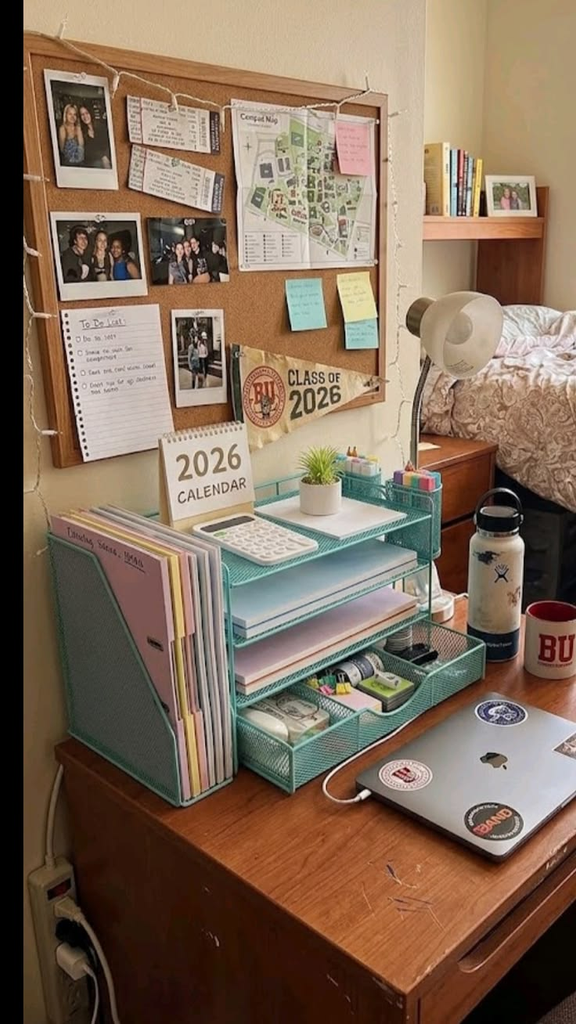
Your dorm desk is probably the most-used square footage in the whole room, and also usually the most cluttered by October.
Why it matters: Desk clutter isn’t really a storage problem, it’s a “everything is at the same height” problem — when your charger, notebooks, and snacks are all just piled on the same flat surface, nothing has a home, so nothing goes back where it belongs.
How to do it: A desktop organizer with tiered compartments gives your stuff actual assigned spots, which sounds minor but is the difference between a desk you can study at and one you have to clear off first. Command hooks on the side of the desk (check your dorm’s specific rules — some ban all adhesives, some just ban nail holes) are great for headphones and lanyards.
If your desk has open shelving above it, that’s prime real estate for a small caddy of daily-use items rather than decorative stuff, since you’ll actually reach for it.
Pro tip: Buy a desk lamp with a USB port and skip a separate charging station — one less cord, one less thing cluttering the outlet strip, and it solves two problems with one purchase.
Bathroom and Shower Caddy Storage for Shared Dorm Bathrooms
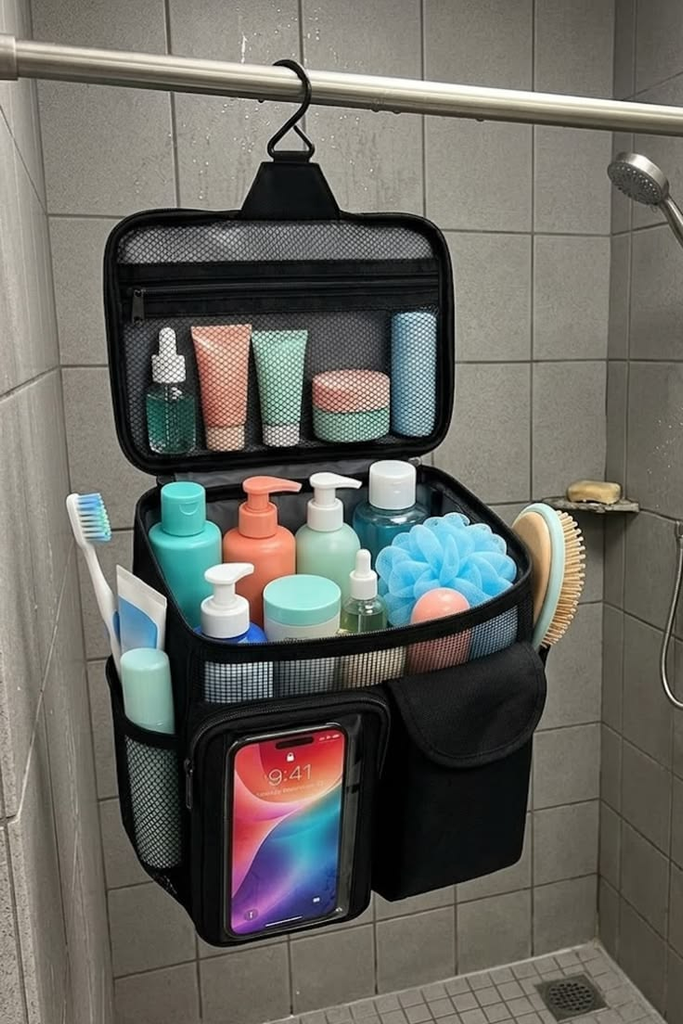
If you’re in a dorm with a shared or communal bathroom, this is its own category of storage problem that apartment guides never cover.
Why it matters: You need something you can actually carry to and from a shared bathroom multiple times a day without it falling apart or dripping water all over the hallway carpet.
How to do it: A caddy with a solid handle and drainage holes in the bottom (not a flat-bottomed one — trust me) is worth the extra few dollars. Quick-dry mesh caddies dry faster between uses than solid plastic ones, which matters more than it sounds like it would when you’re sharing a bathroom with forty other people and humidity is a constant. For your actual room, a small over-the-door hook rack for a robe and towel keeps wet stuff from turning your desk chair into a towel rack.
Pro tip: Get a caddy in a color or pattern you’ll recognize instantly in a shared space — plain white ones get mixed up constantly, and yes, this happens more than you’d think.
First Apartment Storage: Where the Rules Change
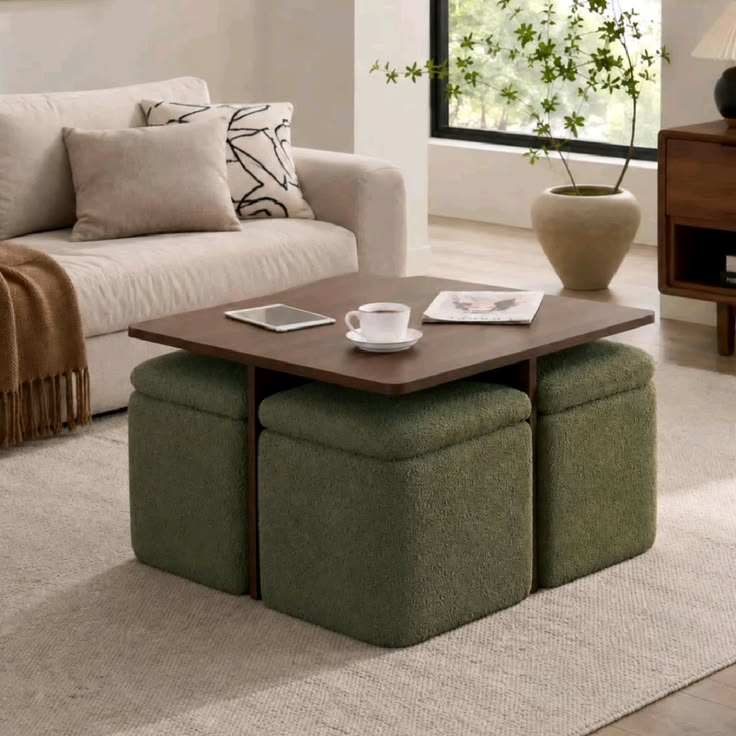
Once you’re out of the dorm and into a first apartment — whether that’s studio apartment storage or a small one-bedroom split with roommates — you’ve got more freedom, but also more square footage to actually plan out, and more of your own money on the line if you buy the wrong thing.
Why it matters: Apartments let you mount and build in ways dorms don’t, which means the ceiling on how much storage you can create goes way up — but it also means it’s easy to overspend on furniture-based storage you didn’t need.
How to do it: Start with your kitchen, since it’s usually the smallest, most storage-starved room in a first apartment.
Over-the-cabinet hooks, a slim rolling cart next to the fridge, and a tension rod under the sink to hang spray bottles solve most small-kitchen storage problems for under $60 total. In the living area, furniture that pulls double duty — an ottoman with storage inside, a coffee table with a shelf, a bed frame with built-in drawers — does more work per square foot than adding standalone shelving units.
Pro tip: Before buying anything wall-mounted, check your lease’s damage deposit terms. A lot of renters overspend on removable adhesive strips assuming they’re 100% damage-free, but the heavier-duty ones can still pull paint on cheaply painted rental walls — test a strip in a closet or behind furniture first.
My friend Sophia repainted her rental’s entryway closet doors twice before landing on paint that didn’t chip when she removed her command hooks — turns out builder-grade white paint in older buildings is thinner than you’d expect, and it’s worth testing adhesive anything in an inconspicuous spot before committing to your whole apartment.
Studio Apartment Storage: Solving for Zero Separation
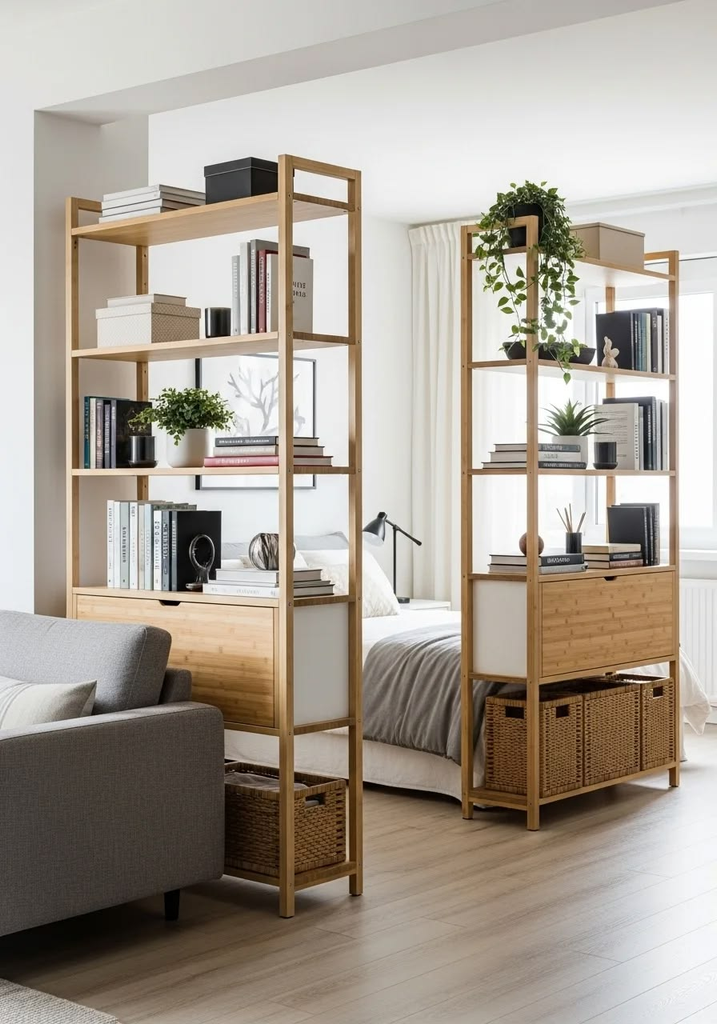
Studios deserve their own quick mention because the storage problem isn’t really “not enough space,” it’s “no walls to divide the space with,” which changes what actually helps.
A bookshelf or open shelving unit used as a room divider does double duty — it separates your sleeping area from your living area and gives you the vertical storage a studio desperately needs.
A bed frame with drawers built into the base (instead of buying a separate dresser) can free up literally a few square feet of walkable floor, which in a studio is a bigger deal than it sounds.
What to Buy vs. Skip: A Quick Cost Breakdown
If you’re trying to figure out where to actually spend your back-to-school storage budget, here’s roughly how I’d allocate $100–150 for a dorm room, based on what’s held up for me and what hasn’t:
| Item | Approx. Cost | Worth It? |
|---|---|---|
| Rolling under-bed bins (set of 2-4) | $25–35 | Yes — highest storage-per-dollar |
| Double hang closet rod | $12–15 | Yes — doubles closet capacity instantly |
| Sturdy over-the-door organizer | $12–18 | Yes, but skip the cheapest option |
| Desktop tiered organizer | $10–15 | Yes for daily clutter control |
| Decorative storage baskets | $15–25 each | Skip, or buy one max — mostly aesthetic |
| Over-the-door mirror with hooks | $20–30 | Nice to have, not essential |
| Mesh shower caddy | $10–15 | Yes for shared dorm bathrooms |
The decorative baskets are the one category I’d actually tell people to skip or seriously limit. They look great in a flat-lay photo, but they’re expensive per unit of actual storage, and most of what people put in them (blankets, extra pillows) could go in a $15 under-bed bin instead for a third of the price.
What I’d Actually Do Differently If I Were Moving In Again
If I were setting up a dorm room from scratch today, knowing what I know now, I’d spend on under-bed rolling storage and the double-hang closet rod first, before anything decorative, because those two things solved more of my actual daily friction than anything else I bought that first year. I’d measure my bed clearance before ordering bins instead of guessing.
And I’d stop buying the cheapest version of anything with a hook or a hinge, because that’s always where the money gets wasted twice — once on the thing that breaks, and again on the sturdier replacement you end up buying anyway.
Storage that actually works isn’t about having more bins — it’s about matching the solution to the specific space you’re stuck with, and being honest about which “genius dorm hacks” are actually genius versus just photogenic.

Leave a Reply