

I used to think decluttering meant one heroic Saturday where I’d empty every drawer onto my bed, cry a little, and shove most of it back in by 9pm because I ran out of steam. That was my system for about four years.
It doesn’t work. What finally worked was breaking it into zones I could actually finish in one sitting, and giving myself permission to skip the stuff that doesn’t matter — which, it turns out, is most of the internet’s decluttering advice.
This is the spring apartment decluttering checklist I’ve refined over three apartments and one very cramped dorm room, updated for how I’m actually approaching it this year.
If you’ve got a 450-square-foot one-bedroom or a shared dorm room where “storage” means the space under your bed, this is written for you specifically, not for someone with a walk-in closet and a garage.
Quick note before we start: I’m not going to tell you to hold every item and ask if it “sparks joy.” I own a stapler.
It does not spark joy. It staples things. Some stuff earns its place in your apartment by being useful, not by making you feel a certain way, and this checklist treats both as legitimate reasons to keep something.
Start With the Entryway, Not the Closet
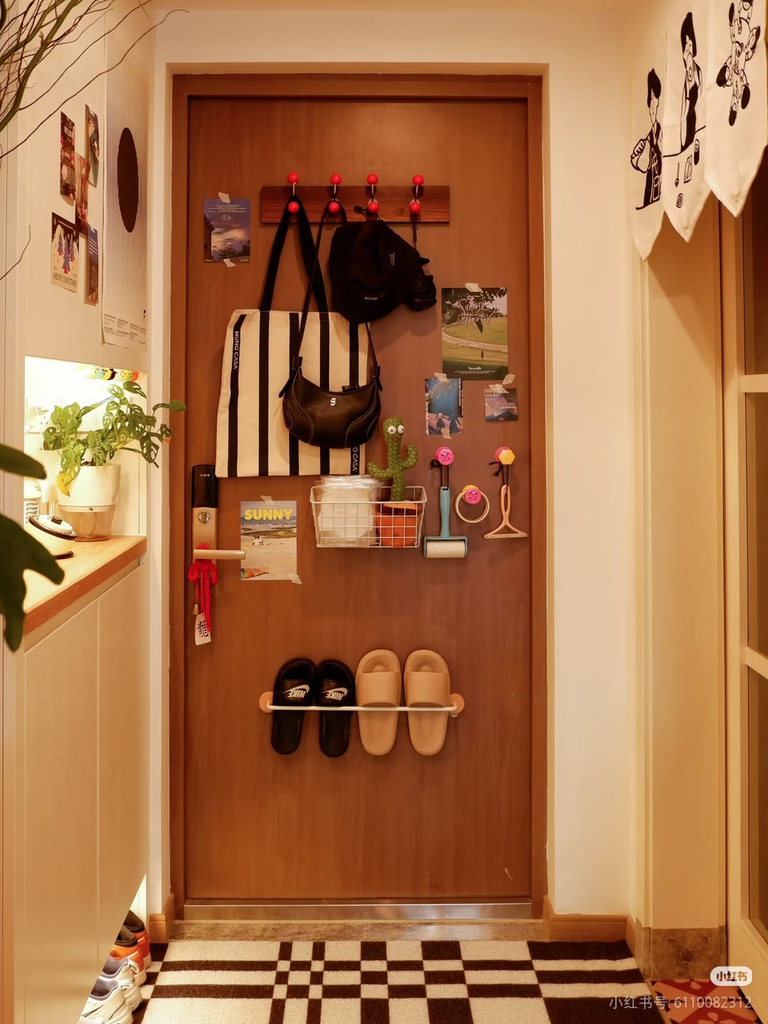
Every decluttering checklist I read growing up said to start with your closet because it’s “high impact.” I disagree, at least for apartments.
Your entryway is the first thing you see walking in and the last thing you see walking out, so a cluttered one sets the tone for the whole apartment, and it’s usually small enough to finish in twenty minutes.
Here’s what actually piles up: shoes you don’t wear, mail you’re avoiding, and bags you’re “about to return.” Pull everything off the floor and any hooks or shelves.
Sort into keep, donate, and trash. For shoes specifically, if you haven’t worn a pair in a full season — not a full year, a full season — they’re taking up prime real estate for something you’ll actually use.
My friend Priya moved into her studio last spring and kept a giant shoe rack meant for a house with a mudroom crammed into her 12-square-foot entry. It ate the whole space and she still tripped over the shoes that didn’t fit on it.
She swapped it for a slim over-the-door shoe organizer and got about 3 extra square feet of actual floor back, which in a small apartment is not nothing.
Pro tip: Mail is the real entryway clutter culprit, not shoes. Set up a small tray or basket right by the door and commit to sorting it the same day it arrives — recycling, bills, everything else — because “I’ll deal with it later” mail becomes a foot-tall stack by April every single year.
The Closet: Sort by Category, Not by Section
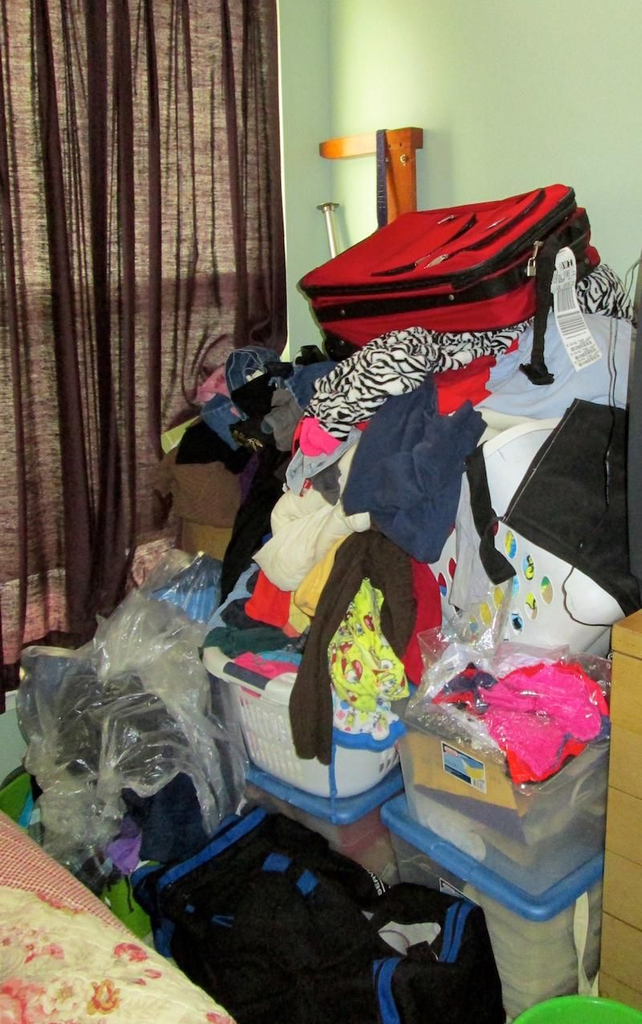
When you finally do get to the closet, resist sorting shelf by shelf. Pull every item of one category — all your tops, then all your bottoms, then all your shoes — out onto your bed at once. Seeing all 40 t-shirts in one pile is what actually makes you realize you don’t need 40 t-shirts.
Doing it shelf by shelf just moves clutter around without confronting the total volume.
For clothes specifically, I use a version of the hanger trick: at the start of the season, turn every hanger backward. When you wear something, turn the hanger the right way.
By the time summer hits, anything still backward hasn’t been touched all spring, and that’s your donate pile with zero guesswork or sentimentality getting in the way.
| Closet Organizer Type | Best For | Approx. Cost | Worth It? |
|---|---|---|---|
| Slim velvet hangers | Maximizing hanging space in a narrow closet | $15–25 for a 20-pack | Yes — this is the single highest-impact closet swap for small spaces |
| Over-the-door shoe organizer | Renters who can’t drill into walls | $12–20 | Yes, but check weight capacity before loading it up |
| Stackable clear bins | Off-season clothes, under-bed storage | $8–15 each | Yes, clear ones specifically — opaque bins just become mystery boxes |
| Closet doubler rod | Doubling hanging space in a single closet | $10–18 | Only if your closet has the ceiling height — measure first |
| Wall-mounted closet system (full kit) | Owners or long-term renters with landlord approval | $150–400 | Only if you’re staying 2+ years — not worth the install for a one-year lease |
Pro tip: Skip the over-the-door hanging shoe organizer with the clear plastic pockets if you own actual heels or boots — they don’t fit, and I learned that the expensive way after buying one, trying to jam three pairs of ankle boots in, and watching it sag off the door within a week. Get the shelf-style over-door rack instead if your shoe collection isn’t all sneakers and flats.
Kitchen: The Zone Everyone Underestimates
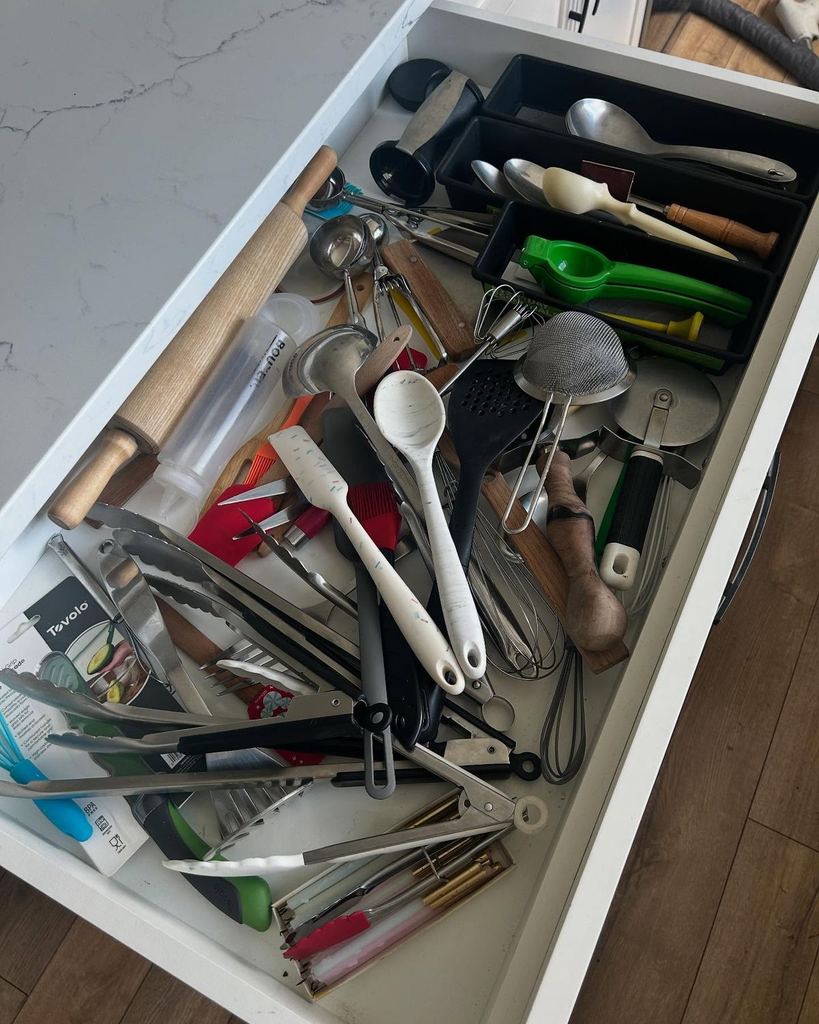
Kitchens in apartments are almost always the smallest room with the highest concentration of stuff, and most of what’s crammed in there is duplicate.
You probably have three spatulas, two can openers, and a drawer of takeout menus for restaurants that closed during the pandemic.
Pull open every drawer and cabinet and ask one question per item: did I use this in the last six months? Baking equipment gets a pass on this rule if you genuinely bake seasonally — nobody needs their springform pan in February.
Everything else that’s gone unused for half a year is a candidate to go.
The other big kitchen clutter source is food storage containers with no matching lid. I don’t know a single person whose Tupperware cabinet is fully matched, and yet almost nobody actually purges it.
Dump the whole cabinet, match what you can, and recycle or trash anything orphaned. You’ll probably lose a third of the pile and not miss a single piece.
Pro tip: Before you buy any new organizers for your kitchen, do the purge first. I’ve watched people (myself included, in my first apartment) buy a drawer divider system to organize 30 utensils, when the real fix was owning 12 utensils. Buying storage before decluttering just gives your clutter a nicer home.
Bathroom: Expiration Dates Actually Matter Here
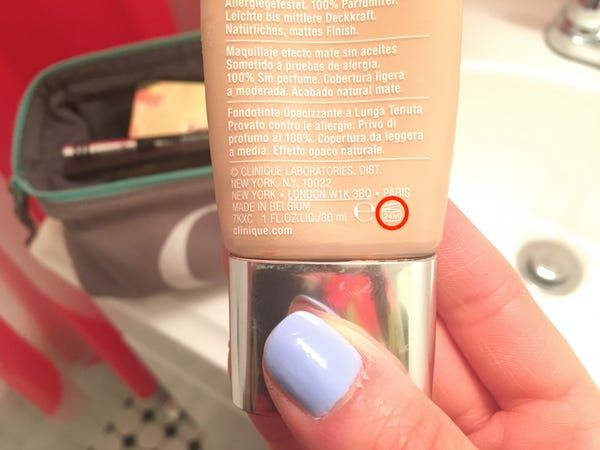
This is the one category where “just toss what you don’t use” isn’t enough, because a lot of bathroom clutter is genuinely expired and you should know that before you decide what stays. Mascara: 3 months open.
Other makeup: 6–12 months depending on the product. Sunscreen: check the printed expiration date, it’s usually 1–3 years, and expired sunscreen loses effectiveness, so this isn’t just a clutter issue, it’s a “this won’t actually protect you” issue.
Under-sink storage in apartment bathrooms is almost always wasted space because people shove things in without any container system, so it becomes a pile you have to excavate rather than shelves you can see into. A couple of stackable bins turn that same cabinet from “dig and hope” into “open and grab.”
Pro tip: Take five minutes and check every skincare and makeup product for a small open-jar symbol with a number and an “M” on the packaging (like “12M”) — that’s the manufacturer’s own shelf-life-after-opening guidance, and it’s more reliable than guessing based on how the product looks or smells.
Paper and Digital Clutter (Yes, This Counts)
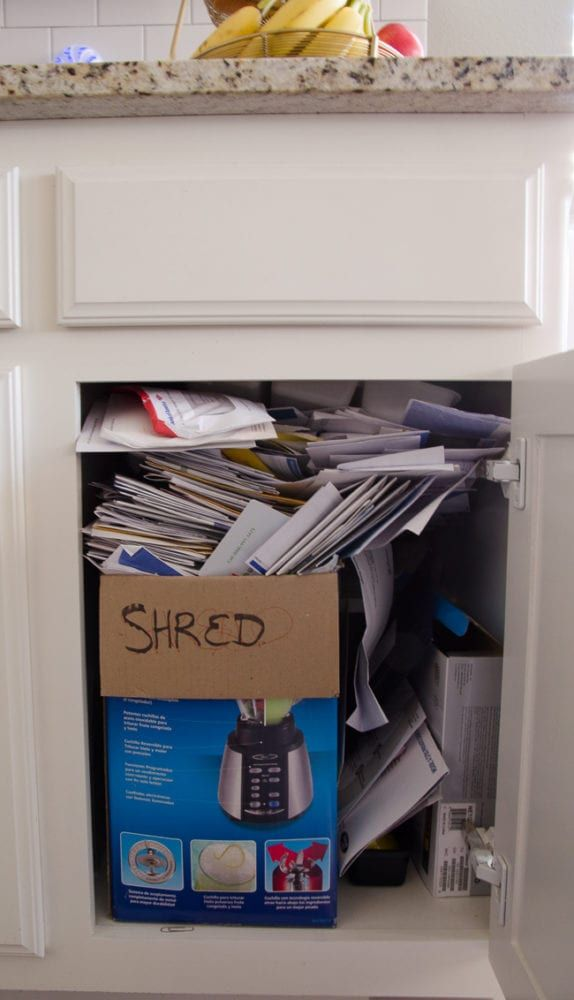
I skipped this category for years because it felt less urgent than physical stuff, and then I found a shoebox with four years of unopened bank statements in it during a move. Paper clutter is real clutter, it’s just quieter.
Go through any drawer, folder, or box of paper and sort into: keep permanently (tax documents, lease, ID-related paperwork — generally 3–7 years for tax records depending on your situation, so check current guidance if you’re not sure), keep short-term (current bills, active warranties), and shred or recycle (anything with your info that’s outdated).
A cheap shredder is worth owning if you don’t have one; a lot of this paperwork has your name, address, or account numbers on it.
While you’re at it, this is also a good spring moment to unsubscribe from retail emails you never open and delete apps you haven’t launched in six months.
It’s not physical clutter, but a phone home screen with 140 unused apps creates the same low-grade mental static that an overstuffed drawer does.
What to Actually Do With Everything You’re Getting Rid Of
This is the step most checklists skip, and it’s the reason so many decluttering piles just sit in a bag by the door for three weeks instead of leaving the apartment.
- Donate: Good for gently used clothing, kitchenware, and books. Most donation centers have specific guidelines about what they’ll accept — check before you drop off a bag of stained clothes, because a lot of places will just discard rejected items anyway.
- Sell: Worth the effort for anything with real resale value — decent furniture, designer or barely-worn clothing, electronics. If an item would sell for under $15–20, the time cost of listing and coordinating pickup usually isn’t worth it for most people.
- Toss: For anything broken, stained beyond use, or expired. Don’t donate things you wouldn’t hand directly to a friend — it just shifts the disposal problem onto someone else.
- Give away locally: Neighborhood buy-nothing groups are genuinely underrated for apartment decluttering specifically, because you don’t have to deal with shipping or a trunk full of donations — someone just walks over and picks it up from your building.
Pro tip: Bag or box items by destination as you sort, not after. If you wait until the end to sort your one big “getting rid of” pile into donate/sell/toss, that sorting step alone can take as long as the original declutter, and it’s the point where most people give up and the bag just sits there.
If You’re Doing This in a Dorm Specifically
Dorm decluttering has its own rules because you’re usually working with a single small closet, no separate kitchen, and a roommate whose stuff is mixed in with yours.
The category system above still works, but add one more pass: anything you brought from home “just in case” that you haven’t touched all year.
Extra bedding, a second set of dishes, clothes for a climate or activity you’re not actually doing — that’s the stuff that eats dorm storage fastest, and it’s the easiest to send home over a break instead of storing in a 9×12 room.
What I’d Do First If I Were Starting Over
If I had to pick one place to start, it’s the entryway, every time — not because it’s the biggest mess, but because it’s fast, visible, and it makes the rest of the apartment feel less overwhelming before you tackle the bigger zones.
Do that one first, let yourself feel the small win, then move to whichever room has been bothering you the most. You don’t need to finish this in a weekend. I never do anymore, and my apartment’s in better shape for it.

Leave a Reply