
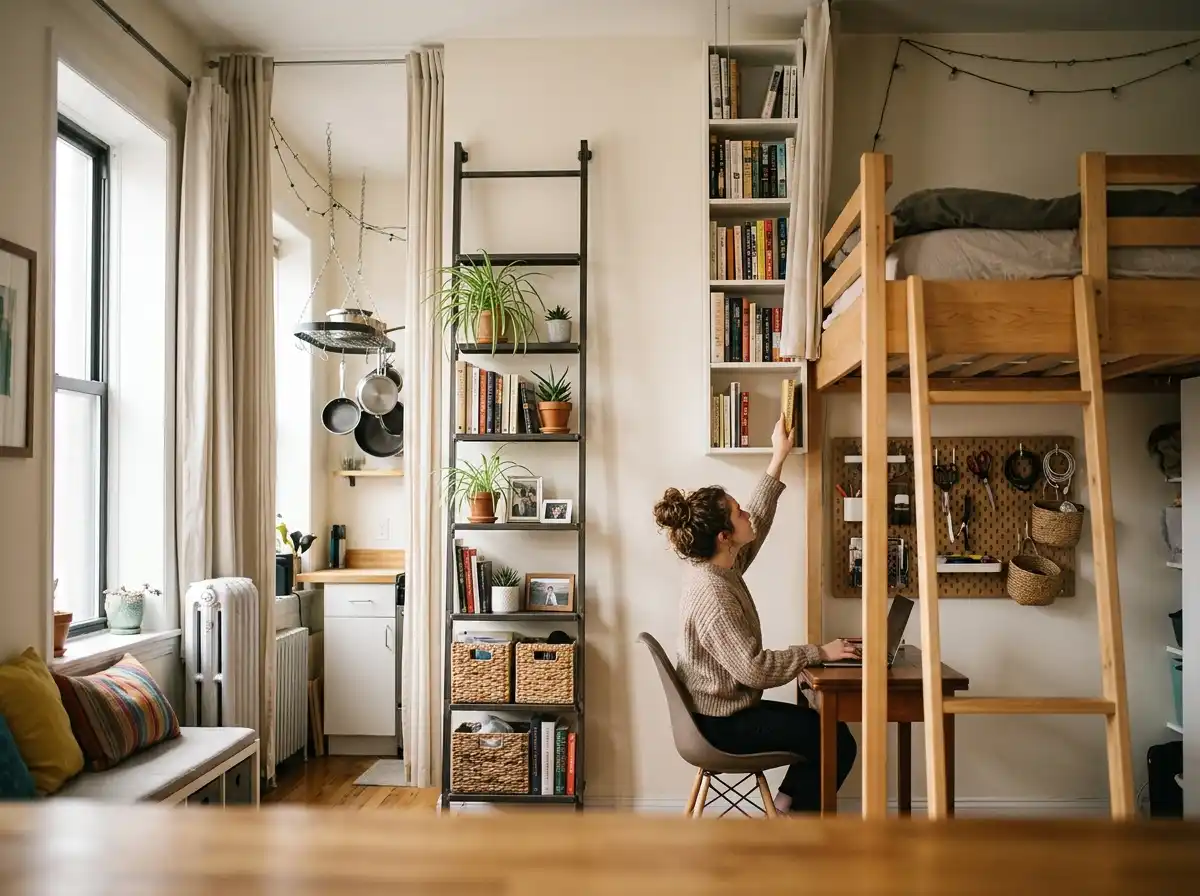
I lived in a 340-square-foot studio in my mid-twenties, and for the first eight months, I stored my off-season clothes in suitcases stacked in the corner of my bedroom because I genuinely didn’t know what else to do with them.
I’d walk past that pile every single day and just… accept it, like it was a permanent piece of furniture. It wasn’t until my downstairs neighbor Priya had me over and I saw she’d turned one entire wall into shelving — floor to ceiling, evenly spaced, actually load-bearing — that it clicked for me: I had been thinking about my apartment in square footage when I should’ve been thinking about it in cubic footage. The floor was full.
The walls were empty. That’s the whole guide, honestly, but let’s get into the actual how.
If you’re in a small apartment right now — a studio, a one-bedroom you’re splitting with a roommate, a dorm room, whatever — you’ve probably already bought the under-bed bins and the closet organizer and you’re still running out of room.
That’s because most small-space advice stops at “use your floor space efficiently” and never actually looks up.
Vertical storage isn’t just another category of small-space living tips; it’s usually the single biggest chunk of unused square footage most renters have, and it’s the one landlords have the least reason to object to, since most vertical solutions don’t require permanent changes to the unit.
This guide covers wall-mounted shelving, over-the-door systems, tension-mounted (no-drill) options for renters, ceiling and ceiling-adjacent storage, and the vertical furniture pieces actually worth the money versus the ones I’d skip.
I’m going to be specific about what held up in my own apartments and what didn’t, because “get a bookshelf” isn’t useful advice on its own.
Why Vertical Storage Actually Matters (Not Just “Looks Nice”)
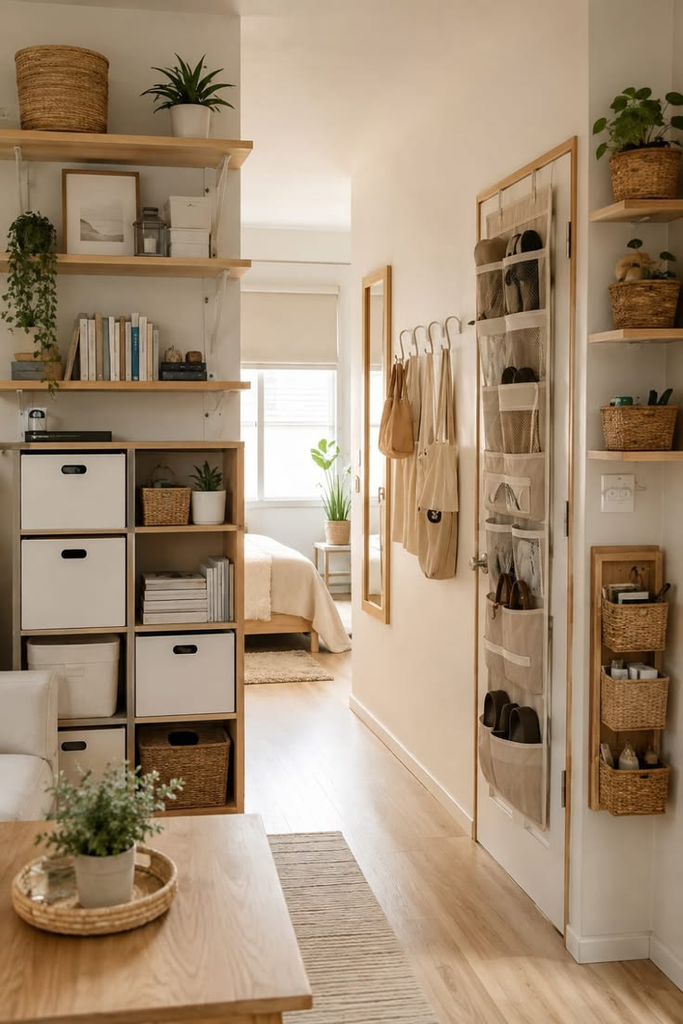
Here’s the thing most small-space content gets backwards: it treats vertical storage as a design choice, a way to make a cramped room look intentional. It’s really a math problem first.
A 400-square-foot studio has roughly 3,200 cubic feet of air in it if your ceilings are 8 feet, and the average renter uses maybe 15-20% of that vertically — everything above eye level is essentially wasted.
When I actually measured my own studio wall (the one across from my kitchenette), it was 11 feet wide and I was using zero inches of it above the height of my dresser.
The other reason it matters specifically for renters: most vertical storage solutions are either fully reversible (tension rods, command strips, over-the-door hooks) or involve minimal, easily-patched damage (a handful of small screw holes for a floating shelf), which puts them in a totally different risk category than, say, built-in cabinetry you’d need permission for.
You get a lot of the benefit of a custom closet system without asking your landlord for anything.
Pro tip: Before you buy a single shelf, stand in the middle of each room and actually look up. Most people mentally “cap” their apartment at whatever height their existing furniture is. I didn’t register my own kitchen had almost 3 feet of totally dead space above my cabinets until I was hunting for somewhere to put a stand mixer I never used enough to justify countertop space.
Wall-Mounted Shelving: The Backbone of Vertical Storage
This is where most people should start, and it’s also where most people get the execution wrong.
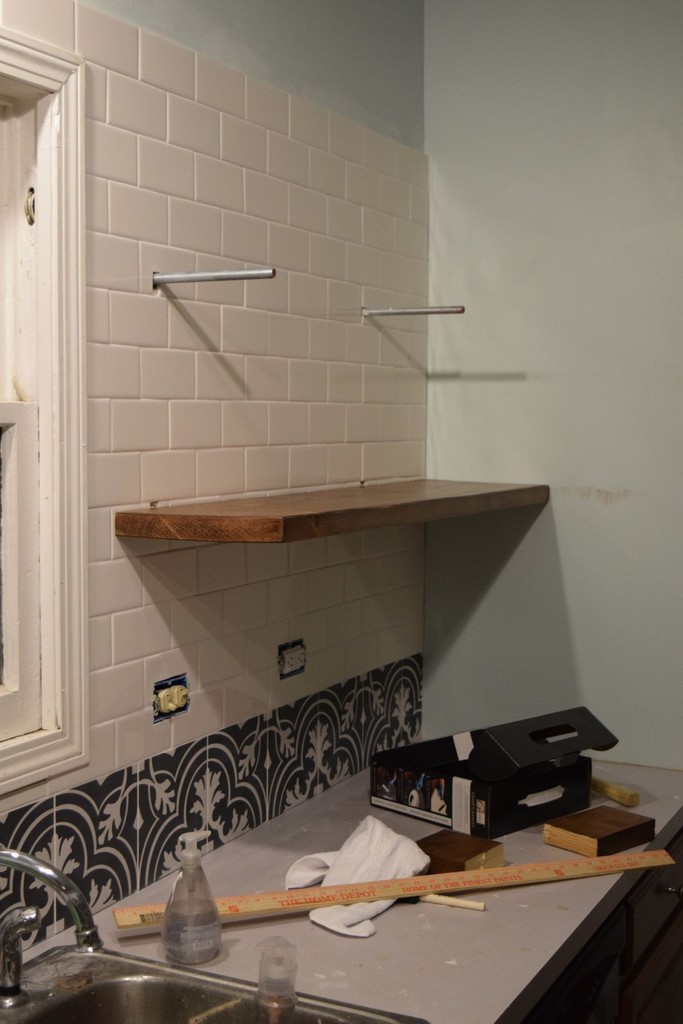
Why it matters: Floating shelves and wall-mounted shelf units give you flat storage surface without eating into your floor plan at all — no legs, no footprint, nothing to walk around. Done right, a wall of shelving reads as intentional decor, not overflow storage.
How to do it: For a rental, look for shelves rated for anchors rather than requiring wall studs specifically, since stud spacing won’t always land where you want it.
A basic 3M drywall anchor rated for 25-50 lbs is plenty for books, plants, and folded clothes; if you’re planning to store anything heavier (a stack of cast iron pans, a CRT-weight vintage item, whatever odd thing you’re keeping), go with a toggle bolt instead. Space shelves 10-14 inches apart if you’re storing books and folded items, or go wider if it’s mostly display pieces and bins.
My friend Marcus, who’s moved four times in six years for work, has gotten this down to a system: he buys the same shelf brackets every time (helps that he knows the exact anchor spacing) and just patches and repaints the old holes at move-out with a $6 tube of spackle. His deposit’s never been docked for it.
A real trade-off: open shelving looks great in photos and is genuinely worse for dust and for anything you don’t want on display.
I switched from all-open shelving to a mix — closed baskets on the shelves for stuff I don’t want to look at, open shelving for the stuff I do — after about a year of resenting how often I had to wipe things down.
Pro tip: Paint the wall behind a shelving unit a shade darker than your walls before you install it. It reads as an intentional design choice and also hides scuffs way better than white does.
Over-the-Door and Door-Mounted Storage
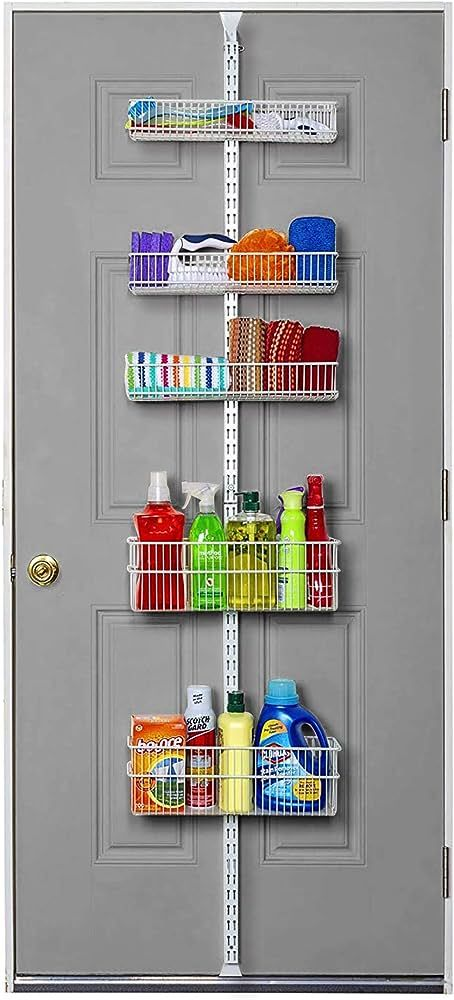
Why it matters: Every door in your apartment — closet, pantry, bathroom, even your entry door in some layouts — has 6-plus feet of unused vertical real estate on it, and almost none of it requires any hardware installation at all.
How to do it: Over-the-door organizers hang on the door itself using hooks that go over the top, no tools needed. They’re best for lightweight, frequently-grabbed items: shoes, cleaning supplies under the sink door, hair tools, accessories. What they’re bad at is anything heavy or anything you need to access quickly, since most swing or shift a bit when the door moves.
I tried an over-the-door shoe rack from a big box store in my first apartment and it sagged and eventually tore within about six weeks because I’d loaded it with boots instead of the sneakers it was rated for — read the weight limits, they’re usually lower than you’d guess (often 15-20 lbs total).
The canvas ones with individual pockets are worse for this than the wire rack style; if you’re storing anything with real weight to it, get the wire version.
Pro tip: Command-brand hook strips designed specifically for hollow or interior doors hold more securely and more evenly than the classic over-the-top hook style, and they don’t interfere with the door closing all the way, which the hook style sometimes does on tighter door frames.
No-Drill and Tension-Mounted Vertical Storage (For Strict No-Damage Leases)
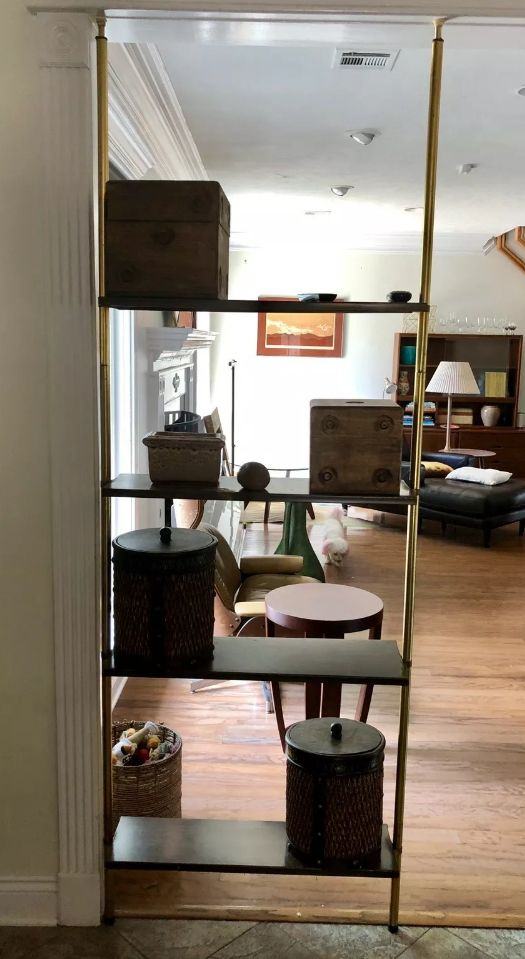
If your lease is genuinely strict about wall damage — some are, especially in bigger buildings or with corporate landlords — tension-mounted systems are worth knowing about specifically.
Why it matters: A tension rod or tension-mounted shelving pole wedges between floor and ceiling using spring pressure, with zero drilling, and it can hold a surprising amount of weight (some rated up to 30-40 lbs per shelf) if it’s installed correctly.
How to do it: These need real ceiling contact, so a popcorn or textured ceiling can actually cause slippage — worth checking before you buy. Get one rated for your actual ceiling height (measure twice; most come in ranges like 6-8 feet or 8-10 feet, and you want it near the shorter end of its range for the tightest, most secure fit).
Add shelves as you need them rather than maxing out the pole on day one, since more shelves means more torque on that tension point.
A reader once commented on a post I wrote years ago that she’d used a tension pole system specifically to create a “closet” in a studio that had none — just hung a curtain rod extension off it with a curtain for privacy. That’s stuck with me as one of the smarter uses I’ve heard of, because it solves a structural problem (no closet) with something fully reversible.
Pro tip: Test the tension by pushing on the pole firmly before you load anything onto it. If it shifts more than an inch, it’s not seated right — reset it before you trust it with anything breakable.
Vertical Furniture Worth Buying (and What to Skip)
Not all “vertical storage” is a shelf on a wall — some of it is just furniture built taller instead of wider.
| Piece | Best For | Skip If | Typical Cost |
|---|---|---|---|
| Tall, narrow bookshelf (5-6 ft) | Books, bins, display items, general flex storage | Your ceiling’s under 8 ft — it’ll look crowded | $60-180 |
| Ladder shelf | Bathrooms, small display, towels | You need real weight capacity — most are light-duty | $40-100 |
| Wall-mounted pegboard | Kitchen tools, craft supplies, jewelry | You want a finished, non-utilitarian look | $25-70 |
| Stackable cube storage | Closets, kids’ rooms, flexible configurations | You’re moving often — they’re annoying to disassemble/reassemble | $15-30 per cube |
| Rolling cart (vertical, narrow) | Bathroom or kitchen gaps between fixtures | The gap you’re eyeing is under 10 inches — most carts won’t fit | $30-90 |
The tall narrow bookshelf is genuinely the best dollar-for-dollar vertical piece I’ve bought, across three apartments now. The ladder shelf, by contrast, I’ve owned twice and given away twice — they’re cute but the shelves are usually too shallow and too lightly rated to hold much beyond towels and a plant.
Pro tip: If you’re deciding between one wide, low piece of furniture and one tall, narrow one for the same footprint, take the tall one almost every time in a small space — you’re not losing floor space either way, so you might as well get the extra vertical storage that comes with it.
Ceiling and Near-Ceiling Storage (The Most Skipped Category)
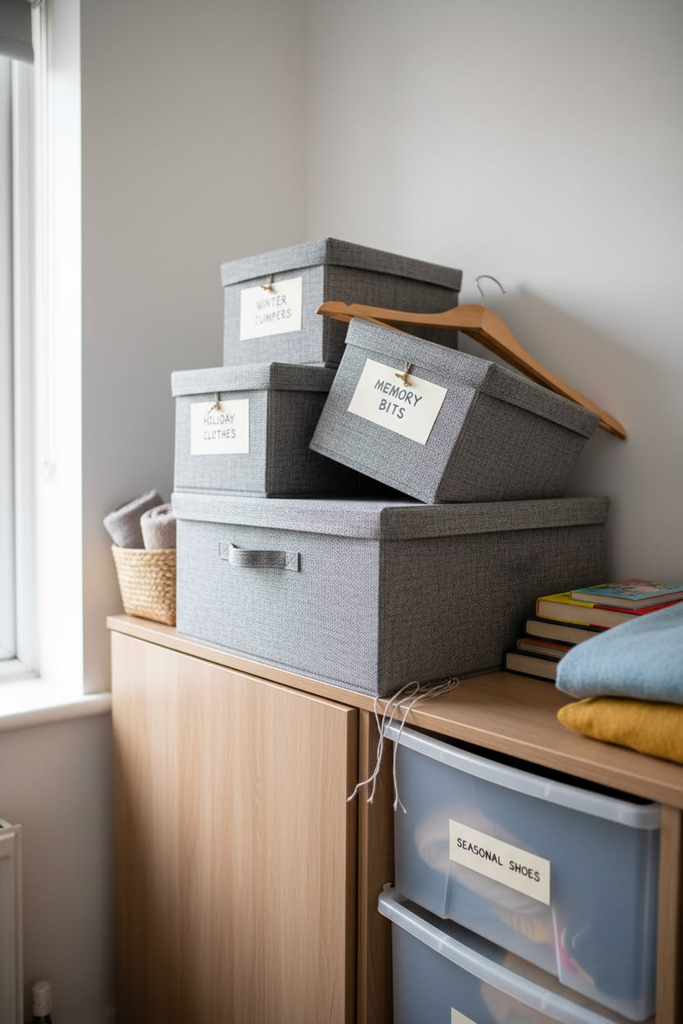
Why it matters: This is the space almost nobody uses, which also makes it the best spot for things you need to access rarely — seasonal decor, luggage, out-of-season bedding.
How to do it: Overhead garage-style ceiling racks aren’t just for garages; some slimmer versions work in closets with 9-plus foot ceilings, mounted to the closet’s own ceiling joists rather than the apartment’s structural ceiling, which usually makes them fair game even in a stricter lease (though I’d still ask). Baskets on top of a wardrobe or tall bookshelf are the low-effort version of the same idea — you’re just using the top of furniture you already own as a shelf.
A real trade-off: anything you put up high needs to be genuinely rare-access, or you’ll be dragging a step stool out constantly, which gets old fast. I learned this the hard way putting my everyday winter coat in a high closet bin — by December I’d moved it back down because climbing for it every morning wasnrt worth the vertical inch it saved.
Pro tip: Label bins you’re storing up high, even if you think you’ll remember what’s in them. Six months from now, you won’t.
What I’d Actually Do First, Starting Over
If I were moving into a small apartment tomorrow with nothing figured out yet, I’d start with one wall of anchored floating shelves in whatever room I spend the most time in, then add an over-the-door system in the closet before I bought a single piece of new furniture.
Everything else — the tension poles, the ceiling racks, the cube storage — I’d add only once I actually knew what specific thing I was still short on space for, instead of buying it all up front the way I did in my first apartment. Vertical space isn’t a trend or a hack; it’s just the room you already have that nobody told you to look up and see.

Leave a Reply