
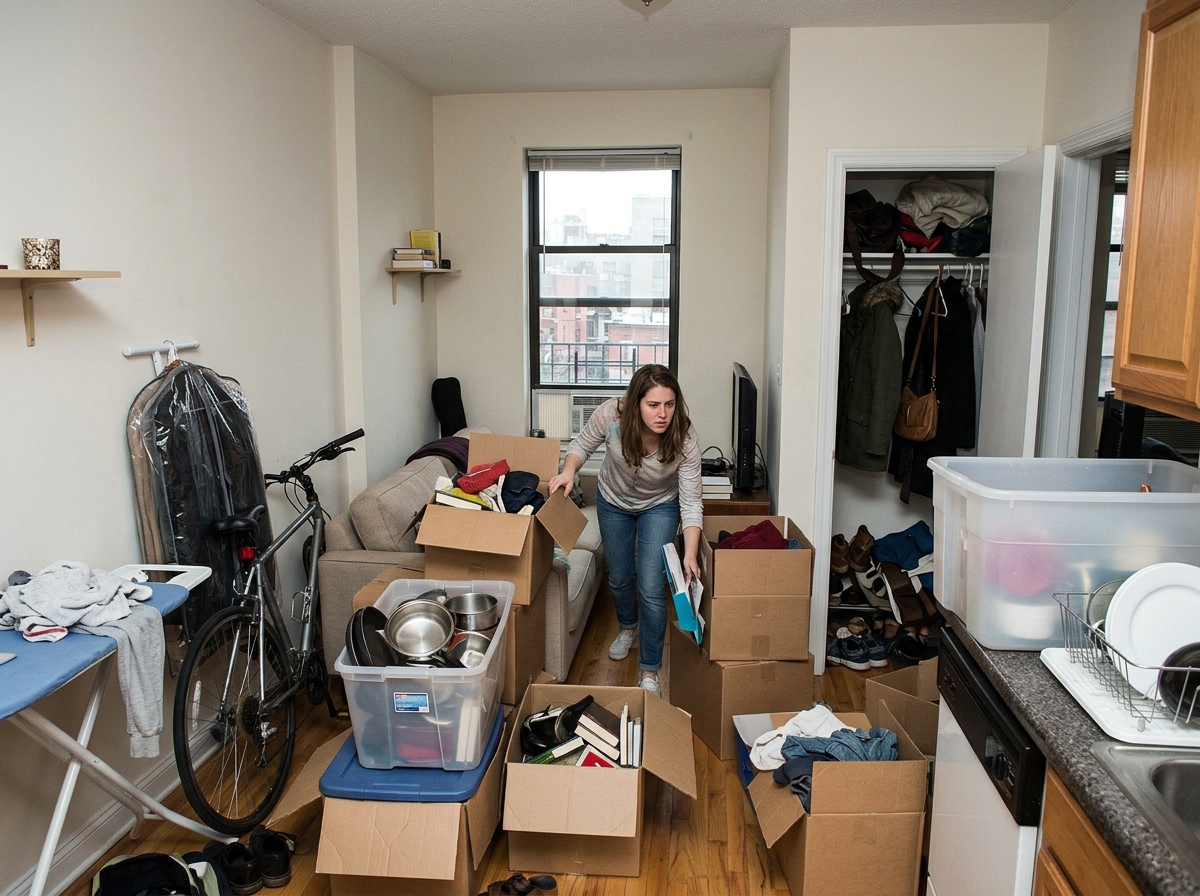
My first apartment was 340 square feet, had one closet the size of a phone booth, and a landlord who threatened to keep my entire deposit over three nail holes in the bathroom.
I made basically every mistake on this list before I figured out what actually works in a small rental — and I’ve watched enough friends move into their first places to know I wasn’t the only one.
If you’re staring down a studio or a railroad-style one-bedroom for the first time, small space storage mistakes are almost a rite of passage.
You buy the wrong bins, you drill where you shouldn’t, you assume “vertical storage” means one flimsy shelf from a big box store.
None of that is dumb — nobody teaches you this stuff. But it does cost you money, wall damage, and closet space you didn’t have to lose.
Here’s what actually trips people up, and what I’d tell my 23-year-old self if I could.
Mistake #1: Buying Storage Before You’ve Lived in the Space
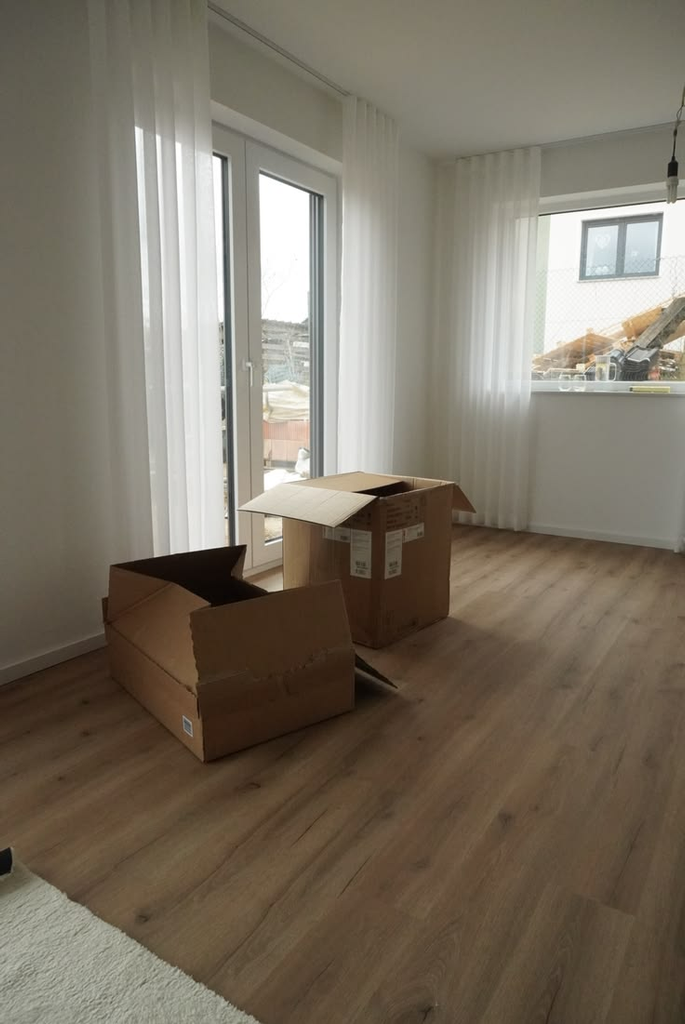
The instinct when you sign a lease is to go straight to Target or IKEA and buy a cart’s worth of bins, baskets, and shelving before you’ve spent a single night in the apartment.
I did this. I bought a six-cube organizer for a corner that, once my bed was actually in the room, didn’t exist anymore.
Give yourself one to two weeks of just living with your stuff in boxes before you commit to organization systems.
You’ll notice things you couldn’t predict from a floor plan — that the closet door swings into the space where you wanted a shoe rack, that there’s a weird 8-inch gap next to the fridge that’s perfect for a rolling cart, that the “storage room” on the listing is actually just a water heater closet.
Pro tip: Take photos of every wall and corner on move-in day, empty, with a tape measure in frame. You’ll reference these more than you think when you’re shopping online at midnight trying to remember if that gap was 12 inches or 15.
Mistake #2: Ignoring Vertical Space Because “There’s No Room for Shelves”
This is the small-space storage mistake I see the most, and it’s almost always about mindset, not actual square footage.
People measure floor space, decide there’s nothing left, and give up — when the walls above eye level are usually completely empty.
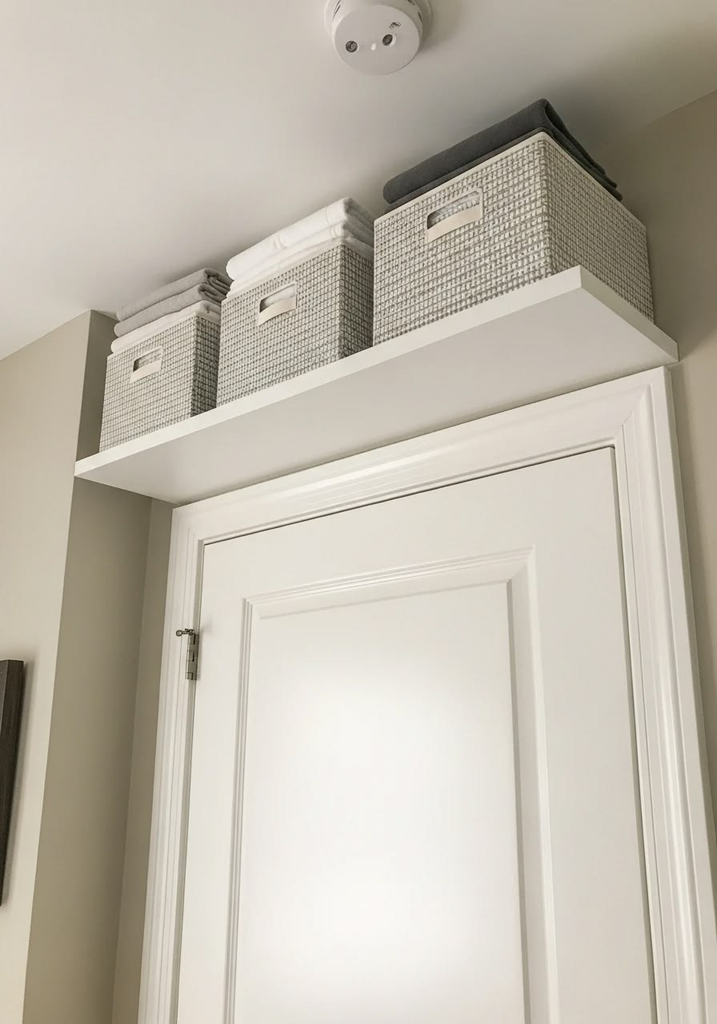
My friend Priya lived in a 400-square-foot studio in Chicago for two years and swore she had “zero storage.” Then she put up three floating shelves above her closet door, stacked her off-season bins there, and suddenly had back three feet of closet floor she’d been sacrificing to winter coats. The shelves cost her about $40 total.
Vertical apartment storage means thinking in three zones: above doorways, above closet rods (there’s almost always 12-18 inches of dead air up there), and the top of any furniture that isn’t already maxed out.
A bookshelf that stops at 5 feet in a room with 9-foot ceilings is wasted real estate.
Pro tip: Command’s heavy-duty vertical strips hold up to 15 lbs per set and come off cleanly — I’ve used them on textured walls in three different rentals with zero paint damage, which is more than I can say for the “removable” 3M hooks from a few years back.
Mistake #3: Choosing Storage Bins Before Measuring the Space They’re Going Into
I bought a set of matching fabric bins because they were pretty and on sale.
They didn’t fit in my closet shelving by about half an inch, so they sat empty in a corner of my bedroom for four months doing nothing but reminding me I’d wasted $60.
Measure first, every time — width, depth, and height, because closet shelves are usually shallower than you think. Bring the measurements with you or save them in your phone before you shop, and don’t trust the thumbnail photo to tell you scale.
| Storage Type | Best For | Typical Cost | Renter-Friendly? |
|---|---|---|---|
| Over-the-door organizers | Shoes, cleaning supplies, small closet items | $15–$35 | Yes, no installation |
| Under-bed bins (with wheels) | Off-season clothes, extra linens | $20–$50 | Yes, zero wall impact |
| Command strip floating shelves | Above doors, dead vertical space | $25–$60 | Yes, but check your walls first (see below) |
| Freestanding shelving units | General storage, kitchen or closet | $50–$150 | Mostly — check lease on furniture anchoring |
| Drilled wall shelving | Heavier or permanent-feeling storage | $30–$100+ | Only with landlord permission |
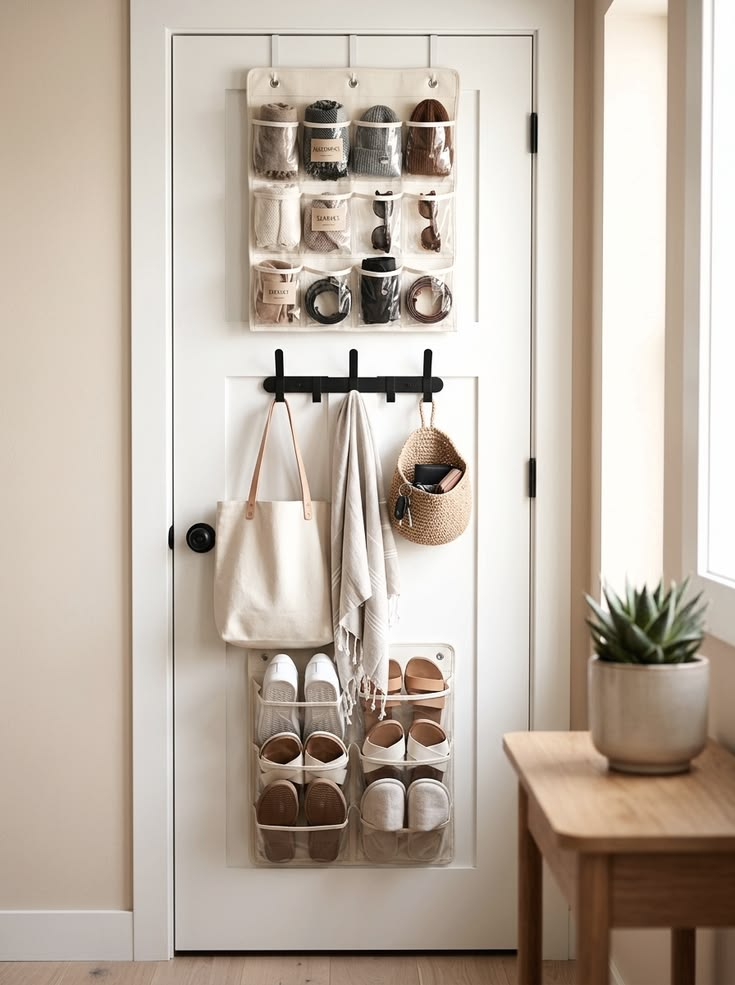
I tried the over-the-door shoe organizer with the flimsy plastic hooks first, and it ripped off the door within a week under the weight of actual sneakers, not ballet flats.
The canvas version with metal grommets has survived three moves and counting — spend the extra $10.
Mistake #4: Not Reading the Lease Before You Drill or Mount Anything
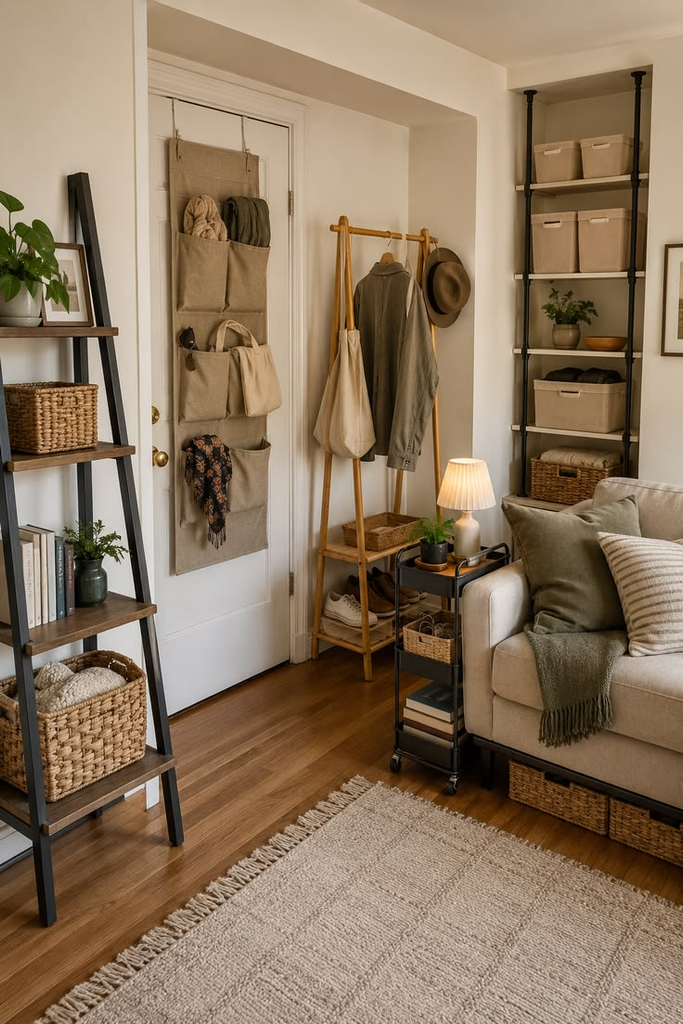
This one cost me part of a security deposit, so I’ll be blunt: read the actual clause about wall damage before you put a single hole in anything. Some leases explicitly allow small nail holes for hanging items and only penalize larger anchors; others prohibit any wall penetration at all.
You cannot assume — I’ve had both types of lease within the same city.
If you’re not sure, or if drilling is banned outright, renter-friendly storage solutions that don’t touch drywall are your best friend: tension rods (they wedge into a closet or alcove with no hardware), Command products rated for your actual weight needs, freestanding units, and furniture with built-in storage like storage ottomans or beds with drawers underneath.
Pro tip: If you do get permission to drill, save the anchors and patch kit that come with any shelving you buy — most landlords will accept a properly filled and painted hole as normal wear and tear, but only if it’s done neatly, not just spackled over and left white on a beige wall.
Mistake #5: Treating the Kitchen Like It Only Has Cabinet Storage
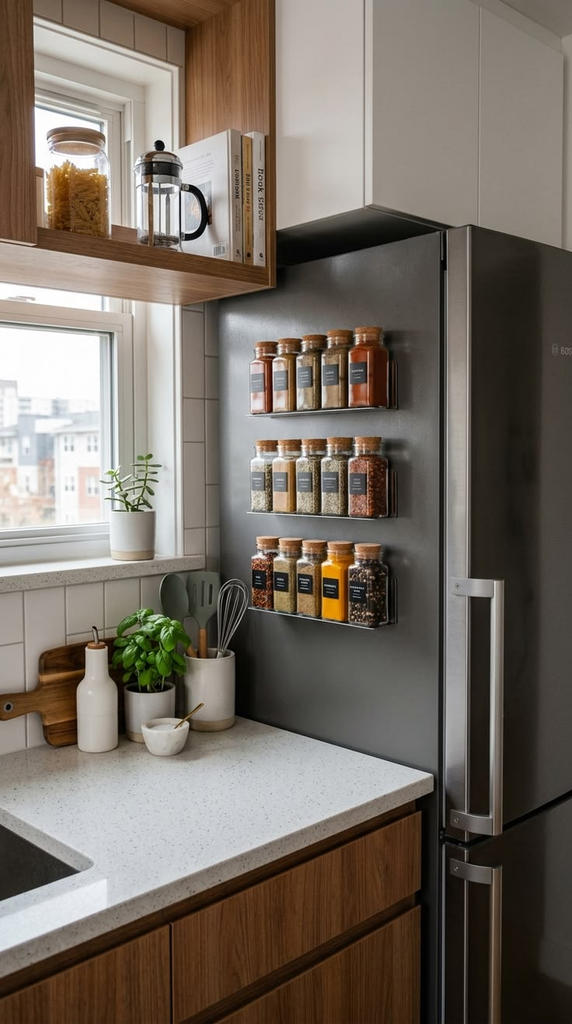
Small apartment kitchens are where I see people give up the fastest, because cabinet space in older rental buildings is often genuinely tiny. But cabinets are rarely the only option.
The inside of cabinet doors can hold hanging racks for lids, foil, or spice jars. The side of a fridge, if it’s magnetic, can hold a slim magnetic spice rack or a paper towel holder.
A rolling cart under a console table or in an awkward corner works as a second pantry. I’ve also seen people use a tension rod under a sink to hang spray bottles by their trigger handles, which frees up the entire cabinet floor for actual storage.
Pro tip: Check if your stove has a drawer underneath — a lot of first-time renters never open it, and it’s usually rated for cookware storage, not just broiler use (though double check your specific model’s manual, since a few are broiler-only for safety reasons).
Mistake #6: Buying “Small Space” Furniture That’s Actually Just Small
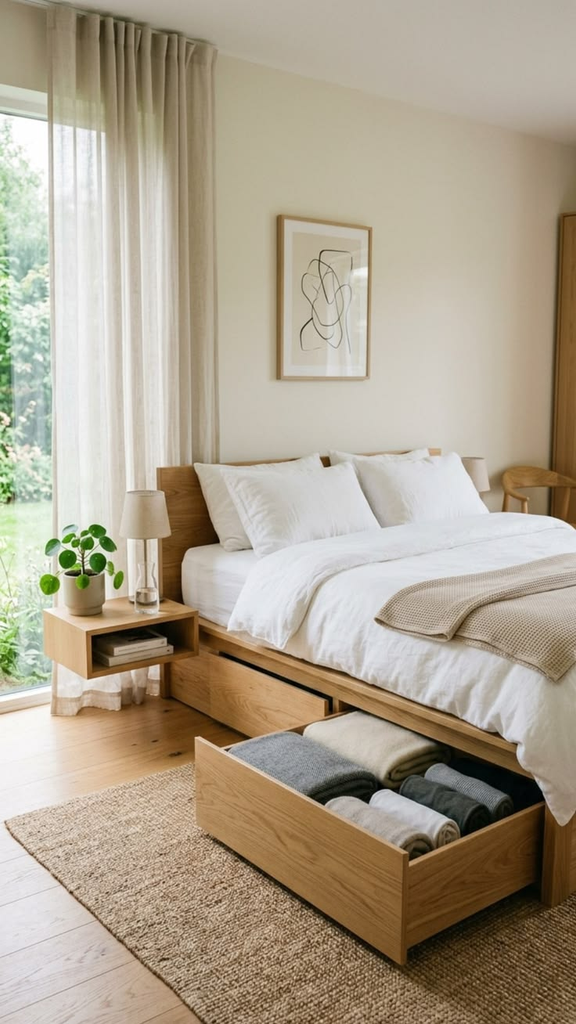
There’s a difference between furniture that’s small and furniture that’s doing double duty, and a lot of “small space” marketing conflates the two.
A tiny coffee table that doesn’t open, lift, or store anything is just a tiny coffee table — it’s not solving your storage problem, it’s just taking up less floor while doing it.
Look specifically for storage ottomans, bed frames with built-in drawers, benches with lift-tops, and console tables with baskets or shelving underneath.
When I finally swapped my flat storage-less bed frame for one with three drawers underneath, I got back the equivalent of a small dresser’s worth of space — enough for all my off-season clothes, without adding a single new piece of furniture to the room.
Pro tip: Before buying anything marketed as “space-saving,” ask yourself what specifically it stores, holds, or hides. If the answer is “nothing, it’s just compact,” it’s not actually solving the problem — it’s just smaller furniture.
Mistake #7: Not Planning for Seasonal or Rotating Storage at All
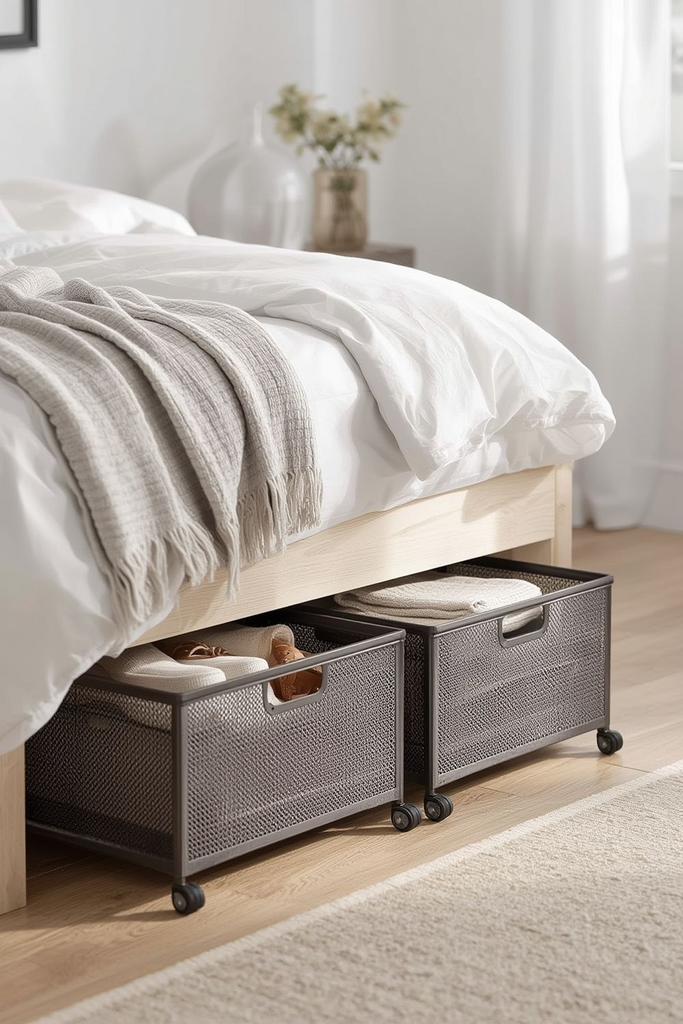
This is the mistake that sneaks up on people around month four or five. You get your everyday stuff organized and feel great, then winter coats, holiday decorations, or off-season sports gear show up with nowhere to go, because you never planned a spot for things you don’t use year-round.
Under-bed bins are the obvious answer here, but they need to be the low-profile kind — measure the clearance under your bed frame before buying, because a lot of standard platform beds only clear 4-6 inches, and “under bed” bins sold online are frequently taller than that.
Vacuum storage bags are genuinely useful for bulky soft items like comforters and winter coats; I was skeptical until a reader on my site mentioned using them for off-season bedding, and now I use them every year for anything I’m not touching for six months.
Pro tip: Label rotating storage bins by season and month, not just contents — “Winter — pack away by March” is more useful at 11pm in October than a bin that just says “coats,” because it forces the actual rotation instead of letting bins pile up indefinitely.
What I’d Do First If I Were Starting Over
If I were moving into a small first apartment again tomorrow, I’d hold off on buying anything for the first week, measure every wall and gap with an actual tape measure, and start with vertical storage above the closet rod and doorways before I touched a single bin. That’s where most people, myself included, leave the most usable space on the table.
Small space storage mistakes are almost never about not having enough room — they’re about not seeing the room you already have.
Once you start looking up instead of just across the floor, most small apartments have more storage hiding in them than the listing photos ever suggested.

Leave a Reply